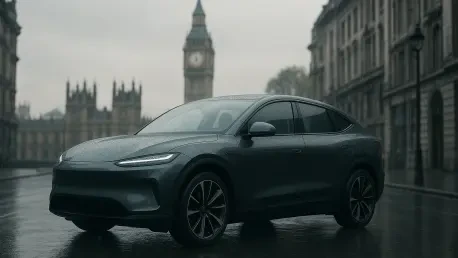

British policymakers are trapped between the U.S. demand for a hard line against Chinese expansion and the EU’s requirement for regulatory alignment to maintain market access. This tension has reached a boiling point as 2026 unfolds, revealing a stark contrast between the United Kingdom’s trade posture and that of its closest allies. While the United States has effectively walled off its market with a 100% tariff on Chinese electric vehicles, and the European Union has implemented manufacturer-specific levies topping 35%, London has remained surprisingly accessible. By maintaining a standard 10% import duty, the U.K. has unintentionally positioned itself as a primary gateway for Chinese automotive giants looking to offset slowing growth elsewhere. This open-market approach has created a flood of affordable, high-tech vehicles on British roads, but it has also sparked an intense debate within Westminster about the long-term cost of such openness in an increasingly protectionist global environment.
The Strategic Imperative: Aligning with European Standards
The central catalyst for a potential shift in British trade policy is the European Union’s “Made in Europe” framework, a cornerstone of the broader Industrial Accelerator Act. This legislation is designed to prioritize regional manufacturing and shield the bloc’s internal market from external competitors that benefit from extensive state subsidies. For the United Kingdom, the stakes are exceptionally high because failing to harmonize its tariff structure with Brussels could lead to severe economic isolation. If the U.K. continues to allow Chinese vehicles to enter at low duty rates, British-made cars and components may soon be classified as “non-compliant” or foreign under the strict rules of origin enforced by the EU. Such a designation would trigger administrative barriers and additional taxes for British exports, potentially devastating a domestic automotive sector that relies on the continent for over half of its total trade volume and integrated supply chains.
Business Minister Jonathan Reynolds is currently navigating this “pincer movement” by weighing the implementation of tariffs that mirror the EU’s manufacturer-specific levies. This move is largely defensive, intended to prevent the U.K. from becoming a “backdoor” for subsidized Chinese goods that could undermine European industrial stability. However, the decision is complicated by the immediate impact on British consumers, who have benefitted from the price wars triggered by the arrival of new brands. Policymakers must decide whether to prioritize the survival of high-end domestic manufacturing or the accessibility of affordable green transport for the general public. As the deadline for the full implementation of the “Made in Europe” rules approaches, the pressure to choose alignment over autonomy is intensifying. Maintaining a divergent trade policy now carries the tangible risk of being shut out of future European technological initiatives and collaborative manufacturing agreements.
The Competitive Challenge: Market Shifts and Strategic Responses
The scale of the challenge is reflected in the dramatic shift in market dynamics observed throughout the first half of 2026. Recent data from Jato Dynamics indicates that the market share for Chinese original equipment manufacturers in the U.K. has more than doubled, jumping from roughly 13% to over 28% in a remarkably short timeframe. This expansion is not limited to battery-electric vehicles; hybrid models have also seen a massive surge in registrations, suggesting that Chinese brands are successfully competing across every segment of the automotive market. A standout example of this trend is the Jaecoo 7, a mid-size SUV that has earned the moniker “Temu Range Rover” due to its aggressive pricing strategy. With a starting price of approximately £29,000, the vehicle offers a significant cost advantage over traditional domestic rivals like the Land Rover Discovery Sport, which begins at £45,500. This massive price-to-value gap allowed the Jaecoo 7 to become the bestselling car in Britain by September.
Economists like Paul Hilton have argued that the U.K.’s response required a more nuanced approach than a simple “yes or no” on tariffs. This perspective was underscored by the Prime Minister’s attempt to reset relations with the EU while avoiding a direct trade confrontation with Beijing. The government sought to balance its environmental goals with industrial protection by encouraging Chinese firms to invest in local assembly plants, thereby satisfying “Made in Europe” content requirements. This move aimed to create high-skilled jobs and internalize battery technology without triggering the retaliatory strikes on luxury exports that China previously threatened. By the end of 2026, the transition toward a more aligned trade policy appeared inevitable, as British policymakers recognized that maintaining access to the European market was paramount for the survival of the nation’s automotive engineering legacy. Future success now depends on lowering domestic energy costs and expanding charging infrastructure.