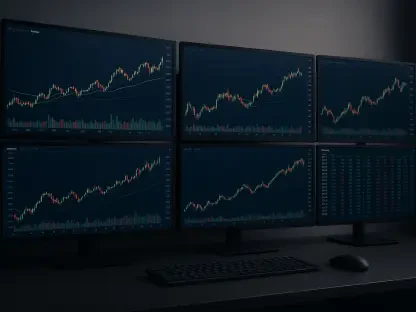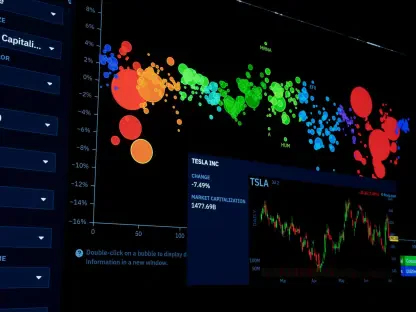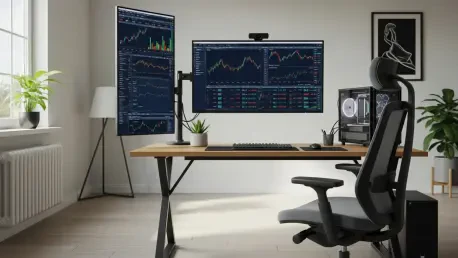

The dramatic evolution of financial markets has reached a pivotal juncture where the long-standing technological divide between massive institutional firms and independent retail participants is finally closing. Historically, the barrier to entry was defined not just by capital, but by the exclusive access to high-frequency data, advanced algorithmic processing, and institutional-grade analytical software that cost tens of thousands of dollars per month. This disparity often left individual traders at a disadvantage, forced to react to market movements that had already been digested and exploited by high-speed server farms and quantitative hedge funds. However, the current landscape of 2026 presents a radically different reality, driven primarily by the rapid democratization of artificial intelligence and high-performance computing. Today, anyone with a modern computer and a reliable internet connection can deploy sophisticated tools that rival the capabilities of professional trading desks. This shift is not merely about having better charts or faster news feeds; it represents a fundamental change in how market information is processed, interpreted, and executed. As artificial intelligence transitions from a niche experiment into a core necessity, the individual participant is no longer an outsider looking in but a fully equipped operator capable of executing with professional-grade precision and statistical rigor.
Leveraging Advanced Language Models for Strategy Development
The integration of Large Language Models has transformed the way individual traders approach market research and the development of complex trading strategies. Models like Anthropic’s Claude have become indispensable for their ability to perform multi-step reasoning and process vast quantities of raw data that were previously overwhelming for a single person to manage. These models can ingest entire spreadsheets of historical trade data, identifying subtle correlations and performance patterns that might escape even the most observant human eye. By acting as a high-level strategic advisor, such an AI can run simulations that evaluate the statistical risk of ruin or determine the robustness of a specific trading plan across different market regimes. This capability allows a trader to refine their edge with a level of scientific scrutiny that was once the exclusive domain of quantitative analysts at major hedge funds. The speed at which these models can iterate on ideas means that a concept can move from a hypothesis to a back-tested strategy in a matter of minutes rather than weeks.
While specialized models handle deep data reasoning, ChatGPT remains a versatile tool for visual analysis and the rapid generation of custom technical indicators. Many traders utilize its advanced vision capabilities to review screenshots of price action, providing a second pair of eyes that can identify chart patterns or volume anomalies that may have been missed during the heat of a live session. Beyond visual aid, the ability of these models to translate plain-English descriptions into functional code has virtually eliminated the technical barrier to entry for algorithmic trading. A trader can describe a complex entry condition involving multiple indicators and risk parameters, and the AI will generate the corresponding script for a variety of platforms instantly. This allows for a highly customized trading experience where tools are built specifically for the individual’s needs, rather than relying on generic, off-the-shelf software. The synergy between human intuition and AI-driven technical execution is now the standard for those seeking to maintain a competitive advantage in the modern market.
Building a Foundation with Modern Infrastructure and Scripting
The shift toward professional-level retail trading is supported by a robust cloud-based infrastructure that removes the need for expensive local hardware. TradingView has emerged as the premier platform for multi-asset analysis, providing a unified workspace that integrates real-time data from stocks, futures, forex, and cryptocurrency. This accessibility ensures that a trader can manage their portfolio and conduct high-level technical analysis from any device without sacrificing the speed or quality of the data feeds. By consolidating these disparate markets into a single, intuitive interface, the platform allows for a more holistic view of global capital flows, which is essential for understanding the inter-market correlations that drive price movement. The move away from fragmented, clunky legacy software toward streamlined, web-based solutions has allowed retail participants to focus their energy on strategy and execution rather than technical troubleshooting and data management.
Complementing this modern infrastructure is the widespread adoption of Pine Script, a domain-specific language that has revolutionized the way traders build and automate their systems. This language was designed to be accessible yet powerful, enabling the creation of everything from simple trend-following indicators to highly complex automated execution models. When used in conjunction with AI coding assistants, the process of developing proprietary tools has become incredibly efficient, allowing retail traders to build custom flexibility into their workflows that mirrors the bespoke systems used by institutional desks. This democratization of coding means that a trader’s success is no longer limited by their programming background but by their ability to conceptualize and test unique market edges. As more participants adopt these scripting capabilities, the market becomes more efficient, forcing traders to continuously innovate and refine their automated systems to stay ahead of the curve.
Using Statistical Benchmarking and Institutional Footprints
Understanding the concept of fair value is critical for any trader looking to navigate the volatility of modern markets, and the Volume Weighted Average Price has become the definitive tool for this purpose. Unlike standard moving averages that only account for price over time, VWAP integrates volume data to show where the majority of financial commitments are being made throughout the trading day. By applying standard deviation bands to this average, traders can create dynamic probability zones that highlight when an asset is statistically overextended or undervalued relative to its daily mean. This provides a clear, data-driven framework for making decisions, reducing the reliance on subjective “gut feelings” that often lead to costly errors. For the retail participant, having access to these statistical benchmarks means being able to see the market through the same lens as the institutional algorithms that use these exact levels to execute large orders.
Identifying institutional footprints through the study of order blocks and supply-demand zones offers another layer of depth to the systematic trading process. Order blocks represent areas where large financial institutions have placed significant buy or sell orders, often leaving behind a trail of high-volume activity that serves as a future area of interest. By marking these zones on a chart, a retail trader can align their positions with the directional flow of institutional capital, effectively “trading in the shadow” of the market’s largest movers. This approach moves away from traditional retail patterns that are often prone to manipulation and instead focuses on the fundamental mechanics of liquidity and price discovery. This systematic framework for identifying high-probability entry and exit points provides a level of consistency that is essential for long-term survival in an environment characterized by rapid price shifts and high-frequency competition.
Managing Information Flow and Market Volatility
In the high-speed environment of 2026, the ability to manage information latency is a significant factor that separates successful traders from those who struggle with unexpected volatility. Tools such as Forex Factory and other comprehensive economic calendars serve as an essential early warning system, notifying participants of scheduled events like central bank decisions or inflation reports. Knowing the precise timing of these releases allows traders to adjust their risk exposure or step aside entirely during periods of extreme unpredictability. By anticipating these “catalyst windows,” a trader can avoid the slippage and erratic price action that often accompanies major news events, preserving their capital for more stable market conditions. This proactive approach to risk management is a hallmark of professional trading and is now easily accessible to anyone with the discipline to integrate a macro-economic schedule into their daily routine.
Beyond scheduled events, the rise of live headline services has provided retail traders with the same real-time edge once reserved for professional newsrooms and institutional trading floors. These services offer instant updates on geopolitical developments, surprise earnings, or sudden shifts in government policy, ensuring that individual participants are never caught off guard by a sudden market move. The democratization of this information flow means that the time gap between a professional seeing a news flash and a retail trader seeing it has essentially vanished. Having access to this stream of high-quality, real-time data allows for faster reaction times and more informed decision-making, especially during “black swan” events or rapid trend reversals. By integrating these headline feeds directly into their trading workspace, individuals can maintain a constant pulse on the global events that dictate market sentiment and price direction.
Overcoming Capital Constraints Through Proprietary Trading
One of the most transformative developments for individual traders has been the explosive growth of the proprietary trading industry, which has effectively solved the problem of limited capital. These firms provide funded accounts to traders who can demonstrate their skill and discipline by passing a rigorous performance evaluation process. This model allows talented individuals to trade with the firm’s money and keep a substantial portion of the profits, provided they adhere to strict risk management protocols and loss limits. For many, this has turned trading from a hobby with small accounts into a legitimate professional career with the backing of significant institutional-level capital. The accessibility of these programs has leveled the playing field, ensuring that success is determined by a trader’s ability to manage risk and execute a strategy rather than the initial size of their personal bank account.
The maturation of the prop trading ecosystem has also led to the rise of aggregators and comparison tools that allow traders to find the best terms and fee structures. Participants can now compare payout speeds, drawdown rules, and evaluation costs across hundreds of different firms, ensuring they select the partner that best aligns with their personal style and goals. This competitive environment has forced firms to provide better tools, faster execution, and more transparent rules, further benefiting the retail community. As capital has become more of a commodity, the focus has shifted entirely toward performance and behavioral discipline. Traders who can maintain a consistent equity curve are now highly sought after, with the potential to scale their managed capital into the millions. This structural shift has created a meritocratic path for individual participants to reach the highest levels of the financial industry without needing a traditional institutional background.
Refining Performance with Micro Instruments and Data Analysis
The introduction and expansion of micro-futures contracts, such as the Micro E-mini Nasdaq-100, have provided retail traders with a level of precision in position sizing that was previously impossible. These smaller contract sizes allow for granular risk management, enabling traders to scale in and out of positions without being exposed to the heavy capital requirements of standard-sized contracts. Because these instruments trade nearly twenty-four hours a day, they offer the flexibility to respond to global events as they happen, regardless of the trader’s local time zone. This continuous liquidity and lower barrier to entry make micro-futures an ideal training ground for those refining their systems, as well as a powerful tool for experienced professionals seeking to manage risk with surgical accuracy. The ability to trade these highly liquid markets with minimal capital has made the futures market one of the most attractive venues for the modern systematic trader.
Continuous improvement in this competitive landscape is increasingly driven by data-driven self-coaching and the rigorous analysis of trade logs. By exporting their trade history into AI-powered diagnostic models, traders can identify specific behavioral biases and patterns that are often invisible during live trading. For example, an analysis might reveal that a trader consistently loses money during the first hour of the market open or has a lower win rate on specific types of setups. This feedback loop transforms a simple list of wins and losses into a powerful mentorship tool, providing objective insights that help eliminate repetitive human errors. By treating their trading as a data science project, individuals can refine their execution and psychology with a level of detail that mirrors the performance reviews conducted at elite trading firms. This focus on objective self-assessment is what ultimately allows a trader to evolve from a novice into a disciplined professional.
The Evolution Toward a Systematic Trading Business
When these diverse tools and strategies are integrated into a single, unified workflow, they transform trading from a speculative activity into a professional business operation. The modern participant acts less like a gambler and more like a systems operator, managing a suite of AI and statistical tools to exploit repeatable market edges. This shift away from “gut feelings” toward systematic execution is the defining characteristic of the institutionalized retail trader. By automating the data collection, strategy testing, and performance analysis phases of their work, individuals can focus their mental energy on high-level decision-making and risk oversight. This industrialization of the trading process ensures that decisions are based on probability and evidence rather than emotion or hearsay. The result is a more resilient and sustainable approach to the markets that can withstand the inevitable periods of volatility and uncertainty.
The final outcome of this technological revolution was the total removal of the information and capital asymmetry that once defined the financial world. Successful participants recognized that the path to longevity required a commitment to constant technological adaptation and a rigorous, data-centric mindset. They moved beyond simple chart patterns and embraced the complexities of market mechanics, institutional flow, and AI-driven diagnostics. The traders who thrived were those who stopped viewing themselves as individuals fighting against the market and started seeing themselves as entrepreneurs running a data-driven enterprise. To maintain this edge, the next logical steps involved the development of even more personalized AI models and the exploration of decentralized liquidity pools. By maintaining a disciplined adherence to these modern systems, the retail community finally secured its place as a sophisticated and permanent fixture in the global financial ecosystem.