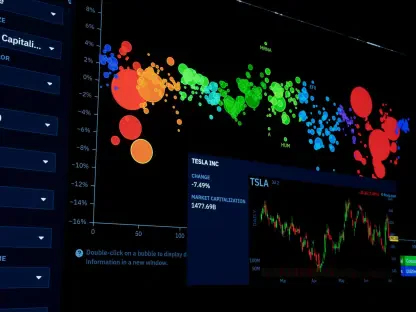

Traders who once logged in solely to chase BTC volatility now expect a single screen to handle coins, cash-like stablecoins, and stock-linked exposure without hopping between accounts or waiting for market bells to ring anywhere on the planet. That shift in expectations has fueled a broader change in what crypto exchanges aim to be: not just arenas for decentralized assets but front doors to a spectrum of financial exposure, including products that track familiar equities and indices. KuCoin’s recent rollouts made this evolution visible, moving from a BTC-centered playbook to a multi-asset strategy that folds tokenized equities, equity-referenced derivatives, and institutional-grade servicing into one ecosystem. The core idea is simple yet consequential. Crypto rails—always-on trading, blockchain settlement, and instant stablecoin funding—now deliver TradFi-shaped exposure in formats that crypto users already understand, pushing platforms toward a new identity as cross-asset access layers.
What TradFi Means on Crypto Rails
TradFi in a crypto setting is not a catchphrase; it is shorthand for bringing mainstream financial structures into a blockchain-first workflow. Banks, brokerages, exchanges, and regulated instruments such as equities and ETFs historically operated through siloed accounts, session-based trading hours, and multi-day settlement. On crypto platforms, the same economic exposure can be mirrored through tokenization and derivatives, but the plumbing changes. Funding arrives in stablecoins, transfers settle on-chain, and orders route through matching engines that never power down. This re-contextualization matters because it reframes how exposure is obtained and managed. Instead of moving capital through legacy rails for each allocation, users can toggle between BTC, ETH, and, for example, a tokenized SPY proxy with no friction from banking cutoffs.
Building on this foundation, the “crypto into TradFi” narrative becomes a set of practical bridges rather than a grand slogan. A token on Solana that tracks a blue-chip ETF embeds recognizable equity logic into a crypto wallet. A perpetual contract that references a mega-cap stock index grants round-the-clock positioning yet preserves the leverage, funding, and liquidation semantics that crypto derivatives traders already navigate. For institutions, an onboarding stack that includes KYC workflows, VIP liquidity lanes, and treasury tooling mirrors broker-dealer courtesies without forcing a departure from crypto-native execution. In effect, the interface stays the same while the menu grows. That continuity is what has drawn retail and professional users toward platforms that repackage TradFi-linked exposure under a unified, blockchain-enabled workflow.
Why This Shift Is Happening Now
Convenience expectations defined the timing. Retail users grew tired of keeping a brokerage for equities, a crypto exchange for coins, a separate on-ramp for fiat, and multiple interfaces for derivatives. The cognitive cost of switching contexts became a competitive factor, and a platform that could compress these steps into one flow gained a credible edge. The appeal rises on quiet crypto days. If BTC ranges and altcoin narratives cool, stock-linked themes—earnings guidance, sector rotation, fiscal headlines—still move. A multi-asset venue can keep attention and capital in one place by surfacing those drivers through tokenized tickers and perpetuals designed for continuous trading. Meanwhile, institutional desks sought crypto liquidity without abandoning familiar service standards, prompting exchanges to formalize VIP programs and compliance-aware frameworks.
Platform economics steered the same way. Pure crypto volumes pulse with cycles; they swell in speculative phases and thin out in consolidation. Broadening the catalog to include equity-linked instruments stabilizes engagement across conditions, evening out order flow and fee capture. Crucially, operational maturity reached a point where this expansion became feasible. Custody providers hardened segregation and bankruptcy-remote structures. Risk engines learned from prior drawdowns and improved liquidation logic. Matching engines absorbed surge loads more gracefully, and compliance teams built playbooks for counterparty reviews and jurisdictional screening. With these pieces in place, exchanges could credibly argue that cross-asset products were not only possible but safer to scale than in earlier eras when basic infrastructure was still catching up to demand.
KuCoin’s Playbook in Practice
KuCoin’s sequence of launches highlighted how this convergence looks when translated into live products. In July 2025, xStocks introduced tokenized equities on Solana with tickers such as SPYx, CRCLx, TSLAx, MSTRx, and NVDAx. The design centered on a 1:1 exposure claim to underlying securities held in segregated, bankruptcy-remote accounts, while trading and settlement rode crypto rails. For users, the appeal was immediate: familiar names in a wallet-like interface, funded with stablecoins, traded with crypto-native order types, and visible alongside BTC holdings in a single portfolio view. xStocks did not ask users to open a brokerage; it mapped equity themes into the workflow they already used for spot and perpetuals.
In March 2026, the platform deepened the concept with Stock Index Perpetual Contracts, initially featuring a Tesla Index Perpetual and a MicroStrategy Index Perpetual. These instruments brought equity narratives into a continuous timeframe with micro-contract sizes and built-in risk controls tuned to crypto-style derivatives. Funding rates aligned positions to reference pricing, while liquidation engines borrowed from established crypto futures logic to manage downside. Running parallel, KuCoin Institutional formalized a servicing layer for professional participants—products and liquidity access, tailored onboarding, and technology integrations that treat the exchange as infrastructure, not just a venue. The net effect was a cohesive playbook: make equities legible to crypto users, recast them for 24/7 trading, and invite institutional flows into an environment that respects their operational standards.
The Three Main Bridges
Tokenized exposure operated as the first bridge, communicating in the language users already knew. A token like SPYx functioned as an equity proxy that could be funded with USDT or USDC, traded on a Solana program with low-latency settlements, and custodied within the same security model as other digital assets on the platform. This approach lowered the barrier to engagement while acknowledging a crucial boundary: tokenized equities differ from direct share ownership. Voting rights, dividend handling, and legal claims depend on issuer terms and custody arrangements, which are disclosed but not identical to brokerage conventions. Redemption paths and collateral waterfalls require careful reading, and they rest on the integrity of the segregated accounts that stand behind the token wrapper.
Equity-referenced derivatives formed the second bridge by reframing stocks within crypto’s favorite template: perpetuals. A Tesla Index Perpetual available on a Sunday night turns equity chatter into actionable positioning without reliance on pre-market or after-hours windows. Micro sizes enable tighter risk calibration, and the familiar mechanics—mark prices, funding intervals, maintenance margins—encourage continuity in how traders manage exposure across asset classes. Yet the benefits come with obligations. Perpetuals carry funding variability, path-dependent liquidation risk, and sensitivity to dislocations between index composition and reference flows. The third bridge, institutional services, tended the ground where larger capital allocators operate. Dedicated client coverage, OTC-like liquidity access, custody integrations, and compliance-aware workflows made it possible for funds and high-net-worth desks to participate without redesigning their operational stack.
How the Expansion Changes the User Journey
The most immediate change for retail users showed up in workflow coherence. A single login could support stablecoin deposits, spot trades in BTC or ETH, a position in a stock-linked perpetual, and a tokenized equity allocation—all displayed in a consolidated balance sheet with unified PnL. That simplicity matters in practice. Funding a tokenized ETF proxy no longer required a bank transfer cutoff; a stablecoin top-up handled it. Hedging a weekend headline about an earnings pre-announcement no longer demanded waiting for Monday’s open; a perpetual position could be placed within seconds. Portfolio construction began to feel less like juggling accounts and more like toggling views inside one system that recognized cross-asset intent.
This continuity also recast the cadence of engagement. Crypto platforms have always been alive when traditional markets sleep, but overlaying equity themes added variety to what “always-on” could mean. Instead of drifting away during crypto lulls, users could shift attention to stock-driven narratives that often break outside cash-session hours: guidance updates, regulatory news, sector downgrades. The perpetual format allowed immediate response, while tokenized tickers provided a calmer avenue for exposure when leverage was not desired. Over time, this duality nurtured a new pattern of platform stickiness. Engagement depended less on whether BTC was trending and more on whether any of a broader set of stories—AI chip cycles, EV deliveries, balance-sheet strategies—demanded a trade.
Strategy and Platform Economics
Strategically, the move to multi-asset positioning reduced concentration risk tied to crypto-only cycles. Revenue lines stopped swinging solely with spot volumes and meme-driven surges; they gained ballast from users trading equity-linked instruments anchored to different catalysts. This diversification encouraged product teams to prioritize risk engines, reference pricing, and custody quality as competitive differentiators, not just background plumbing. Exchanges that demonstrated resilience through stress events—rapid liquidations, sharp basis shifts, unexpected halts in reference markets—earned credibility that translated into deeper balances and higher retention across both retail and institutional cohorts.
The sequencing of releases told its own story. By starting with tokenized equities, KuCoin placed recognizable names inside a crypto interface, priming users for the idea that a platform could be a general-purpose access layer. The next step—stock index perpetuals—shifted the same narratives into an always-on frame, matching crypto time with equity themes. Finally, institutional servicing signaled that professional capital was not an afterthought but a core audience. These steps compounded. More products justified better infrastructure; better infrastructure welcomed bigger flows; bigger flows warranted higher service standards. The result was a feedback loop that aligned business resilience with user utility, driving a stable base of activity across market regimes.
Risks, Caveats, and Operating Requirements
The bridges to TradFi only held if underlying mechanics worked as promised. Tokenized equities required crystal-clear disclosures on custody segregation, collateral claims, and redemption rules. Users needed to understand that an SPYx balance was an exposure claim mediated by an issuer and a custodian, not a brokerage account with direct voting rights. Corporate actions demanded precise handling: splits, dividends, and index rebalances had to be reflected in token economics and reference pricing without lag or leakage. Any gap eroded trust. On the derivatives side, funding arithmetic and liquidation logic had to be both transparent and battle-tested. Mispriced marks or erratic risk thresholds could turn a product benefit into a liability during market shocks.
Operational resilience underpinned everything. Reliable oracles and index construction methodologies were non-negotiable for stock-linked perpetuals, especially when underlying cash markets were closed. Custody integrations had to prove bankruptcy-remote status in documentation and, ideally, in audits. Matching engines needed headroom for bursts of cross-asset volatility, while surveillance systems watched for manipulation that could exploit thin periods in reference markets. Compliance frameworks rounded out the stack: jurisdiction-sensitive access, robust KYC, and reporting paths for institutional clients. The thesis that crypto could deliver TradFi-shaped exposure hinged on these safeguards. Without them, the promise of a unified access layer would collapse under the weight of operational risk.
Next Moves and Practical Guidance
For retail traders, the most effective next step had been disciplined segmentation of tools: use tokenized equities for straightforward exposure and balance-sheet simplicity; reserve perpetuals for event-driven positioning with defined risk parameters; and keep stablecoin reserves sized to anticipated margin needs to avoid forced de-leveraging during spikes. Reading issuer terms for tokenized products, including redemption windows and corporate action handling, prevented surprises. Adding guardrails—position limits, stop-outs, and calendar reminders around earnings or index rebalance dates—turned continuous access from a temptation into a controlled advantage.
Institutions gained from formalizing workflows around these cross-asset rails. Mapping settlement cycles for tokenized exposures to treasury operations, integrating exchange APIs into existing OMS/EMS stacks, and documenting counterparty reviews for custody and liquidity partners raised confidence in scale. Risk committees benefited from stress-testing scenarios that crossed domains: a weekend macro shock that hit both BTC and a stock index perpetual, or a corporate action in an underlying ETF proxy. Vendor diversification, especially in pricing oracles and custody providers, reduced single points of failure. In short, the convergence opened operational efficiencies, but it favored teams that treated it as infrastructure—with clear processes, validated assumptions, and measured deployment of capital.