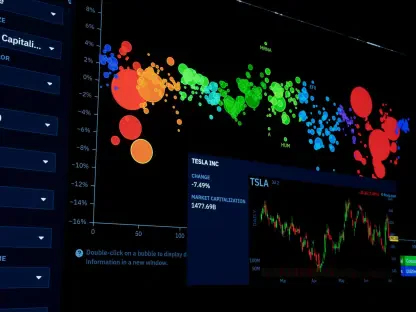

The transition from physical oil trading to financial derivatives has enabled retail participants to gain price exposure without the need for complex storage arrangements or logistics. In the high-volatility environment of 2026, where Brent crude has frequently fluctuated around the US$108 mark and West Texas Intermediate has tracked closely near US$105, these instruments have become essential tools for those looking to capitalize on energy market shifts. For Australian traders, the appeal of oil commodity trading lies in its ability to provide exposure to global geopolitical events and industrial demand cycles through a regulated and accessible framework. Unlike the traditional oil industry, which requires massive infrastructure for transport and refinement, the digital marketplace allows individuals to speculate on price movements using only a funded account and a stable internet connection. Under the watchful eye of the Australian Securities and Investments Commission (ASIC), the market has matured, offering a structured environment that emphasizes transparency and consumer protection. As global energy security remains a central theme in international discourse, understanding the mechanics of these financial products is the first step toward navigating the complexities of the modern commodity landscape with confidence and precision.
1. Select an Oil Investment Platform
The process of engaging with the oil market begins with the selection of a reliable investment platform that acts as the primary gateway to global energy exchanges. For participants in Australia, it is vital to ensure that the chosen provider is authorized and regulated by ASIC, which provides a layer of security through strict compliance standards, including the mandatory 10:1 leverage cap on commodity CFDs for retail clients. This regulatory framework is designed to prevent excessive risk-taking while ensuring that brokers maintain adequate capital reserves and transparent operational procedures. Beyond regulation, the technological prowess of the platform is a significant factor; traders require low-latency execution and high-speed data feeds to react to the rapid price swings characteristic of the 2026 oil market. Many successful traders prioritize platforms that offer local funding solutions, such as PayID or instant bank transfers, which allow for efficient management of Australian Dollar (AUD) balances without incurring the high costs of currency conversion typical of international transfers.
In addition to regulatory and financial considerations, the depth of analytical tools and educational resources provided by the platform can significantly influence a trader’s long-term performance. Advanced charting software that supports multiple timeframes, technical indicators, and real-time news integration is essential for identifying patterns in the volatility of WTI and Brent. A high-quality platform should also provide negative balance protection, an important safety feature that prevents a trader’s account from falling into a deficit during periods of extreme market gaps or liquidity shortages. Many Australian platforms now offer mobile-optimized applications, enabling users to monitor their positions and adjust risk parameters while away from their primary workstations, reflecting the 24-hour nature of global energy trading. By evaluating a broker’s reputation, fee structure, and the robustness of its risk-management suite, traders can establish a secure foundation that allows them to focus entirely on market analysis and execution rather than technical or administrative hurdles.
2. Pick WTI or Brent Crude
Choosing between the two primary benchmarks, West Texas Intermediate (WTI) and Brent Crude, is a strategic decision that depends on whether a trader wishes to focus on American domestic factors or broader international dynamics. WTI is the standard for U.S. oil, primarily extracted from shale fields in the Permian Basin and delivered to the critical storage hub in Cushing, Oklahoma. As a light and sweet crude, it is highly sought after by refineries for its efficient conversion into gasoline and diesel. In 2026, WTI prices are often a direct reflection of American economic health, U.S. oil production levels, and the weekly inventory fluctuations reported by the Energy Information Administration (EIA). Those who follow U.S. industrial policy, domestic infrastructure developments, and American consumer demand often find WTI to be the most responsive instrument for their trading style. Because WTI is landlocked, it can sometimes trade at a significant discount or premium to global prices if there are bottlenecks in the U.S. pipeline network or sudden spikes in domestic production.
In contrast, Brent Crude serves as the international benchmark, influencing the pricing of approximately two-thirds of the world’s traded oil. Sourced from North Sea fields, Brent’s coastal location makes it easily transportable by tanker, making its price highly sensitive to maritime logistics and geopolitical events across Europe, Africa, and the Middle East. For an Australian trader, Brent is often seen as the more globally relevant indicator, as it directly impacts fuel prices in the Asia-Pacific region and is the benchmark of choice for monitoring OPEC+ production decisions. In the current year of 2026, Brent has remained particularly sensitive to shipping disruptions in the Strait of Hormuz and the Red Sea, where even minor security concerns can lead to immediate price premiums. Understanding the “Brent-WTI spread” is also a common tactic; this price difference provides insight into the balance between American supply and global demand. Selecting the right benchmark involves aligning one’s market research with the specific geographic and economic drivers that are most likely to influence price action in the desired timeframe.
3. Perform Market Research
Effective market research in the oil sector requires a dual-pronged approach that synthesizes fundamental economic data with technical price analysis to form a coherent trading thesis. Fundamental research involves a deep dive into the supply and demand metrics that govern the energy world, such as the monthly production reports from the Organization of the Petroleum Exporting Countries (OPEC) and the International Energy Agency (IEA). In September 2026, the market experienced a sharp reaction when U.S. crude inventories increased by over 7 million barrels, defying analyst expectations and exerting downward pressure on prices despite ongoing supply concerns. This highlights the necessity of tracking the economic calendar for inventory releases, central bank interest rate decisions, and geopolitical summits that can alter the market’s trajectory in minutes. For Australians, monitoring the U.S. Dollar is equally important; since oil is priced in USD, a strengthening greenback can make the commodity more expensive for foreign buyers, potentially curbing demand and leading to lower prices even when supply remains constant.
Technical analysis complements fundamental data by providing a visual map of market psychology and historical price behavior. Identifying support and resistance levels is a foundational skill; for example, the US$100 level in 2026 has served as a major psychological pivot point where buying and selling interest frequently converges. Tools such as the Relative Strength Index (RSI) help traders identify if the market has become overextended in either direction, while moving averages can clarify the broader trend amidst the noise of short-term volatility. In the current high-frequency trading environment, many institutional algorithms are programmed to execute at specific technical levels, making these chart points self-fulfilling prophecies. Volatility indicators like the Average True Range (ATR) are also utilized to determine the appropriate distance for stop-loss orders, ensuring they are placed outside of normal market fluctuations. By combining the “what” and “why” of fundamental news with the “where” and “when” of technical charts, traders can move away from speculative guesswork toward a more disciplined and data-driven methodology.
4. Determine Your Trade Direction
Deciding whether to take a long or short position is the core operational decision in oil CFD trading, allowing participants to potentially benefit from market movements regardless of whether prices are rising or falling. A long position is taken when an analyst anticipates that the price of WTI or Brent will increase, perhaps due to signs of a global economic recovery, a cold winter increasing heating demand, or production cuts by major exporters. In this scenario, the trader enters a contract at a lower price and aims to exit at a higher one, with the difference representing the gross profit. During 2026, bullish sentiments have often been sparked by disruptions to major pipeline infrastructures, such as those in Saudi Arabia, which suddenly removed millions of barrels from the global supply chain. However, going long requires an awareness of the costs of holding positions over several days, as swap rates can impact net returns. It is essential to remain objective and ensure that a long bias is supported by actual data rather than just the momentum of the current trend.
Conversely, the ability to go short is a defining advantage of the CFD market, providing a way to profit during periods of oversupply or economic stagnation. A short position is initiated when a trader believes that oil prices are headed lower, often triggered by a sudden increase in shale output, a surprise inventory build, or a resolution to a long-standing geopolitical conflict. By selling the contract at a high price with the intent to “buy it back” at a lower level, the trader can capitalize on bearish market phases that would typically penalize traditional buy-and-hold investors. In the volatile environment of 2026, shorting has been a viable strategy during weeks where global recession fears have outweighed supply-side constraints. Short selling does come with unique risks, however, as there is no theoretical ceiling on how high a commodity price can climb, making strict exit strategies even more vital. By maintaining the flexibility to trade in either direction, Australian participants can adapt their strategies to the ever-shifting realities of the energy market, ensuring they are not sidelined during prolonged downward corrections.
5. Establish Risk Controls
Establishing robust risk controls is the most important safeguard for any trader, as the inherent volatility of oil can lead to rapid capital depletion if not managed with extreme discipline. The primary tool for risk management is position sizing, which involves determining the exact amount of capital to risk on a single trade based on the total account balance. In Australia, the 10:1 leverage limit for retail traders means that while a small amount of margin can control a much larger value of oil, the potential for magnified losses is equally high. Over-leveraging is a common error that many seek to avoid by ensuring that their margin levels are sufficient to withstand significant price swings without triggering a margin call. In the 2026 market, where daily moves of three to five percent are standard, a conservative approach to leverage is often the key to surviving the learning curve. By treating risk management as a non-negotiable part of every trade, participants can ensure that no single market event has the power to end their trading career.
Furthermore, the use of automated orders like stop-losses and take-profits is essential for maintaining emotional neutrality and protecting capital in a fast-moving market. A stop-loss order provides a hard exit point that automatically closes a trade if the market moves against the position by a pre-determined amount, preventing a small mistake from turning into a catastrophic loss. Conversely, a take-profit order ensures that gains are realized once a specific target is reached, preventing the greed-driven mistake of holding onto a winning position until the market reverses. These tools are particularly important for Australian traders who may be inactive during the highly volatile New York and London trading sessions. Additionally, understanding the impact of overnight funding costs is vital for those who hold positions for more than a single day, as these fees can add up and change the break-even point of a trade. A comprehensive risk plan also includes a clear set of rules for when to stay out of the market entirely, such as during periods of extreme illiquidity or when major economic data is due to be released.
6. Track Your Trade
The final stage of the trading process involves active monitoring and the disciplined management of open positions, as the 2026 oil market rarely stays static for long. Once a trade is live, the participant must remain alert to breaking news that could invalidate their original thesis, such as unexpected changes in OPEC+ production quotas or sudden shifts in maritime security. For an Australian trader, this often means checking the markets during the transition between the Asian and European trading sessions, as liquidity increases and new trends can emerge. Modern trading platforms facilitate this by providing real-time alerts and mobile-optimized interfaces that allow for the instant adjustment of stop-loss levels in response to new information. This phase is less about searching for new opportunities and more about protecting the current trade, ensuring that the initial risk-reward ratio remains favorable. It is a period that tests a trader’s mental discipline, requiring them to resist the urge to interfere with a well-planned trade due to short-term price noise.
Beyond immediate price tracking, the process of trade management includes a thorough post-market analysis once the position has been closed. Successful participants often keep a detailed log of their trades, documenting the entry and exit points, the rationale behind the decision, and the emotional state they were in during the process. This practice allows for the identification of recurring mistakes and the refinement of strategies over time, turning both wins and losses into valuable educational experiences. In 2026, where the market is heavily influenced by algorithmic trends and high-frequency data, being able to review one’s performance against historical benchmarks is a competitive advantage. Traders must also stay informed about any changes to the regulatory environment or platform-specific terms that could affect their future trades. By treating every trade as a data point in a longer journey, market participants can evolve their skills and adapt to the shifting dynamics of the global energy landscape, ensuring that their approach remains relevant in an ever-changing financial world.
7. Strategic Outlook for Energy Market Participants
The dynamics of the oil market in 2026 demonstrated that a sophisticated approach to commodity trading required a balance of regional awareness and global strategic thinking. Participants who succeeded during this period were those who recognized the diverging paths of WTI and Brent, utilizing the unique characteristics of each benchmark to hedge against different types of economic risk. The shift toward digital derivatives allowed for a level of agility that was previously impossible, enabling traders to pivot their strategies in response to real-time geopolitical developments and sudden changes in supply infrastructure. By prioritizing ASIC-regulated platforms and adhering to strict leverage and margin protocols, Australian traders were able to navigate periods of extreme volatility without exposing themselves to ruinous losses. The integration of advanced technical indicators with fundamental supply-demand analysis became the standard for those seeking to find consistent opportunities in the energy sector.
Strategic success also depended on the ability to remain disciplined during the rapid price spikes and corrections that defined the mid-2020s. The focus moved beyond simple price speculation and toward the mastery of risk-management tools that protected capital in a 24-hour global market. Traders who took the time to understand the intricacies of overnight funding, the impact of the U.S. Dollar on oil pricing, and the seasonal demand cycles were better prepared for the fluctuations of the 2026 landscape. Ultimately, the lessons of this period emphasized that while the technology for entering the market had become more streamlined, the core principles of thorough research and emotional control remained the most critical factors for longevity. As the energy market continued to evolve with the introduction of new technologies and shifts in global production, the most resilient participants were those who viewed trading as a continuous process of learning and adaptation within a highly regulated and professional framework.