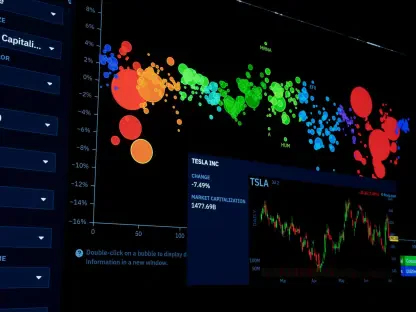

OKX has successfully integrated tokenized equities into its unified account system, enabling seamless transitions between spot stocks and complex derivatives. This milestone reflects a broader shift in the current financial landscape where the demarcation between traditional equity markets and the digital asset ecosystem has virtually vanished. At the heart of this transformation is the meteoric rise of tokenized U.S. stocks, which function as digital representations of shares in global powerhouses like NVIDIA, Tesla, Apple, and Microsoft. These instruments allow international investors to bypass the inherent hurdles of traditional brokerage infrastructure, opting instead to utilize stablecoins to gain immediate exposure to the world’s most influential companies. The primary appeal in 2026 lies in the elimination of geographic barriers and the implementation of 24/7 trading cycles, providing a level of agility that legacy exchanges have historically been unable to offer to the average retail or institutional participant.
The surge in popularity of these tokenized assets has introduced a new layer of complexity regarding how traders evaluate cost and efficiency across different venues. For the modern participant, identifying the most effective platform is no longer a simple matter of comparing a single commission percentage or a marketing headline. This analysis provides a deep exploration of the five primary exchanges—Bitget, MEXC, Kraken, Gate, and OKX—that have established themselves as the leaders in this space through competitive fee structures and innovative product offerings. By dissecting maker and taker fees, liquidity depth, and the utility of the underlying ecosystem, a unified understanding emerges regarding which platforms provide the greatest value for specific trading styles. The maturation of this market has shifted the focus from mere accessibility to the nuances of execution quality and capital efficiency in a globalized, digital-first economy.
Analyzing the Intricacies of Modern Trading Costs
In the specialized realm of tokenized stocks, the advertised commission is frequently just a superficial indicator of the true expense of a transaction. To accurately benchmark exchanges in 2026, one must investigate the various operational layers that influence the final execution price, beginning with the fundamental distinction between maker and taker fees. Maker fees are applied to those who provide liquidity by placing limit orders that sit on the book, while taker fees are charged to those who remove liquidity through immediate market orders. While the industry has generally converged toward a standard 0.10% fee, significant variations persist between platforms, including specialized rebate programs that actually pay traders for providing liquidity. These variations can drastically alter the profitability of high-frequency strategies where even a few basis points determine the long-term viability of a trading model.
Beyond the visible commissions, the impact of bid-ask spreads and execution slippage serves as a critical determinant of total trading expenses. The spread, representing the price gap between the highest bidder and the lowest seller, becomes a hidden tax on platforms where liquidity is fragmented or thin. In many documented cases, a “zero-fee” transaction can end up being significantly more expensive than a fee-bearing trade if the spread is wide or if the market depth is insufficient to absorb the order without moving the price. Slippage is an especially vital consideration for institutional-sized orders, where the difference between the expected price and the actual fill price can erode margins. Additionally, secondary operational costs such as stablecoin conversion rates and withdrawal fees for moving assets between different blockchain layers must be integrated into a comprehensive cost-benefit analysis for any serious portfolio manager.
Bitget: The Benchmark for Institutional Grade Liquidity
Bitget has effectively secured its position as the premier destination for sophisticated tokenized stock traders by prioritizing market depth and execution reliability. Although its baseline maker and taker fees of 0.10% align with the broader market average, the exchange offers a level of liquidity that remains unsurpassed in the current environment. Its proprietary rToken product line provides access to an extensive catalog of over 600 tokenized equities and exchange-traded funds, enabling users to maintain a diversified portfolio across sectors like renewable energy, biotechnology, and artificial intelligence. This breadth of choice ensures that investors do not need to fragment their capital across multiple platforms to achieve a balanced exposure to the global economy.
The most compelling argument for utilizing Bitget involves its superior execution quality, particularly when dealing with high-volume positions in volatile assets like Tesla or Amazon. Independent data from July 2026 confirms that Bitget’s slippage metrics are consistently lower than its competitors, often by a margin of nearly 50% for trades exceeding $50,000. This efficiency is maintained through deep order books that remain stable even during periods of intense market activity. Furthermore, Bitget has innovated the utility of its tokenized assets by allowing rTokens to serve as collateral for broader trading activities. This means a trader can hold a long-term position in NVIDIA while simultaneously using the value of those tokens to back margin positions or participate in yield-generating programs, maximizing the utility of every dollar held within the ecosystem.
MEXC: Disrupting the Market with Fee Compression
MEXC has successfully occupied a unique position in the 2026 landscape by offering the most aggressive and competitive commission structure available to the public. For participants whose primary objective is the absolute minimization of direct trading costs, MEXC stands out with its 0% maker fee and a remarkably low 0.05% taker fee. This structure has been specifically designed to attract high-frequency retail traders and those operating with smaller capital pools where traditional commissions would otherwise represent a significant percentage of their total equity. By lowering the entry barrier to nearly zero, the platform has fostered a vibrant community of active participants who prioritize cost-efficiency above all other metrics.
However, the pursuit of the lowest possible fees requires a nuanced understanding of the platform’s broader market dynamics. While the headline rates are industry-leading, MEXC frequently utilizes promotional campaigns to sustain these levels, leading to questions regarding the long-term permanence of such aggressive pricing. Additionally, while the exchange provides coverage for the most prominent technology and consumer stocks, its overall selection and the depth of its order books often trail behind institutional-focused competitors. Traders on MEXC must remain particularly observant of bid-ask spreads, as the potential for wider gaps in less liquid assets can occasionally offset the savings gained from the low taker fees. For those trading high-volume, blue-chip tokenized stocks, the platform remains an excellent choice for maximizing capital retention.
Kraken: Pioneering Rewards for Market Makers
Kraken has taken a distinct approach to the tokenized stock market by focusing on specialized incentives for those who contribute to the health of the platform’s order books. Through its xStocks initiative, Kraken has introduced a -0.02% maker fee on its professional-tier platform, effectively paying participants a rebate for adding liquidity. This revolutionary model flips the traditional fee structure on its head and has made Kraken the favored venue for professional market participants and algorithmic traders who utilize limit orders to execute their strategies. By rewarding patience and liquidity provision, Kraken ensures that its markets remain orderly and attractive for a wide range of participants seeking stable entry and exit points.
The platform also emphasizes accessibility and regulatory transparency, which has been a cornerstone of its reputation throughout the current year. With a minimum investment threshold of just one dollar, Kraken has democratized access to the “Magnificent Seven” and other high-value equities, allowing retail users to engage in fractional ownership with ease. Currently supporting over 130 tokenized assets, including major indices like the S&P 500 and the Nasdaq-100, the exchange provides a secure and highly regulated environment for both novice and experienced investors. The combination of 24/7 trading availability for many assets and a focus on high-security standards makes it an ideal choice for those who view tokenized stocks as a core component of a long-term, risk-managed investment strategy.
Gate: Streamlining Global Access for Retail Participants
Gate has established a reputation for providing a transparent and straightforward trading experience through its gStocks product line, which caters to a diverse global audience. By implementing a flat 0.10% fee for both maker and taker orders, the exchange eliminates the confusion often associated with tiered pricing or complex volume requirements. This simplicity is particularly appealing to retail investors who value predictability and ease of use in their financial operations. The platform offers a respectable selection of over 70 tokenized assets, notably including equities from international markets such as Hong Kong and South Korea, which provides a level of geographic diversity that is often missing from more U.S.-centric platforms.
The infrastructure behind gStocks is designed for 24/7 availability, ensuring that users can react to global economic shifts regardless of the time or their physical location. Fractional ownership is a core feature, with entry points starting as low as one USDT, allowing for highly granular portfolio management. While Gate may not offer the same level of institutional-grade liquidity as Bitget or the maker rebates found on Kraken, it serves as a highly reliable and accessible secondary venue. For users who are already integrated into the broader Gate ecosystem of decentralized finance and altcoin trading, the gStocks interface provides a seamless bridge to traditional corporate value without requiring additional KYC or onboarding processes.
OKX: The Evolution of Consolidated Financial Ecosystems
OKX has redefined the concept of a multi-asset platform by fully integrating tokenized stocks into its sophisticated Unified Account architecture. This system is specifically engineered to allow traders to move capital fluidly between diverse asset classes, ranging from spot cryptocurrencies to complex stock-linked derivatives, all within a single collateral pool. For the standard user tier, OKX provides a competitive 0.08% maker fee and a 0.10% taker fee, offering a slight but measurable cost advantage for those who prefer to provide liquidity. This focus on capital efficiency is further enhanced by a tiered VIP structure that rewards higher-volume traders with progressively lower costs, making it an attractive home for growing portfolios.
The platform’s focus is clearly centered on high-demand, high-performance assets, ensuring that the most popular global stocks are always available with 24/7 liquidity. The mobile trading experience on OKX is frequently cited as a benchmark for the industry, providing professional-grade charting and execution tools in a portable format. By consolidating the trading of traditional equities and digital assets into a single, high-performance environment, OKX has addressed the primary friction point for modern investors: the need for a unified view of their entire wealth. This integration allows for more complex risk management strategies, such as using stock holdings to hedge against crypto volatility or using stablecoin yields to fund a long-term accumulation of blue-chip tech stocks.
The New Standard: Continuous Markets and Real-Time Responses
As the data from these leading platforms is synthesized, several dominant trends have become clear in 2026, most notably the final obsolescence of traditional trading hours. There is now an industry-wide consensus that the old 9:30 AM to 4:00 PM EST window is a relic of a slower, less connected era. Every major exchange discussed here now provides either 24/7 or 24/5 access to tokenized U.S. equities, which has fundamentally transformed how global investors interact with corporate news. This transition allows for immediate reaction to earnings reports, CEO announcements, or macroeconomic data as it breaks, regardless of whether the physical New York Stock Exchange is open. The result is a more efficient market where information is priced in instantly across all time zones.
Furthermore, the sophisticated trader of 2026 has moved beyond a simple comparison of headline commissions, shifting their focus toward the concept of total execution cost. The market has matured to a point where liquidity and market depth are recognized as being just as valuable as low fees. The ability for an exchange to handle large orders without significant slippage has become the primary metric for institutional success. Simultaneously, the rise of stablecoin dominance, particularly with USDT remaining the primary denominator for tokenized stock pairs, has created a highly liquid and frictionless environment for moving value. This standardization has allowed for the rapid dissemination of capital and has solidified tokenized stocks as a permanent fixture in the global financial system, bridging the once-wide gap between blockchain technology and corporate equity.
Strategic Recommendations for Global Traders
The market landscape of 2026 demonstrated that the initial barriers between traditional finance and the blockchain had largely dissolved, leaving investors with a variety of specialized tools. For high-volume or professional participants, the evidence strongly favored Bitget due to its superior liquidity depth and the ability to utilize tokenized assets as active collateral for complex strategies. These traders found that the slightly higher nominal fee was a worthwhile investment for the significantly reduced slippage and broader asset selection. Meanwhile, retail investors who prioritized cost-saving above all else were best served by the aggressive fee compression offered by MEXC, provided they remained vigilant about the execution quality during periods of extreme market volatility.
Those who specialized in limit-order strategies identified Kraken as the most mathematically advantageous venue, benefiting directly from the maker rebate system that turned trading costs into a small but consistent revenue stream. For the generalist investor, the integrated ecosystems of OKX and Gate provided the most balanced experience, combining ease of use with the powerful benefit of a unified account structure. Moving forward, the most successful market participants should focus on a holistic approach to platform selection that accounts for their specific volume, order type, and need for capital utility. As tokenization continues to expand into new asset classes, maintaining accounts on multiple leading exchanges will remain a key strategy for ensuring the best possible execution in an increasingly competitive global marketplace.