
The global financial landscape has undergone a tectonic shift as cryptocurrency derivatives now represent the overwhelming majority of daily trading volume, eclipsing traditional spot markets through a combination of institutional adoption and advanced retail participation. By 2026, the transition from simply holding digital assets to managing complex contract-based positions has fundamentally redefined how value is perceived and traded within the decentralized economy. These specialized platforms enable participants to speculate on price movements through instruments like perpetual swaps and options without the logistical burden of managing private keys for every underlying coin. This evolution from basic asset ownership to sophisticated financial engineering marks a major milestone in the maturation of the crypto-financial ecosystem, catering to a diverse demographic ranging from aggressive retail speculators to massive sovereign wealth funds and insurance companies. The sheer scale of the market now dictates global liquidity patterns, making derivatives the primary engine driving price discovery across the entire digital asset spectrum.
This migration toward derivatives is fueled by a critical need for advanced capital management strategies that traditional spot markets simply cannot accommodate. Modern traders increasingly utilize these sophisticated instruments for risk mitigation through strategic hedging, allowing them to offset significant portfolio losses during inevitable bearish cycles. Furthermore, the widespread availability of leverage enables market participants to control substantial positions with relatively minimal collateral, while the ability to go “short” ensures that profit opportunities remain viable regardless of market direction. This inherent flexibility, combined with the convenience of unified account margins, makes derivatives the preferred choice for portfolio diversification in a fast-moving environment. As institutional players enter the space with higher frequency, the demand for capital efficiency has pushed exchanges to develop more robust margin systems, ensuring that even the most complex strategies can be executed with precision and safety.
Primary Instruments and Market Mechanics: Foundation of Trading
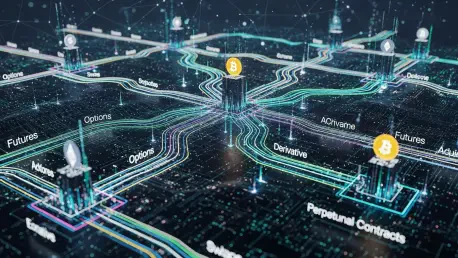
The contemporary market architecture is built upon three foundational contract types that serve distinct strategic purposes: perpetual futures, options, and traditional fixed-date futures. Perpetual futures, commonly referred to as “perps,” remain the most popular product due to their lack of expiration dates and their unique reliance on a sophisticated funding rate mechanism. This mechanism periodically transfers payments between long and short position holders to keep contract prices tightly aligned with the underlying spot market values, preventing long-term divergence. In 2026, these instruments have become so liquid that they often lead the spot price rather than following it, acting as a high-fidelity signal for market sentiment. The continuous nature of these contracts allows for long-term exposure without the “roll-over” costs associated with monthly or quarterly expirations, making them the primary tool for both day traders and long-term trend followers looking for maximum flexibility.
In contrast to the continuous nature of perpetuals, options have seen a massive surge in adoption among institutional hedge funds and sophisticated retail investors. These contracts provide a strategic way to manage downside risk by granting the right, but not the legal obligation, to execute a trade at a predetermined price. This functionality is particularly vital in a market that, while more mature, still experiences bouts of significant volatility. Meanwhile, traditional futures continue to serve as a vital tool for corporate entities and miners who require price certainty to hedge against long-term operational risks on fixed dates. The interplay between these three instruments creates a multi-layered market where risk can be sliced, diced, and traded with a level of precision that was previously reserved only for the most advanced traditional commodity markets. As a result, the 2026 derivatives ecosystem provides a comprehensive toolkit for any financial objective, whether it involves aggressive growth or conservative preservation.
Evaluating the Dominant Global Exchanges: Liquidity and Innovation
Success for a trading platform in the current era is defined by a rigorous set of operational standards that go far beyond simple brand recognition or marketing budgets. Deep liquidity is the most critical metric for any professional participant, as it ensures that large orders can be executed with minimal slippage and price disruption even during periods of intense market stress. Beyond mere trade execution, users now prioritize robust security infrastructure, including transparent insurance funds and secure, multi-signature custody solutions that protect against systemic failures. Binance maintains its position as the industry’s liquidity powerhouse, offering an expansive range of trading pairs and high-leverage options that attract the highest volumes globally. Its infrastructure is specifically designed for high-performance trading, featuring advanced risk-control integrations and low-latency execution engines that serve as the industry benchmark for reliability and scale across various geographic jurisdictions.
While Binance leads in volume, OKX has solidified its role as a leader in institutional innovation by focusing on the technical needs of professional market makers and large-scale funds. By implementing complex portfolio margin systems, OKX allows professional traders to maximize capital efficiency by offsetting margin requirements across various uncorrelated positions, effectively bridging the gap between centralized trading and decentralized financial logic. This approach has made it a favorite for those who run high-frequency strategies requiring maximum throughput and minimal capital drag. Similarly, Bybit has earned a reputation for maintaining a matching engine that remains responsive even during the most extreme volatility spikes, which is a non-negotiable requirement for professional scalpers. These platforms have moved beyond being mere interfaces; they are now complex financial hubs that offer integrated services ranging from automated strategy tools to deep-dive analytical dashboards that provide real-time insights into global capital flows.
Niche Leaders and Emerging Technological Shifts: Specialized Trading
In the highly specialized world of volatility trading, Deribit remains the undisputed authority, commanding a vast majority of the global open interest for Bitcoin and Ethereum options. Its analytical tools for volatility surface mapping and risk management are considered the industry standard for professional options strategies, attracting a clientele that focuses more on Greek-based trading than simple price direction. At the other end of the spectrum, MEXC serves as a high-leverage challenger, attracting active traders with its aggressive fee structure and access to a wide variety of volatile, emerging contracts that larger exchanges might be slower to list. This diversity in platform offerings ensures that every segment of the market has a dedicated venue, allowing for a healthy competition that drives down costs and forces continuous innovation in user interface design and backend reliability across the entire sector.
The technological landscape is also witnessing a significant move toward the professionalization of backend infrastructure, with a heavy emphasis on institutional-level APIs and complex risk-management interfaces. There is a notable rise in the popularity of decentralized derivatives exchanges (DEXs), which appeal to users seeking greater self-custody and autonomy away from centralized intermediaries. While centralized giants still dominate the market due to their superior execution speed and deep order books, the growth of decentralized options suggests a future where users have more choices regarding asset management. These decentralized platforms are increasingly integrating Layer-2 scaling solutions to narrow the performance gap with their centralized counterparts. This technological convergence is creating a more resilient market where traders can choose their preferred balance between the security of decentralization and the high-performance capabilities of centralized trading engines, ensuring the ecosystem remains robust against both technical and regulatory challenges.
Strategic Evolution and Future Considerations: Actionable Insights
The landscape of 2026 revealed a market that reached a state of mature complexity, where the selection of an exchange became a strategic decision based on specific risk tolerances and geographical requirements. The industry bifurcated into two distinct paths: compliant, highly regulated platforms that offered maximum legal protection for institutional players, and high-performance offshore exchanges that provided maximum trading flexibility for global speculators. Market participants who prioritized security and long-term stability gravitated toward regulated entities like Kraken Futures, while those seeking the highest possible leverage and the widest asset variety utilized specialized offshore engines. This division allowed the market to cater to a global audience with differing legal and financial needs, ensuring that liquidity remained fragmented but accessible through various cross-platform arbitrage strategies that kept global prices remarkably consistent.
Successful traders in this environment ultimately focused on the reliability of a platform’s matching engine during periods of intense market stress, as this became a non-negotiable requirement for professional engagement. The integration of institutional-grade tools and the expansion of regulatory frameworks provided a more stable foundation than in previous years, yet the fundamental risks of leverage remained a primary concern for risk managers. Investors were advised to diversify their exchange exposure and utilize platforms that offered transparent proof of reserves and insurance funds. As the sector continued to integrate with traditional finance, the ability to manage complex positions across both centralized and decentralized venues became a hallmark of the modern professional. Moving forward, the focus shifted toward capital efficiency and the development of even more sophisticated cross-margin products, ensuring that the crypto derivatives market remained the most dynamic and innovative sector in the global financial system.