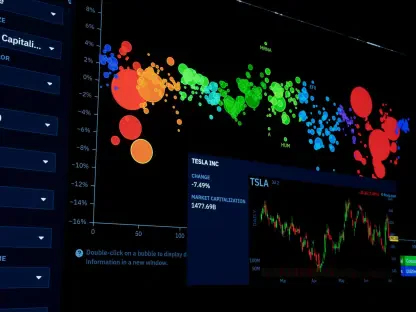
Market analysts are closely monitoring the 1:1 ratio between Uniswap’s spot trading volume and its total open interest as a sign of genuine market participation. The digital asset landscape has recently observed a significant upward trajectory for Uniswap (UNI), which posted a notable gain of 1.78% over a twenty-four-hour period and an even sharper 2.87% increase within a single hour of trading. On September 11, 2026, the token reached a valuation of approximately $6.1720, bolstered by a substantial market capitalization of $3.83 billion. This specific price action stands out remarkably from typical market-wide fluctuations, appearing to be driven by a unique combination of derivatives positioning and robust spot market activity rather than a general shift in investor sentiment toward broader altcoins. By examining the interplay between different trading vehicles, observers can see a cohesive narrative of growth that points toward a more sustainable structural shift in the asset’s current valuation.
Analyzing the Impact of Derivatives and Open Interest
A primary driver behind the current price action is the massive commitment of capital within the derivatives market, where Open Interest (OI) for UNI has climbed to $502.62 million. This figure represents a vast number of outstanding futures and options contracts that have yet to be settled, indicating that professional and institutional traders are actively betting on the token’s future price direction rather than simply holding the asset in static cold storage wallets. Such high levels of participation add a layer of complexity and depth to the current trading environment, suggesting that the move is backed by sophisticated hedging and speculative strategies. Unlike previous cycles where retail FOMO drove spikes, this increase in Open Interest points to a calculated influx of liquidity from entities that require deep order books. The presence of these institutional participants often leads to reduced volatility in the long run as they bring more balanced perspectives to the price discovery process.
The funding rate, which currently sits at a positive 0.0075%, further confirms a long-dominant market sentiment where demand for long positions remains high. In this scenario, traders holding long positions are paying a small premium to those holding short positions to keep their trades open, signaling a strong conviction that the price will continue its upward climb in the near term. Furthermore, the recent liquidation of $1.22 million in short positions has been described by market observers as orderly, suggesting that the upward pressure is being fueled by fresh buying interest rather than a chaotic and unsustainable short squeeze that would typically lead to a rapid retracement. When liquidations occur in such a controlled manner, it often signifies that the market is absorbing the selling pressure efficiently. This structural health is vital for maintaining the current price floors and provides a clearer path for the asset to challenge the next resistance levels without significant friction.
Validation Through Spot Market Volume
One of the most promising aspects of the current UNI rally is the validation provided by the spot market, which serves as the bedrock for any legitimate price appreciation. Often, cryptocurrency rallies fail prematurely because they are driven purely by excessive leverage without any actual purchase of the underlying token to provide a floor. However, Uniswap’s twenty-four-hour spot trading volume has reached $548.48 million, almost perfectly mirroring the total Open Interest in a way that is rarely seen in volatile markets. This alignment is a critical indicator for market analysts, as it suggests a healthy, two-sided market participation where real tokens are changing hands alongside speculative bets. This synchronicity implies that for every futures contract being opened, there is a corresponding level of activity in the actual exchange of UNI tokens. Such a balance prevents the market from becoming top-heavy with leverage, which is the most common cause of sudden and violent liquidations.
This alignment between spot volume and derivatives demand creates a much more stable foundation for the current price of $6.1720, allowing the asset to weather minor volatility. When the volume of actual trades tracks so closely with futures activity, it minimizes the risk of price manipulation by high-leverage traders who might otherwise dominate the price action with relatively small amounts of capital. The resulting environment is one of genuine participation, where the price reflects a broad consensus among different types of investors, ranging from retail buyers to sophisticated institutional players. This diversification of the investor base is essential for the maturity of the Uniswap ecosystem, as it indicates that the token is being used for its utility and governance features rather than just as a vehicle for gambling. Consequently, the price action feels less like a speculative bubble and more like a fundamental revaluation based on the platform’s actual usage and economic footprint.
Technical Momentum and Sentiment Metrics
Technical indicators such as the Relative Strength Index (RSI) provide further insight into whether the asset is becoming overheated or if there is still room for upward movement. The one-hour RSI currently stands at 56.61, indicating healthy intraday momentum that remains well below the overbought threshold of 70, which typically triggers a sell-off. More interestingly, the four-hour RSI sits at 42.45, suggesting that the medium-term trend has not yet reached a point of exhaustion and might even be considered slightly undervalued from a purely technical standpoint. This specific gap between short-term momentum and medium-term stabilization provides ample room for continued growth without the immediate threat of a sharp reversal. Traders often look for this kind of reset in the RSI to confirm that a rally has enough breath to sustain itself through several sessions. As long as these metrics stay within these neutral to slightly bullish bounds, the technical outlook remains exceptionally positive.
Broader market sentiment also supports a constructive outlook for Uniswap, as evidenced by the general climate of the digital asset industry. The Fear & Greed Index is currently sitting at 57, reflecting a state of mild optimism rather than the extreme euphoria that typically precedes a major market crash or a correction. Historically, the most sustainable rallies occur when the market is leaning toward positive sentiment without becoming overextended or irrational in its expectations. This balanced psychological backdrop allows individual assets like UNI to move based on their own fundamental and technical merits rather than being dragged down by systemic panic or inflated by unsustainable hype. Investors seem to be adopting a more cautious yet hopeful stance, which leads to more deliberate buying patterns and stronger support levels. This shift in the collective mindset is particularly important for decentralized finance tokens, which rely heavily on the continued trust and engagement of their user communities to maintain value.
The Path Toward Future Sustainability: Market Outlook and Support
For Uniswap to maintain its current trajectory and perhaps reach new highs, several key conditions must be met regarding capital retention and trading volume. Analysts suggested that Open Interest must stay above the $480 million floor to ensure that capital is not fleeing the ecosystem in search of higher returns elsewhere. Additionally, the funding rate needed to remain positive; a flip to negative territory would have indicated that short-sellers had regained control, likely leading to a price correction. Retaining high spot volume was also essential to ensure the market did not become overly dependent on leverage, which could lead to cascading liquidations if the price dipped suddenly. Monitoring these metrics provided a clear roadmap for understanding how the asset would behave in the face of changing market conditions. The focus remained on whether the decentralization of liquidity could continue to attract institutional interest, as this was the primary driver of the initial surge and remained the key to long-term stability.
In summary, the performance of UNI during this period served as a textbook example of a demand-led market structure that prioritized transparency and volume over hype. Unlike a random fluctuation, this move was backed by over half a billion dollars in committed capital and a balanced set of technical indicators that pointed toward sustained growth. While the reliance on derivatives meant the situation remained sensitive to shifts in leverage, the data points clearly toward a well-supported price level that reflected real demand. Moving forward, the most logical next step for market participants involved closely watching the $480 million Open Interest support level as a primary gauge for the longevity of this constructive rally. Investors who prioritized these structural metrics over speculative rumors found themselves better positioned to navigate the complexities of the decentralized finance sector. The emphasis on maintaining a 1:1 ratio between spot and derivatives volume offered a new standard for evaluating the health of high-cap altcoins in an increasingly professionalized market.