
The sheer scale of Microsoft’s A$25 billion investment in Australian digital infrastructure represents a monumental pivot that attempts to anchor long-term industrial value amidst a sea of short-term financial uncertainty. This financial commitment is the largest the organization has made in the region in forty years, signaling a profound shift in how global tech giants perceive the South Pacific. By pouring resources into this territory, Microsoft is not merely selling services but is actively constructing the backbone of a new economy.
The Landscape of Global AI Expansion and Key Industry Players
This massive influx of capital is driving a transformation where platforms like Microsoft Azure and Amazon Web Services (AWS) compete to establish dominance in a rapidly evolving market. While Microsoft leads with its record-breaking spending, other titans such as OpenAI and Anthropic are simultaneously weaving themselves into the national fabric through research partnerships and integrated services. This collective movement is repositioning Australia as a primary global hub for technological innovation rather than a secondary consumer market for foreign software.
To ensure this expansion remains stable and secure, government entities such as the Australian Signals Directorate and the Department of Home Affairs have taken on critical oversight roles. Their involvement is designed to harden national infrastructure against the sophisticated digital threats that often accompany such rapid industrial scaling. By collaborating with these “AI hyperscalers,” the Australian government is attempting to synchronize corporate ambition with the rigorous demands of national security and public safety.
Evaluating Industrial Advancement Against Market Uncertainty
Physical Infrastructure Growth vs. Equity Performance
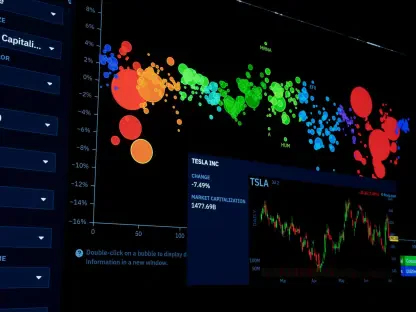
There is a striking contrast between Microsoft’s aggressive physical expansion and its recent performance on the stock market. On one hand, the company is projecting a massive 140% increase in Azure cloud capacity, supported by the construction of three new data centers to meet future demand. On the other hand, this industrial surge is occurring even as the company manages its most challenging quarterly financial performance since 2008. Investors are currently weighing the value of these massive concrete-and-silicon assets against the immediate volatility of tech stocks.
Human Capital Development vs. Revenue Model Disruption
The long-term social mandate to train three million Australians in AI skills by 2028 serves as a stabilizing force against the disruption of traditional software business models. As OpenAI and Anthropic introduce tools that change how code is written and services are delivered, established giants are forced to pivot their monetization strategies. This focus on human capital is an attempt to create a literate workforce that can sustain high-level AI operations even when market turbulence threatens the revenue streams of legacy software products.
Strategic Regulatory Alignment vs. Capital Expenditure Risks
Australia’s National AI Plan provides a “tech-friendly” regulatory environment that helps mitigate some of the inherent risks associated with multi-billion dollar capital outlays. Microsoft’s Memorandum of Understanding with the government serves as a strategic framework to align corporate expansion with national interests like cybersecurity and sustainable resource management. However, the sheer size of these investments creates a significant financial exposure if the global demand for AI-driven business transformations does not materialize at the expected pace.
Strategic Challenges and Implementation Obstacles
Scaling physical data centers involves more than just buying land; it requires navigating complex technical and environmental hurdles. The high water usage and energy requirements of Azure facilities have become a focal point for critics and planners alike. Ensuring that these massive installations do not strain local utility grids or deplete water resources is a primary operational challenge that could delay growth if not managed with extreme precision and transparency.
Furthermore, these investments represent a “high-stakes bet” where the speed of industrial construction might move faster than the market’s ability to price in the value of AI. There is a risk that the infrastructure will be ready before the broader business community has fully figured out how to integrate these tools into their daily operations. Deepening the collaboration with government security agencies also adds layers of complexity, as corporate entities must balance their proprietary interests with the transparency required for national defense.
Conclusion and Strategic Recommendations for Navigating Volatility
The divergence between robust industrial scaling and fluctuating financial valuations defined the landscape for major tech stakeholders. While Microsoft and its competitors built massive physical footprints, the market struggled to reconcile these long-term assets with the immediate pressure of quarterly earnings. This period demonstrated that the physical foundation of AI was expanding far more consistently than the stock prices of the companies building it. Decision-makers recognized that infrastructure health remained the most reliable indicator of future market stability.
Choosing between hyperscale providers like Azure or AWS required a careful evaluation of their specific regional infrastructure commitments and their alignment with national safety standards. Stakeholders who prioritized long-term infrastructure over short-term market reactions found themselves better positioned to weather the turbulence of the era. The Australian case study proved that when corporate expansion was tied to national interests and workforce development, the resulting ecosystem became more resilient to the inevitable cycles of global market volatility.