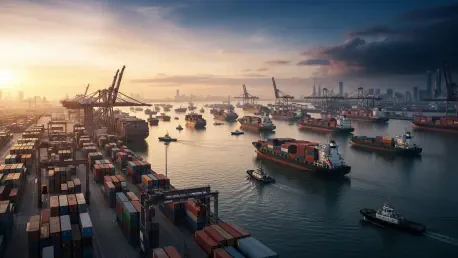

The global maritime landscape has entered a period of unprecedented volatility where the traditional mechanics of supply and demand are being overshadowed by sharp geopolitical friction. As of April 2026, the market is characterized by extreme fluctuations and contradictory signals, primarily driven by the ongoing conflict in the Middle East and its profound impact on vital maritime corridors. The status of the Strait of Hormuz remains the central theme of this crisis, acting as a flashpoint of uncertainty despite intermittent announcements regarding potential reopenings. A persistent U.S. blockade of specific regional ports and vessels further complicates the logistical landscape, forcing carriers to maintain expensive and time-consuming workarounds. While shipping lines have adapted their routing patterns over the past seven weeks to maintain a semblance of flow, these tactical adjustments have not resolved the underlying issues of extended transit times and poor schedule reliability that continue to plague the global network.
Regional Economic Impacts and Trade Burdens
The financial consequences of these persistent disruptions are particularly visible in American and Bermudian trade, where the cost of doing business has reached historic highs. Freight rates for goods originating in the Far East and destined for the U.S. West Coast have surged by more than fifty percent since February, creating a significant burden for importers and retailers. Locally, shipping entities such as Bermuda International Shipping, Somers Isles Shipping, and Bermuda Container Line have been forced to implement substantial fuel surcharges to offset rising operational costs. Shippers are currently facing a one hundred and fifty dollar per TEU maritime fuel surcharge following a seventy-five percent spike in global fuel prices. Additionally, inland surcharges of eighty dollars per container have been introduced to manage the volatile diesel prices affecting trucking and rail logistics. These cumulative costs are fundamentally reshaping the pricing strategies of businesses that rely on consistent maritime deliveries.
Beyond the immediate financial impact, the operational reality for international shipping companies involves navigating a complex web of legal and physical risks that have become the new normal. The necessity of avoiding high-risk zones has forced a massive reallocation of vessel capacity, leading to congestion in ports that were previously considered highly efficient. Many organizations are now investing in advanced predictive analytics to forecast fuel price swings and potential route disruptions, though these tools are often tested by sudden military escalations. This volatile environment has caused a shift in contract negotiations, with more shippers opting for spot-market flexibility over long-term fixed rates. However, this flexibility comes at a significant premium, as carriers prioritize clients who are willing to pay the highest surcharges to secure limited space on vessels. This trend reflects a broader move toward prioritizing supply chain security and resilience over the cost-saving measures that defined the previous decade.
Global Trade Lane Divergence and Strategic Resilience
While the trans-Pacific and Transatlantic lanes show no signs of retreating from their elevated pricing levels, a notable divergence has appeared in other major trade corridors. Data highlights that rates on routes from the Far East to North Europe and the Mediterranean have eased slightly, dropping between four and five percent in recent weeks. Analysts view this as a temporary seasonal fluctuation rather than a structural recovery of the maritime industry. The second quarter is historically the weakest period for container demand, providing a brief window of relief for European shippers before the peak season begins. Conversely, other regions continue to struggle with a lack of available equipment and high demand, preventing a uniform stabilization of global freight costs. This fragmentation of the market suggests that the relief seen in specific corridors is a result of temporary workarounds rather than a genuine resolution of the geopolitical conflicts that are driving the current global shipping crisis.
To address these challenges, forward-thinking logistics leaders prioritized the implementation of multi-modal transport strategies and the diversification of their global supply chains. They recognized that relying solely on maritime routes through volatile regions posed an unacceptable risk to business continuity and customer satisfaction. Stakeholders invested heavily in real-time visibility platforms that allowed them to track cargo and anticipate delays before they cascaded into major operational failures. By establishing secondary sourcing hubs closer to end markets, companies successfully reduced their dependence on long-haul shipping lanes that were subject to geopolitical blockades. These organizations also fostered closer partnerships with carriers to secure priority loading and more predictable pricing structures in an otherwise unstable market. Ultimately, the focus shifted from short-term cost reduction toward long-term resilience, ensuring that the supply chain could withstand the continued instability of the global political and economic landscape.