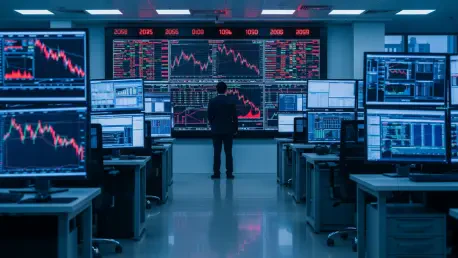

The bustling trading floors of Seoul’s Yeouido financial district have been transformed into a landscape of palpable anxiety as the benchmark KOSPI index spiraled into a technical bear market today. This dramatic shift represents a stark departure from the unbridled optimism that characterized the opening quarters of 2026, where the relentless pursuit of high-performance computing hardware pushed equity valuations to unprecedented heights. However, the current atmosphere is defined by a rapid liquidation of positions in semiconductor and technology sectors, leaving investors to navigate a sea of red as global sentiment turns sharply against growth-heavy portfolios. A confluence of cooling demand for high-end electronic components, persistent inflationary pressures, and a strengthening U.S. dollar has created a volatile environment that many professional analysts are struggling to stabilize. This retreat from risk assets is not merely a localized phenomenon but rather a reflection of a broader, systemic recalibration of how value is perceived in an increasingly uncertain global marketplace.
Tracking the Momentum: The Depth of the South Korean Market Decline
The KOSPI index experienced one of its most punishing single-day retreats in recent history, plunging by 5.5 percent to settle at approximately 7,231.63 by the closing bell. This decline is particularly significant because it marks a cumulative loss of over 20 percent from the recent peak, officially crossing the threshold that defines a bear market in technical analysis. Earlier in the year, the index was buoyed by a frenzy for memory chips and sophisticated artificial intelligence infrastructure, but those gains have been erased with surprising speed and intensity. This sharp correction has triggered a wave of margin calls and forced liquidations, further accelerating the downward momentum as automated trading algorithms reacted to the breach of key support levels. The psychological impact of seeing the benchmark index crumble so decisively has left many market participants reconsidering their long-term exposure to domestic equities while bracing for continued volatility in the coming weeks.
While the main board captured the most headlines, the tech-heavy KOSDAQ index followed a similarly harrowing trajectory, dropping more than 4 percent and falling below the psychologically critical 800-point mark for the first time in nearly ten months. Other major barometers of economic health, such as the KRX 100, were not immune to the carnage, posting substantial losses as investors abandoned growth-oriented stocks in favor of more liquid assets. This broad-based sell-off reflects a deep-seated caution among retail and institutional investors alike, who are now pricing in a much slower growth trajectory for the domestic technology sector. The erosion of market capitalization across these indices highlights the fragility of sentiment that was previously built on aggressive earnings forecasts that now appear increasingly detached from the current reality of slowing global demand. As these benchmarks continue to test new lows, the focus has shifted toward identifying where the eventual floor might lie.
Economic Pressures: Identifying the Primary Drivers of the Tech Sell-Off
A primary driver of this financial rout is the significant shift in how the global investment community views the immediate profitability of artificial intelligence ventures. After years of massive capital expenditures and soaring stock prices, a growing number of analysts are expressing concerns that the return on investment for AI-driven software and services is taking longer to materialize than previously anticipated. This skepticism has led to a major valuation reset, starting with big tech in the United States and rapidly spreading to the South Korean supply chain that provides the hardware foundation for these technologies. Domestic investors, fearing that the peak of the semiconductor cycle has already passed, have moved quickly to lock in profits or mitigate losses. This contagion effect demonstrates the high degree of interconnection between local electronics manufacturers and the global tech ecosystem, where a sneeze in Silicon Valley often leads to a cold in the Seoul markets.
Beyond the internal dynamics of the technology sector, macroeconomic and geopolitical pressures have intensified the selling pressure on South Korean assets. Foreign institutional investors have offloaded hundreds of billions of won in equity holdings, largely driven by the continued weakening of the domestic currency which recently touched 1,530.0 against the U.S. dollar. This currency depreciation makes South Korean stocks less attractive to international buyers while simultaneously increasing the cost of imported raw materials for local manufacturers. Furthermore, rising tensions in the Middle East have pushed energy prices higher, adding another layer of complexity to the inflation outlook and prompting a flight to safer havens like gold or treasury bonds. While domestic retail investors attempted to provide a buffer by purchasing stocks during the initial dip, their collective capital was simply not enough to offset the massive exodus of foreign funds seeking to reduce emerging market exposure.
Strategic Shifts: Navigating the Search for Market Stability
The nation’s premier semiconductor manufacturers, which often serve as a proxy for the overall health of the Korean economy, have been at the very center of the current market storm. Samsung Electronics and SK Hynix, both global leaders in high-bandwidth memory and advanced logic chips, saw their share prices tumble significantly as the tech rout deepened. SK Hynix in particular, which had enjoyed a stellar run due to its dominance in the AI memory space, became a primary target for aggressive profit-taking as fears of a glut in the semiconductor market began to surface. The correction was not limited to the chip sector, as other industrial pillars such as automotive manufacturing and battery production also faced double-digit percentage declines. This suggests that the sell-off is not just a localized tech bubble bursting, but a more comprehensive reassessment of the country’s export-oriented economic model in a world characterized by shifting trade alliances and cooling consumer spending.
In stark contrast to the widespread devastation seen in the growth sectors, a small selection of defensive and utility-based stocks managed to offer a modicum of stability during the session. Companies such as Korea Electric Power and major telecommunications providers were viewed by some as temporary safe havens, owing to their steady cash flows and the essential nature of the services they provide to the public. These firms typically perform better in high-interest rate environments where investors prioritize dividends and earnings consistency over the potential for explosive capital gains. This rotation into value-oriented assets indicates a tactical shift in investor strategy, moving away from the high-risk, high-reward bets of the previous two years. While these gains were relatively modest and unable to lift the broader indices, they serve as a reminder that capital does not always leave the market entirely; rather, it often seeks out sectors that are less vulnerable to the cyclical downturns of the tech industry.
The transition into a bear market served as a wake-up call for those who believed the technology-led rally could continue indefinitely without a significant correction. Investors who prioritized diversification and maintained a focus on fundamental value were generally better positioned to weather the initial shock than those who were over-leveraged in speculative growth plays. Looking ahead, the focus shifted toward identifying the catalysts that could spark a genuine rebound, such as a stabilization in the currency markets or a clear resolution of geopolitical conflicts. The lessons learned during this volatile period highlighted the necessity of rigorous risk management and the importance of looking beyond the hype of emerging technologies. While the immediate outlook remained clouded by uncertainty, the eventual stabilization of the KOSPI provided a foundation for a more disciplined and sustainable approach to domestic equity investment that favored long-term resilience over short-term gains.