
The definitive agreement for SpaceX to acquire a nationwide spectrum portfolio from Grain Management marks the precise moment the company transitioned from a launch provider into a direct competitor of the American telecommunications establishment. This strategic move involves 14 MHz of paired spectrum in the 800 MHz band, allowing the company to function as a standalone carrier rather than just a technical partner for existing mobile operators. The sudden shift in market dynamics immediately impacted the valuation of traditional giants like AT&T and Verizon, reflecting a broader industry realization that space-based infrastructure is no longer just a supplementary tool for rural coverage.
Introduction to SpaceX Direct-to-Device Technology
The system operates on the principle of using Low Earth Orbit satellites to provide a direct link to standard, unmodified smartphones. This technology removes the need for expensive proprietary ground equipment or specialized hardware within the phone itself. By integrating eNodeB modem technology directly into the satellite bus, SpaceX has successfully simulated the behavior of a terrestrial cell tower from hundreds of miles above the planet.
This transition from a satellite partner to a standalone carrier disrupts the traditional reliance on terrestrial networks. While previous efforts focused on filling coverage gaps in partnership with carriers like T-Mobile, the current model positions SpaceX as an independent utility. This evolution is crucial for closing the global connectivity gap, offering a persistent signal that does not rely on the physical placement of thousands of ground towers in difficult terrain.
Technical Architecture and Feature Analysis
Low-Band Spectrum and Signal Penetration
The acquisition of the 800 MHz spectrum from Grain Management provides a critical layer of signal reliability. Low-band frequencies are prized for their ability to travel long distances and pass through physical obstacles such as foliage and building materials. By controlling these proprietary nationwide frequencies, SpaceX has moved away from piggybacking on external networks, allowing for a more consistent and controlled user experience across the United States.
Furthermore, this spectrum utility allows the network to maintain a broader footprint per satellite. When compared to higher frequency bands, the 800 MHz signal remains coherent over a larger surface area, reducing the complexity of the hand-off process between moving satellites. This frequency control is a significant differentiator that provides SpaceX with the independence required to compete on quality rather than just availability.
The Starlink V3 Satellite Constellation
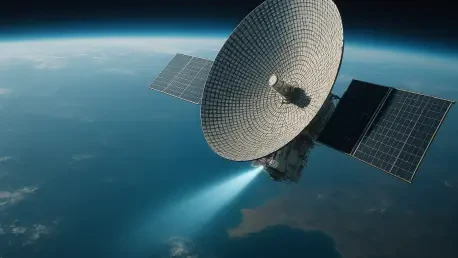
The Starlink V3 satellites represent a massive leap in orbital engineering, featuring phased array antennas that are significantly larger and more powerful than previous iterations. These antennas are designed to focus narrow, high-gain beams toward individual handsets, managing the Doppler shift and signal latency inherent in high-speed orbital flight. This architecture allows the constellation to maintain stable data transfer rates that rival traditional 4G connections in areas where infrastructure is sparse.
Network density is another pillar of this architecture, with a planned constellation exceeding 11,000 units. This volume ensures that at any given moment, multiple satellites are visible from any point on the ground, facilitating seamless transitions as satellites move across the horizon. This level of redundancy minimizes signal dropouts, a historic problem for satellite telephony, and provides a resilient mesh that adapts to fluctuating user demand in real time.
Recent Innovations and Industry Shifts
The strategic pivot toward becoming a primary mobile service provider has strained traditional partnerships within the telecom sector. As SpaceX moves to compete directly with AT&T and Verizon, the industry is witnessing the breakdown of collaborative models in favor of a “carrier-neutral” approach. This shift forces terrestrial operators to choose between building expensive ground infrastructure or developing their own expensive satellite constellations to keep pace.
Technological convergence is now the dominant trend, as the lines between urban high-density networks and rural space-based coverage begin to blur. SpaceX is successfully merging these two worlds by providing a unified service that requires no change in consumer behavior. This evolution suggests that the future of telecommunications will be defined by whoever controls the most efficient hybrid of terrestrial and orbital assets.
Real-World Applications and Use Cases
One of the most immediate benefits of this technology is the elimination of “no-zone” areas across the country. In remote mountainous regions or expansive maritime environments where ground towers are geographically unfeasible, SpaceX provides a reliable communication link for voice and data. This ubiquity ensures that travelers and workers in isolated areas are never truly disconnected from the global network.
In the realm of emergency services, the D2D network serves as a vital backbone during disaster recovery. When hurricanes or wildfires destroy terrestrial towers, the satellite network remains operational, allowing first responders and victims to coordinate rescue efforts without delay. Additionally, enterprise users are leveraging the network for global asset tracking and the management of autonomous vehicles, ensuring that industrial sensors remain active regardless of their proximity to a city.
Technical and Regulatory Challenges
Despite these advancements, signal penetration in dense urban environments remains a technical hurdle. While the 800 MHz band is effective, the sheer density of concrete and steel in modern cities can still block satellite signals, potentially necessitating the use of hybrid ground towers to ensure indoor reliability. SpaceX must balance the expansion of its orbital fleet with the practical realities of urban physics to achieve true nationwide dominance.
Regulatory scrutiny is also intensifying as the Federal Communications Commission evaluates spectrum transfers and potential anti-trust issues. Managing an 11,000-unit constellation creates significant concerns regarding orbital congestion and the risk of physical collisions in space. Furthermore, the company must ensure that its high-powered satellite transmissions do not interfere with existing terrestrial networks, a delicate technical balance that requires constant oversight.
Future Outlook and Strategic Projections
The path toward 5G D2D connectivity is the next major milestone for the industry. Anticipated breakthroughs in satellite hardware will eventually allow for the high-speed data rates required for video streaming and low-latency gaming directly via satellite. As hardware becomes more efficient, the reliance on ground-based infrastructure will likely diminish further, potentially leading to a total shift in how mobile plans are marketed and sold.
The potential monopolization of the space-to-phone market remains a significant point of discussion. With a valuation exceeding $2 trillion and a vertically integrated model that includes its own launch vehicles, SpaceX possesses a competitive advantage that is difficult for any terrestrial carrier to replicate. This could lead to a fundamental consolidation of the telecom industry, where a single entity provides the infrastructure for global safety, commerce, and communication.
Final Assessment of SpaceX D2D Technology
The technical review of the SpaceX Direct-to-Device ecosystem showed that the company successfully moved beyond the limitations of traditional satellite internet. The acquisition of nationwide spectrum provided the essential frequency needed to challenge the dominance of terrestrial carriers. This transition indicated that the reliance on ground-based towers was no longer the only viable path for nationwide mobile coverage.
The integration of eNodeB technology into the V3 satellites demonstrated a high level of engineering maturity that translated into reliable real-world performance. Future implementations should focus on improving indoor penetration and expanding 5G capabilities to maintain this competitive edge. Ultimately, the analysis suggested that the telecommunications landscape entered a new era where orbital infrastructure functioned as the primary backbone for global mobile connectivity.