
The landscape of American energy production is undergoing a massive transformation as independent operators seek the defensive advantages of scale in an increasingly volatile global market. Devon Energy, an Oklahoma City-based powerhouse, recently signaled the beginning of a new era with its first-quarter 2026 performance results, which serve as the final chapter of its history as a standalone entity. This period was characterized by a fascinating contradiction: the company showcased its operational prowess by exceeding production targets and maintaining strict cost controls, yet it simultaneously grappled with a significant revenue miss that momentarily dampened market enthusiasm. The duality of these results highlights the complexity of the current energy sector, where technical efficiency must constantly battle the headwinds of fluctuating commodity prices and investor expectations. As the industry watches Devon transition toward its definitive merger with Coterra Energy, these results offer a blueprint for how a legacy producer intends to maintain its relevance and profitability.
Financial Realities and Operational Milestones
Analyzing the Disconnect Between Earnings and Revenue
The fiscal data emerging from the first quarter of 2026 presented a nuanced picture that forced investors to look beyond simple top-line figures to understand the company’s true health. Devon Energy reported adjusted core earnings of $641 million, translating to $1.04 per diluted share, which notably outpaced the analyst consensus of $1.01. This bottom-line victory suggested that management had successfully optimized its internal processes and squeezed more value out of every barrel produced. However, the optimism was tempered by a reported revenue of $3.81 billion, falling significantly short of the $4.18 billion estimated by market analysts. This discrepancy, totaling nearly $370 million, acted as a primary catalyst for a 1.6% decline in share price immediately following the announcement, as the market reacted to the unexpected gap between operational output and realized financial gains. This gap serves as a reminder of the inherent risks in a sector so closely tied to global pricing.
Despite the initial investor caution sparked by the revenue shortfall, the underlying cash generation of the organization remained remarkably resilient throughout the quarter. Devon recorded $1.7 billion in operating cash flow and a healthy $816 million in free cash flow, figures that were buoyed by a highly disciplined approach to capital investment. The firm’s total capital expenditures for the period were $848 million, which represented a 6% reduction compared to the midpoint of the company’s previous guidance. Executives attributed this spending efficiency to more favorable facility costs and a strategic shift in the timing of specific infrastructure projects. By maintaining such a lean capital profile, Devon demonstrated its ability to protect its balance sheet even when revenue targets were not fully realized. This financial fortitude is particularly important as the company prepares for the integration of new assets, ensuring it enters the next phase of its corporate life with a high degree of liquidity and low relative debt.
Driving Efficiency Through Technical Innovation
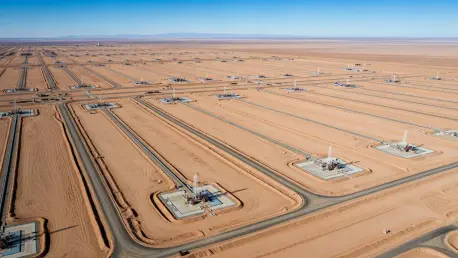
Operationally, the first quarter was a period of high intensity and technical achievement for Devon, particularly within its core oil production segments. Total production averaged 833,000 barrels of oil equivalent per day, hitting the bullseye of the company’s internal guidance and confirming the reliability of its asset base. A specific area of strength was oil production, which reached 387,000 barrels per day, touching the upper limit of the guidance range and making up 46% of the total volume mix. This focus on high-margin liquids has been a deliberate strategy to maximize profitability per unit. The Delaware Basin continued to serve as the engine room for this growth, absorbing the lion’s share of technical attention and capital. The success in this region underscores the importance of high-quality acreage in an environment where drilling costs remain a major concern. By concentrating resources where they are most effective, the company has managed to maintain its competitive edge.
To maintain this production cadence, Devon utilized an average of 19 drilling rigs and six completion crews throughout the quarter, resulting in 110 gross operated wells being brought online. A significant trend highlighted in the report was the continued extension of lateral lengths, with the average well now stretching to 10,500 feet. These longer laterals are essential for maximizing reservoir contact and improving ultimate recovery rates, allowing the company to extract more resources from a single surface location. Beyond its active drilling program, the firm also invested $151 million in leasehold acquisitions, primarily focused on bolstering its position in the Delaware Basin. This proactive approach to land management ensures a deep inventory of future drilling locations, providing a long-term runway for growth that is not dependent on immediate market shifts. The combination of technical precision in the field and strategic expansion of the acreage footprint has established a solid operational foundation for the future entity.
The Strategic Impact of the Coterra Integration
Building a Global Shale Powerhouse
The most transformative event on the immediate horizon is the all-stock merger with Coterra Energy, a transaction that was finalized following shareholder approval in May 2026. This merger is not a standard acquisition but a strategic combination designed to create one of the most formidable shale operators on the planet. By merging these two premier portfolios, the new Devon Energy will possess an unmatched scale in the Delaware Basin, which is widely considered the most productive oil play in the United States. The companies have already identified $1.0 billion in sustainable annual pre-tax synergies that they expect to fully realize by the end of 2027. This massive reduction in overhead and operational costs will be achieved through the consolidation of logistics, shared infrastructure, and increased bargaining power with oilfield service providers. Under the final terms, Devon shareholders will retain a 54% majority stake in the combined venture, reflecting the company’s strong position as the senior partner in this landmark industry consolidation.
The strategic rationale for this deal extends far beyond simple cost-cutting; it is about creating a “weather-proof” business model that can thrive across a variety of price environments. In an era where investors are demanding higher returns and lower risk, the enhanced scale provided by the Coterra assets will allow for more stable free cash flow and a more predictable growth trajectory. The combined entity will have the flexibility to shift capital between different basins and commodity types, such as natural gas and crude oil, depending on which offers the best returns at any given moment. This diversification is a key component of the merger’s value proposition, offering a level of resilience that smaller, single-basin operators simply cannot match. As the merger closes, the focus will shift rapidly toward the integration of personnel and technology, with the goal of creating a unified corporate culture that prioritizes efficiency and shareholder value above all else. This move represents a significant consolidation of power in the Permian region.
Navigating the Path to Long-Term Profitability
A hallmark of Devon’s strategy throughout early 2026 has been its unwavering commitment to a shareholder-friendly capital allocation framework. Even as it navigated the complexities of a major merger, the company managed to repurchase $69 million in shares during the first quarter as part of its ongoing $5 billion program. While these repurchases were temporarily paused to ensure a smooth transition into the Coterra deal, the board of directors has already signaled its intent to launch an even more aggressive buyback program once the merger is complete. The target for this new authorization is expected to exceed $5 billion, which, combined with a reliable dividend of $0.315 per share, places Devon among the leaders in the industry for returning capital to its owners. This approach is designed to attract a broader base of institutional investors who prioritize consistent income and share price appreciation. The company’s low leverage, evidenced by a net debt-to-EBITDAX ratio of just 0.9 times, provides the financial security necessary to maintain these payouts.
Looking toward the immediate future, the company is also focused on a comprehensive business optimization plan that is already delivering results ahead of its original schedule. This initiative aims to improve annual pre-tax free cash flow by $1 billion, and the upcoming repayment of a $1 billion term loan will serve as a major milestone in this process. By reducing interest expenses and strengthening the balance sheet, Devon is effectively lowering its break-even price, making it more competitive in a global market. For the second quarter of 2026, the firm expects production to continue its upward trend, with targets set between 851,000 and 868,000 barrels of oil equivalent per day. While full-year guidance has been withheld until the Coterra assets are fully integrated, the internal momentum is clearly positive. The focus remains on maintaining high oil volumes and low unit costs, ensuring that the company enters its next phase as a lean, highly profitable organization capable of setting new standards for the entire shale industry through its disciplined management.
The strategic integration of Coterra Energy into the Devon portfolio was a decisive move that successfully shifted the company’s trajectory toward becoming a dominant global energy entity. Investors and industry analysts monitored the transition closely, noting that the emphasis on large-scale consolidation provided a necessary hedge against market volatility. The firm reached its synergy targets ahead of schedule, proving that the logistical and operational overlap between the two organizations offered more value than originally projected. Moving forward, the most effective path involves a continued focus on the Delaware Basin’s high-margin assets while aggressively deploying the new $5 billion share repurchase program. Management should prioritize the full repayment of outstanding high-interest debt to further lower the corporate break-even point. These steps established a durable framework for shareholder returns that remained resilient even as commodity prices shifted. Ultimately, the merger did not just increase the company’s size; it fundamentally improved its capital efficiency and technical capabilities for the long term.