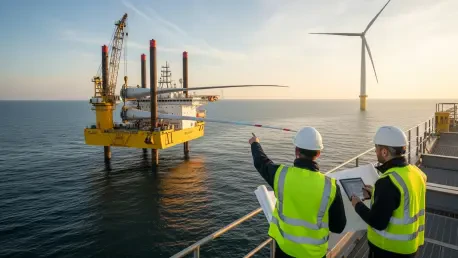

The landscape of international construction arbitration is currently undergoing a profound transformation as the global community accelerates its departure from fossil fuels toward a net-zero economy. For decades, the resolution of disputes in large-scale infrastructure projects has been a cornerstone of legal practice, characterized by multinational corporations seeking neutral arbitral forums to navigate the complexities of cross-border engineering. Historically, these conflicts were predictable in their origin, typically revolving around “delay and disruption” claims where parties argued over who was responsible for project stalls and how liquidated damages should be calculated. However, the technical nature of these disputes is changing rapidly as the industry shifts its focus toward renewable energy assets like massive offshore wind farms, complex green hydrogen electrolyzers, and sprawling solar arrays. These new technologies bring a set of unique legal and financial stressors that the traditional construction contract was never fully designed to handle, creating a high-stakes environment where old legal precedents are being tested against new technological realities.
The shift toward decarbonization has fundamentally altered the risk profile of energy projects, introducing a level of uncertainty that differs significantly from the well-trodden paths of coal or gas plant construction. In 2026, the industry is seeing a convergence of experimental engineering and rigid financial structures, which often leads to a disconnect between the ambitions of project sponsors and the practical capabilities of contractors. This friction is further complicated by the integration of Environmental, Social, and Governance (ESG) mandates, which have evolved from voluntary reporting standards into binding contractual obligations. As these factors collide, the role of the arbitrator is expanding, requiring not only a deep understanding of contract law but also an appreciation for the nuances of emerging green technologies and the volatile financial markets that support them. The following analysis explores how these evolving dynamics are reshaping the future of construction arbitration and what stakeholders must do to mitigate the risks inherent in the energy transition.
The Shifting Paradigms of Project Financing
The unprecedented scale of capital required to fund the energy transition has led to a surge in project financing models, where investment banks and private equity firms become the primary drivers of infrastructure development. This influx of liquidity is a double-edged sword; while it provides the necessary fuel for green innovation, it also imposes a level of financial oversight that can feel restrictive to the engineering professionals on the ground. In many modern renewable projects, the financier is no longer a silent partner but an active participant in the negotiation of Engineering, Procurement, and Construction (EPC) contracts. This shift means that risk allocation is often dictated by those who view the project through the lens of a balance sheet rather than a blueprint. Consequently, the legal frameworks governing these projects are becoming increasingly tilted toward protecting capital at all costs, often at the expense of the operational flexibility needed to handle the unpredictable nature of renewable energy construction.
The Disconnect: Financiers vs. Engineers
The emergence of special purpose vehicles (SPVs) as the standard entity for managing renewable energy assets has created a distinct hierarchy on the construction site, often placing financial stakeholders at the top of the decision-making chain. These entities are frequently staffed by financial experts whose primary objective is to satisfy the stringent requirements of lenders and shareholders, often leading to a focus on immediate financial metrics such as quarterly projections and internal rates of return. This prioritization can lead to a fundamental disconnect with the contractors and engineers who are tasked with the physical execution of the project. While an engineer may see the need for a tactical delay to ensure the structural integrity of a wind turbine foundation under unexpected seabed conditions, a financier may only see a breach of the completion schedule that triggers a debt service default. This lack of a “seasoned employer” perspective—historically provided by utility companies with deep technical roots—means that projects are often managed with a rigidity that ignores the practical volatility of construction.
This friction is intensified by the fact that many project sponsors today lack the in-house technical expertise to evaluate the validity of contractor claims regarding unforeseen site conditions or technical failures. Instead of engaging in a collaborative problem-solving process, these sponsors often rely on external consultants who are incentivized to protect the lender’s interests above all else. This dynamic transforms the project environment into a zero-sum game, where every technical setback is viewed through the prism of contractual liability rather than as a hurdle to be overcome through mutual cooperation. As a result, disputes that could have been resolved through early mediation or technical adjustment are instead escalated to formal arbitration, where the central question is not how to fix the engineering problem, but who should pay for the resulting financial shortfall. This culture of litigation is particularly prevalent in 2026 as the pressure to deliver green energy on tight timelines reaches a fever pitch.
Contractor Vulnerability: The Third Layer of Financing
A troubling trend has emerged in the current project finance landscape where the contractor is increasingly viewed as an involuntary “third layer of financing” for underfunded or overly ambitious projects. Because many renewable energy SPVs are “empty shells” with limited contingency reserves, any unforeseen event such as a sudden spike in material costs or a labor shortage can quickly exhaust the available project funds. When sponsors are unable or unwilling to inject more equity, they often look to the contractor to bridge the gap. This is frequently achieved through the aggressive levying of liquidated damages or by calling performance bonds at the first sign of a schedule slip. By forcing the contractor to continue work while withholding payments or clawing back funds through penalties, the employer effectively uses the contractor’s balance sheet to keep the project solvent. This practice places immense pressure on the contractor’s cash flow, which is already notoriously thin in the construction industry, often hovering between 2% and 5% margins.
The long-term consequences of this adversarial financing model are often catastrophic for all parties involved, leading to a cycle of insolvency and protracted legal battles. When a contractor is pushed to the brink of bankruptcy by an employer’s refusal to recognize legitimate cost overruns or delays, the project typically grinds to a halt, leaving the lender with a half-finished asset and the contractor with a mountain of debt. In the ensuing arbitration, tribunals are often faced with the difficult task of “unscrambling the egg” to determine which party’s financial maneuvering led to the project’s collapse. The contractor will argue that the employer’s actions constituted a breach of the implied duty of cooperation, while the employer will point to the strict “fixed-price, fixed-date” nature of the EPC contract. This dynamic highlights a critical flaw in current renewable energy financing: the failure to account for the inherent risks of pioneering new technologies, which should ideally be shared more equitably between the capital providers and the builders.
The Technical Dilemma of Experimental Design
In the traditional world of fossil fuel power generation, the concept of a “proven design” was the gold standard for risk mitigation, ensuring that every valve, turbine, and pipe had been tested over decades of operation. However, the rapid pace of the energy transition has effectively stripped away this safety net, forcing the industry to deploy technologies that are still in their infancy. Whether it is the scaling up of offshore wind turbines to heights previously thought impossible or the integration of high-pressure hydrogen storage systems, the industry is operating on the “green frontier” where the blueprints are often updated even as the concrete is being poured. This lack of technological maturity introduces a layer of performance risk that was largely absent from the stable, repetitive projects of the past. When these experimental designs fail to meet their theoretical output targets, the resulting disputes center on whether the failure was a result of poor workmanship or a fundamental flaw in the underlying technology.
Innovation Hazards: Scaling Beyond the Lab
The urgency of the global climate crisis has created an environment where the transition from pilot project to industrial-scale deployment is happening at breakneck speed, often bypassing the traditional multi-year testing phases required for industrial equipment. This pressure for innovation means that many renewable projects utilize systems that, while theoretically sound, have not been adequately tested under the harsh environmental stresses of real-world operation. For example, a biomass conversion plant may perform perfectly with a specific grade of feedstock in a controlled test, only to suffer from unexpected corrosion and mechanical failure when faced with the chemical variability of bulk agricultural waste. Similarly, the actual energy output of large-scale solar arrays can be significantly affected by micro-climatic factors that were not fully captured in the initial meteorological models used to secure project financing. These performance gaps create a direct conflict between the contractor’s guarantee of “fitness for purpose” and the reality of working with unproven systems.
The legal fallout from these technical failures often involves a complex web of claims regarding the “provenness” of the technology and the accuracy of the data provided during the bidding phase. If a facility fails to reach its guaranteed capacity, the project company may face severe penalties from the grid operator or lose lucrative government subsidies, prompting them to seek full indemnity from the contractor. The contractor, in turn, will often argue that they were hired to build a specific design provided by the employer and that the failure is inherent to the technology itself rather than the quality of the installation. In 2026, as more projects reach the operational phase, arbitration tribunals are increasingly being called upon to act as technical referees, tasked with determining where the boundaries of “reasonable engineering” end and where the risks of “experimental innovation” begin. This requires a shift in arbitral expertise, as the focus moves from simple contract interpretation to a deep dive into fluid dynamics, material science, and data modeling.
Design Risk: Responsibility and Variations
One of the most contentious issues in modern construction arbitration is the allocation of design risk, particularly when an employer provides a preliminary design that the contractor is then expected to “validate” and complete. In the context of the energy transition, this “hand-off” point is often blurred because the technology is so new that neither party fully understands its long-term failure points. If a contractor accepts a design and it subsequently fails, the legal question revolves around whether the contractor had a duty to warn the employer of the design’s deficiencies. Conversely, if the contractor identifies a flaw and proposes a fix, the employer may reject the modification as an unnecessary “variation” that would increase costs and delay the schedule. This creates a “catch-22” for the contractor: proceed with a potentially flawed design and risk future liability, or insist on changes and risk an immediate dispute over time and money.
The resolution of these disputes often hinges on the precise wording of the contract’s “defect regime” and how it interacts with general indemnity clauses. Employers frequently attempt to use broad “diligent performance” requirements to hold contractors liable for technical failures that were not specifically covered under the warranty provisions. For instance, if a new type of floating wind platform develops structural cracks after two years of operation, is that a “latent defect” attributable to the contractor’s welding, or is it a failure of the employer’s experimental design? Without clear contractual definitions of what constitutes a “proven design,” these cases often devolve into a battle of experts, with each side presenting thousands of pages of technical data to support their version of the truth. To avoid this, parties are increasingly moving toward more sophisticated “early warning” mechanisms in their contracts, but the fundamental tension between the desire for state-of-the-art technology and the need for reliable performance remains a primary driver of arbitration.
The Rise of ESG Considerations in Contracts
The construction industry is currently responsible for nearly 40% of global energy-related carbon emissions, a reality that has placed the sector under intense scrutiny from regulators, investors, and the public. As a result, the energy transition is no longer just about the finished product—the wind farm or the solar park—but also about the carbon footprint and social impact of the construction process itself. This shift has led to the formalization of Environmental, Social, and Governance (ESG) requirements as core components of construction agreements, transforming what were once high-level policy goals into enforceable contractual obligations. In 2026, a contractor’s failure to adhere to a greenhouse gas emissions management plan can be just as legally significant as a failure to meet a construction milestone. This evolution introduces a new layer of “scope creep” where contractors are held accountable for environmental outcomes that are often outside their direct control, such as the carbon intensity of their global supply chains.
FIDIC Standards: From Protection to Mandate
The International Federation of Consulting Engineers (FIDIC) has played a pivotal role in this transition by updating its standard contract forms to reflect the hardening of environmental standards. The evolution of Sub-Clause 4.18 is a prime example of this trend; where the 1999 Red Book merely required contractors to take “reasonable steps” to protect the environment, the updated versions used in 2026 demand that they “take all necessary measures” to comply with environmental impact statements and sustainability targets. The move from “reasonable” to “necessary” is a massive legal shift that significantly raises the bar for contractor performance. Under this new standard, a contractor could be found in breach of contract for failing to implement an expensive, low-carbon alternative for site logistics, even if that alternative was not explicitly budgeted for in the original bid. The ambiguity of terms like “all necessary measures” provides a fertile ground for disputes, as employers and contractors often have vastly different interpretations of what is required to satisfy a sustainability mandate.
Furthermore, these environmental obligations often extend beyond the physical boundaries of the construction site to encompass the entire lifecycle of the materials used. Contractors are now frequently required to provide detailed “carbon passports” for the steel and concrete they source, ensuring that these materials meet specific low-emission criteria. If a supplier fails to provide the necessary documentation, or if the carbon footprint of the materials exceeds the contractual limit, the contractor may face significant penalties or even be forced to rip out and replace the non-compliant work. This level of granular oversight creates a logistical and legal minefield, as the contractor’s liability is tied to the performance of a global network of sub-suppliers who may not be bound by the same ESG standards. In arbitration, these cases often turn on the concept of “foreseeability” and whether a diligent contractor could have known that a remote supplier would fail to meet the project’s sustainability requirements.
Radical Climate Drafting: The Threat of Termination
Beyond the standard FIDIC forms, a new wave of “radical climate drafting” is appearing in bespoke construction contracts, often driven by the requirements of institutional lenders. These clauses, such as those popularized by the Chancery Lane Project, introduce aggressive mechanisms to punish carbon budget overruns or reward superior sustainable performance. One of the most controversial of these is the ability for a lender or employer to terminate a contract or reject the works if a project’s greenhouse gas emissions management plan is not strictly followed. While these provisions are intended to drive the industry toward net-zero, they grant an extraordinary level of discretion to employers and lenders to determine what constitutes a “remediable” breach. In a high-pressure project, the threat of termination for a carbon overrun can be used as a powerful lever to extract concessions from a contractor on other, unrelated issues like schedule delays or cost claims.
The practical danger of these punitive ESG clauses is that they may actually undermine the goals of the energy transition by driving reputable, risk-averse contractors away from green projects. If the penalty for a minor environmental non-compliance is the same as the penalty for a major structural failure, the risk-reward calculation for many builders becomes untenable. Moreover, the industry is seeing cases where ESG violations are used as a legal pretext to levy liquidated damages against contractors who are already struggling with technical challenges. For example, an employer might ignore a contractor’s request for a time extension due to experimental technology failures but then aggressively pursue a claim for the carbon emissions generated during the resulting delay. This weaponization of ESG metrics creates a toxic project environment and leads to “tortuous” arbitration proceedings where the parties argue over the financial value of a carbon ton versus the utility of a completed power plant.
Compounding Pressures and Practical Conflicts
The true complexity of the energy transition in 2026 lies not in any single factor, but in the way that finance, design innovation, and ESG requirements interact and frequently conflict with one another. These overlapping pressures create a “perfect storm” of risk that the traditional, adversarial model of construction contracting is ill-equipped to handle. For instance, the push to reduce the carbon footprint of a project often requires the use of novel, low-carbon materials that have not yet been certified under traditional safety standards. This creates a direct conflict between the project’s sustainability goals and its safety requirements, leaving the contractor to navigate a legal maze where satisfying one contractual obligation may lead to a breach of another. These contradictions are becoming a primary source of high-value arbitration, as parties seek clarity on how to prioritize competing mandates in a world where the rules of engagement are constantly changing.
Safety vs. Sustainability: The Innovation Paradox
One of the most visible conflicts in modern green construction is the tension between reducing material consumption to lower the “embodied carbon” of a structure and ensuring its long-term structural resilience. In the quest for net-zero, engineers are under pressure to use thinner profiles of high-strength steel or to replace traditional Portland cement with experimental, low-carbon binders. While these innovations are essential for meeting climate targets, they often lack the extensive “proven design” track record that insurers and building inspectors require. If a contractor uses a “greener” material that subsequently fails to meet its load-bearing specifications, they face a massive liability claim. However, if they refuse to use the material, they may be in breach of their ESG obligations and carbon budget. This “innovation paradox” places the contractor in a position where they are essentially gambling on the long-term performance of materials that have not yet stood the test of time.
This dilemma is further complicated by the fact that many existing safety regulations and industry certifications have not kept pace with the speed of technological change. A contractor may find themselves in a situation where they have followed the employer’s sustainability mandate to the letter, only to have the finished work rejected by a local regulator because the materials used do not fit into existing safety categories. In the ensuing arbitration, the employer will likely argue that the contractor, as the “expert” builder, should have known that the sustainable materials were not “fit for purpose” under local law. The contractor, meanwhile, will argue that they were simply following a specific contractual instruction to prioritize carbon reduction. These cases are particularly difficult for arbitral tribunals because they require a balancing of the global public interest in sustainability against the localized private interest in structural safety, with no clear legal hierarchy to guide the decision.
Financial Constraints vs. ESG Goals
The final compounding pressure in the energy transition is the direct conflict between the narrow margins of project financing and the high costs associated with radical sustainable building practices. Many renewable energy projects are “price-takers” in the market, meaning their revenue is capped by government-set tariffs or fixed power purchase agreements. This creates a rigid financial envelope that leaves little room for the cost increases that often accompany green innovation. When a project faces a schedule slip due to technical challenges, the added cost of maintaining high ESG standards—such as using low-emission construction equipment or managing complex waste recycling programs—can become a target for cost-cutting. This leads to a situation where ESG considerations are the first to be sacrificed when a project is in distress, or conversely, they are used as a financial weapon to claw back money from a struggling contractor through penalties and deductions.
This financial tension is particularly acute in 2026 as global inflation and supply chain volatility continue to impact the cost of green materials. A contractor who signed a fixed-price contract two years ago may find that the “green steel” required by the project’s ESG plan has doubled in price, making the project’s completion financially impossible under the original terms. If the employer refuses to adjust the contract price, the contractor is forced to choose between taking a massive loss or cutting corners on sustainability. When these projects eventually end up in arbitration, the focus is often on whether the “extraordinary” nature of the energy transition justifies a departure from the strict pacta sunt servanda (agreements must be kept) principle. Arbitrators are increasingly asked to consider whether ESG mandates should be treated as a form of “change in law” or “force majeure” that entitles the contractor to financial relief, a question that strikes at the heart of modern commercial law.
Navigating the Path to a Sustainable Future
The transition to a renewable-led energy system is an era-defining challenge that has fundamentally rewritten the rules of international construction. It is no longer enough for a project to be completed on time and within budget; it must now be delivered through a process that is sustainable, technically innovative, and financially resilient under extreme scrutiny. The traditional adversarial models of the past, which relied on shifting all risk to the contractor, are proving to be unsustainable in the face of the experimental and capital-intensive nature of green infrastructure. For the energy transition to succeed without being bogged down in a decade of “hellish” legal disputes, the industry must embrace a more collaborative approach to risk management. This requires a fundamental shift in how contracts are drafted and how disputes are resolved, moving away from zero-sum games toward a model that recognizes the shared interest of all stakeholders in the successful delivery of net-zero assets.
Collaborative Risk Sharing: The New Standard
To mitigate the volatility of the “green frontier,” the industry must move toward more equitable risk-sharing mechanisms that reflect the realities of building with unproven technology. This could involve the use of “target price” contracts or “alliance” models where the employer, contractor, and even the lender share in both the savings of a successful project and the costs of an unforeseen failure. Such a model encourages early disclosure of technical risks and discourages the aggressive legal maneuvering that currently plagues the sector. Furthermore, the industry needs to develop more standardized “defect regimes” that specifically address the nuances of experimental designs, providing a clear pathway for resolving technical failures without immediately defaulting to a breach of contract claim. By creating a contractual “safe harbor” for responsible innovation, stakeholders can ensure that the race for net-zero does not become a race to the bottom for the construction industry’s solvency.
The Future of Arbitral Expertise
As the volume and complexity of energy transition disputes continue to grow, the role of the arbitrator must also evolve. In 2026, the most effective tribunals are those that combine legal excellence with a sophisticated understanding of the technical and environmental factors at play. This may lead to an increase in the use of “technical assessors” or the appointment of arbitrators with specific backgrounds in engineering or carbon accounting. Moreover, the industry would benefit from a more consistent body of arbitral “case law” regarding the interpretation of ESG clauses and the allocation of experimental design risk. While arbitration is a private process, the publication of redacted awards could provide much-needed guidance for parties drafting the next generation of renewable energy contracts. Ultimately, the success of the global energy transition will depend not just on the genius of our engineers, but on the wisdom of our legal and financial systems in creating a framework that supports, rather than stifles, the building of a sustainable future.