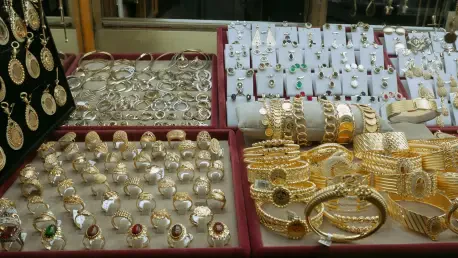

The global landscape of luxury jewelry is currently witnessing a profound departure from the traditional reliance on gold and platinum as the sole indicators of high-end value. This movement is characterized by a sophisticated blending of ancient craftsmanship and modern industrial materials, fundamentally altering the way collectors perceive the worth of their acquisitions. While precious metals have served as the industry’s backbone for centuries, a confluence of economic volatility and a desire for radical creative expression has prompted prestigious houses and independent artisans alike to explore the untapped potential of base metals. This transition is not merely a temporary trend but represents a deep structural shift in the aesthetic and commercial foundations of the market. Today, the intrinsic value of a piece is increasingly measured by its narrative, technical complexity, and the uniqueness of its materials, rather than the simple weight of its bullion. This evolution suggests that the future of luxury will be defined by intellectual and artistic depth.
Economic Pressures and the Push for Accessibility
The primary driver for the current diversification of materials is the exorbitant cost of traditional bullion, which has reached unprecedented levels in the current 2026 market. With gold and platinum prices squeezing the profit margins of even the most established jewelry houses, brands are seeking innovative ways to maintain accessibility without compromising their hard-earned luxury status. Bvlgari, the storied Italian jeweler under the LVMH umbrella, serves as a primary example of this strategic adaptation in a high-inflation environment. By integrating high-grade steel into its iconic B.zero1 and Tubogas collections, the brand is revisiting a material it first experimented with decades ago, effectively bridging the gap between heritage and modern financial pragmatism. This move allows the house to offer entry-level luxury at a price point significantly lower than full-gold versions, ensuring that the brand remains relevant to a broader spectrum of affluent consumers who are mindful of the current economic climate.
Furthermore, these pricing strategies are specifically designed to recapture a younger demographic of consumers who find themselves priced out of the traditional gold market but still crave the prestige associated with top-tier brands. For instance, the introduction of gold-and-steel hybrid rings has created a new tier of “accessible luxury” that serves as a gateway for the next generation of collectors. US-based brands like Eden Presley have followed a similar path, launching collections that utilize steel coated with diamond-like carbon as a direct alternative to increasingly expensive 14-carat gold. This approach is not simply about cost-cutting; it is a calculated effort to ensure brand longevity in an era where the rising cost of raw materials threatens to alienate the aspirational buyer. By legitimizing non-precious metals through high-design contexts, these companies are effectively expanding the definition of what constitutes a luxury investment, proving that prestige can be maintained even when moving away from the conventional gold standard.
Technical Innovation and Aesthetic Freedom
While financial considerations are significant, the industry’s embrace of alternative metals is also deeply rooted in the pursuit of aesthetic possibilities that gold and silver simply cannot replicate. Designers are increasingly turning to materials like titanium, niobium, and aluminum for their unique physical properties, which offer a vastly expanded creative palette. In the United Kingdom, pioneer jewelers have popularized the use of niobium for high-end wedding bands because of its hypoallergenic properties and its ability to be anodized into iridescent, futuristic colors. Historically treated as a secondary material, niobium is now being elevated to a primary structural component, allowing for the creation of pieces that shimmer with vibrant blues, purples, and greens. This level of chromatic control is impossible to achieve with traditional yellow or white gold, making these alternative metals the preferred choice for artisans who wish to push the boundaries of the visual language of jewelry.
Moreover, the physical lightness of these industrial metals provides a functional advantage that is revolutionizing the design of large-scale, statement jewelry. Houses like Hemmerle frequently utilize aluminum and iron to achieve specific artistic goals that would be physically impossible with heavier precious metals. Aluminum, valued for its extreme lightness, allows for the creation of intricate, oversized earrings and necklaces that remain comfortable for all-day wear, whereas a similar design in gold would be prohibitively heavy. However, working with these base metals is notoriously difficult, often requiring years of research and development to master their unique melting points and structural behaviors. This labor-intensive nature means that the final production cost is often higher than if the piece had been cast in traditional gold. Consequently, the value of the jewelry is shifting from the raw material’s market price to the mastery of the craft, reinforcing the idea that true luxury lies in the execution.
Historical Context and the Search for Uniqueness
The shift toward non-precious metals is not a modern anomaly but a return to historical practices where the definition of “preciousness” was shaped by social context rather than chemistry. High-end curators often point to the “Berlin ironwork” movement of the 19th century as a historical parallel, where Prussian citizens exchanged their gold jewelry for iron pieces to support national efforts. In that era, wearing iron became a symbol of patriotism and sacrifice, making it socially more valuable than the gold it replaced. Today’s diversification is similarly rooted in a search for meaning, as modern consumers move away from mass-produced gold designs in favor of pieces with a compelling story. Designers like Ebba Goring prioritize experimental materials to appeal to collectors looking for one-of-a-kind wearable art. These creators use non-precious metals as a canvas for complex techniques, such as nano-ceramic plating, which appeals to a market that is increasingly saturated with traditional luxury goods.
Finally, the legitimization of base metals has been accelerated by modern extraction and treatment methods that have made these materials more durable and visually striking than ever before. Advanced techniques such as diamond-like carbon (DLC) coatings and complex riveting have allowed materials like bronze and steel to age gracefully, developing a patina that many collectors find more desirable than the static shine of polished gold. As the distinction between “precious” and “base” continues to blur, the industry is moving toward a synthesis of rarity, technical difficulty, and design originality as the true metrics of worth. Collectors now look for the intellectual signature of the designer, valuing the innovation required to transform common materials into extraordinary objects. This evolution suggests that the most successful jewelry houses of the future will be those that can successfully weave together historical narrative and cutting-edge metallurgy to create pieces that resonate on a level beyond simple material wealth.
The transition toward alternative metals in high-end jewelry was solidified through a combination of economic necessity and a renewed focus on the artist’s hand. As the market moves forward, consumers should prioritize acquisitions based on the technical complexity and the durability of the innovative coatings rather than the intrinsic value of the metal alone. Future collectors will likely find that the most resilient investments are those that utilize advanced materials like titanium and niobium, which offer longevity and a unique aesthetic that mass-market gold cannot match. To navigate this changing landscape, buyers should seek out designers who provide transparency regarding their metallurgical processes and the specific treatments used to ensure the permanence of the piece. Ultimately, the industry shifted toward a more intellectual definition of luxury, where the value of jewelry was determined by the harmony of its design and the ingenuity of its construction.