
Rigorous pre-due diligence is becoming a critical requirement for European buyers to identify compliance issues before committing to a Chinese acquisition. This shift reflects a broader evolution in how Western industrial firms engage with the world’s second-largest economy in 2026. No longer viewed simply as a low-cost production hub or a secondary market for high-end exports, the region has transitioned into a central pillar of global corporate strategy. Companies are recognizing that the traditional “export and manufacture” model is insufficient for capturing the rapid technological shifts and cost-efficiency demands of the modern era. Deep integration through mergers, acquisitions, and strategic alliances has replaced the old greenfield investment approach, allowing entities to secure a foothold that resonates locally and globally. This transition is motivated by a pressing need for market access and capability acquisition that organic growth cannot provide at the necessary speed. By embedding themselves into the domestic industrial fabric, European firms are transforming into local players that can compete on equal footing with agile regional competitors.
Capturing Market Share: Strategies for Local Integration
Targeting the Mid-Market: The Rise of Dual-Brand Strategies
Historically, European industrial firms have successfully dominated the premium segments of the regional market by leveraging their reputations for high-quality engineering. However, a significant portion of current demand is concentrated in the “good-enough” mid-market, which requires products that are functional and cost-effective rather than over-engineered. European companies often find it difficult to serve this high-volume segment using their existing high-cost structures and premium brand identities. To address this gap, many organizations are now acquiring local champions to act as B-brands within their portfolio. These local entities possess the operational agility and lower production costs necessary to thrive in competitive mid-market segments. By maintaining a dual-brand strategy, European firms can capture high-volume demand without diluting the value of their core premium offerings. This approach also provides an immediate sales network and a deeper understanding of regional procurement behaviors, allowing for a more nuanced market presence that balances technical excellence with economic pragmatism.
Absorbing Innovation: Enhancing Supply Chain Speed and Technology
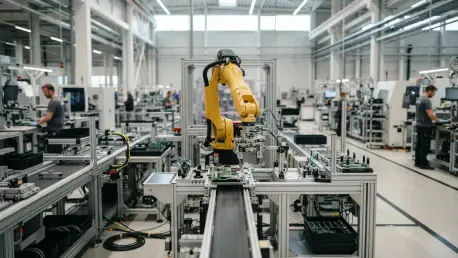
Beyond seeking market share, European companies are increasingly motivated by the need to access cutting-edge technology and advanced manufacturing capabilities. In sectors such as industrial automation, smart manufacturing, and green energy, local firms have developed an operational pace that is difficult to replicate in Western markets. Strategic acquisitions provide a direct route into these innovation ecosystems, allowing Western firms to bypass lengthy research and development cycles. By partnering with these players, European companies integrate into supply chains that are optimized for speed and flexibility, which is vital in industries where product life cycles are rapidly shrinking. This presence allows European firms to absorb rapid innovation methodologies on the ground and apply those efficiencies to their global operations. The integration of local expertise in robotics and artificial intelligence has become a cornerstone of maintaining global competitiveness. By embedding themselves in these dynamic tech hubs, firms are not just securing a local presence; they are acquiring the tools necessary to lead the next phase of global industrial evolution.
Maximizing Long-Term Value: Managing Risks and Growth
Shifting Focus: Aftermarket Services and Global Expansion
As the industrial sector matures, the focus of value creation is shifting from the initial sale of equipment to long-term service and aftermarket maintenance. A local presence established through M&A allows European firms to capture these recurring revenue streams and build deeper, more resilient customer relationships. This transition is essential as hardware sales become more commoditized and profit margins face increasing pressure. By acquiring established local service providers, European companies can offer the rapid response times and localized support that regional clients now expect, moving beyond the limitations of traditional Western service models. Furthermore, as Chinese multinationals expand their footprints internationally, European partners can follow these customers into new territories such as Southeast Asia. This “follow-the-customer” strategy ensures that European firms remain the preferred service providers as their clients scale their operations on a global level. These domestic partnerships create a springboard for international growth, allowing European parents to leverage their local ties to win contracts in emerging markets.
Navigating Complexities: Valuations and Strategic Compliance
The execution of M&A has seen a normalization of valuations, with multiples for industrial firms now ranging between 6-12x EV/EBITDA. A more restrictive domestic IPO market has made trade sales to international buyers an increasingly attractive exit strategy for local founders and investors. This shift has created a window for European buyers to acquire high-quality assets at valuations that are more aligned with global investment standards. However, the process remains complicated due to fragmentation and the difficulty of sourcing reliable data. Strategic buyers must navigate a landscape where private owners may be less familiar with formal Western acquisition protocols and transparency requirements. To address these hurdles, experts emphasize the importance of early-stage screening to identify structural weaknesses before a transaction gains momentum. Rigorous pre-due diligence allows firms to uncover potential compliance issues or regulatory hurdles that could derail a deal later in the process. This proactive approach to risk management is essential in a regulatory environment that is constantly evolving.
Strategic Evolution: Integrating China into a Global Framework
Future Perspectives: China as a Global Innovation Lab
Industry leaders recognized that a successful China strategy was no longer a separate regional concern but a vital component of a unified global framework. The innovations and cost structures that emerged from the East set the pace for the entire industrial system, forcing companies to integrate these dynamics into their core operations. European companies that successfully utilized M&A and joint ventures did not just secure a local market; they enhanced their global scalability. It was found that those who moved beyond simple manufacturing and became an integrated part of the industrial fabric were better positioned to handle shifts in the global economy and maintained higher resilience. These transactions provided the agility necessary to survive in a market that demanded extreme speed and local relevance. By moving beyond simple manufacturing and becoming an integrated part of the industrial fabric, these firms utilized local expertise to drive success on a worldwide scale. The shift toward targeted investments and minority stakes allowed for a more flexible approach, ensuring that operations remained resilient.
Practical Implementation: Steps for Sustained Growth
Moving forward, organizations prioritized local autonomy while maintaining a strong link to global quality standards to ensure long-term stability. The most successful models involved creating cross-functional teams that could bridge cultural gaps and facilitate the two-way transfer of technology and expertise. Firms were encouraged to view their regional acquisitions as laboratories for global innovation rather than just sales offices. By fostering a culture of mutual learning and technical exchange, European companies secured their place as leaders in an interconnected market. It was found that establishing clear communication channels between the European headquarters and the local acquisition was the most effective way to transfer knowledge and technology in both directions. Strategic recommendations included the creation of cross-functional teams that could bridge cultural gaps and ensure that the “B-brand” strategy did not erode the core identity of the parent firm. Those who mastered this balance secured their place as leaders in a truly globalized economy, proving that integration was the key to success.