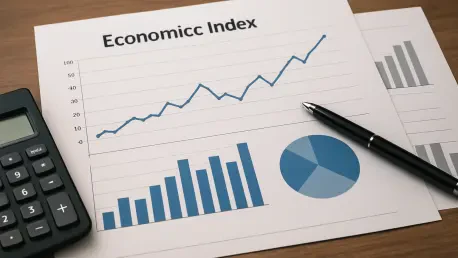

Analysis of the Anthropic Economic Index shows that occupations focused on augmenting human output are far more resilient than those targeted for total automation. This fundamental insight emerges from the Stanford Institute for Human-Centered AI (HAI) and its Digital Economy Lab, which has pioneered a suite of indicators to monitor the shifting tides of the global workforce. By leveraging high-frequency data from private sector leaders and academic researchers, the project provides a live pulse on employment and productivity that traditional government statistics often miss due to reporting lags. These indicators serve as a vital counterpoint to hype, offering a clear view of how generative intelligence is diffusing through various industries. As these technologies integrate into the daily operations of businesses worldwide, the need for real-time observation has never been more critical for navigating the complexities of this digital age effectively. This approach ensures that the analysis remains grounded in factual evidence rather than speculative marketing claims or industry hype.
Labor Market Disruptions
Tracking Employment: The Evolution of Professional Tasks
The most immediate disruptions are visible in sectors where AI exposure is highest, such as software development and customer service, which have seen an employment contraction exceeding 4% within the current year. This decline is not uniform across all demographics but is acutely felt by young professionals aged 22 to 25. For these individuals, the availability of entry-level roles has dropped significantly, as companies increasingly rely on automated workflows to handle tasks that were previously the domain of junior staff. The acceleration of this trend suggests that the barrier to entry for certain career paths is rising, necessitating a shift in how educational institutions prepare the next generation of workers. Beyond simple job losses, the data reveals a fundamental change in hiring logic, where firms prioritize candidates who can manage automated systems over those who perform manual digital tasks. This realignment reflects a broader structural change in how human capital is valued in a market increasingly dominated by generative tools.
Automation vs. Augmentation: Defining the Resilience of Roles
Deep analysis of user interactions with advanced language models like Claude reveals a critical divergence between roles that emphasize repetition and those that focus on creative problem-solving. While occupations centered on pure task automation are experiencing stagnation or decline, those that leverage AI for augmentation show a higher degree of stability. Augmentation allows professionals to enhance their own productivity by offloading cognitive drudgery, thereby increasing their overall value to an organization. However, the data indicates that even in resilient roles, the total volume of employment in high-exposure sectors continues to trend downward as efficiency gains reduce the need for large teams. This shift highlights a paradox where individual productivity may rise while aggregate labor demand in specific niches cools. Understanding this distinction is essential for policymakers who must decide whether to support traditional job retention or pivot toward large-scale workforce retraining.
Measuring the Technological Footprint
Specialized Lenses: Tools for Economic Observation
The Canaries Dashboard functions as a sophisticated early-warning system, utilizing anonymized payroll data from partners like ADP Research to monitor hiring and retention patterns in real time. This tool has identified subtle but significant demographic disparities, particularly regarding the slower job growth rate for women in administrative and service sectors compared to their male counterparts. Since these roles are often more vulnerable to automation, the dashboard provides the necessary evidence to address potential gender gaps before they become entrenched in the broader economy. Simultaneously, the Transformation Tracker evaluates macroeconomic indicators like 10-year interest rates to gauge whether financial markets anticipate a massive productivity boom. Currently, these indicators suggest a more stable, structural evolution rather than an explosive surge, indicating that while the foundations are shifting, the aggregate economy remains in a state of controlled transition. This dual-focus approach allows researchers to see both the microscopic shifts in individual livelihoods.
Digital Diffusion: Assessing Surplus and Adoption Rates
Beyond labor statistics, the project introduces the GDP-B: Surplus Observer to capture the “hidden” economic value that consumers derive from AI tools, which traditional GDP metrics often overlook. By surveying users on their willingness to pay for generative services versus everyday staples, the lab quantifies the consumer surplus that exists when a technology provides more value than its market price. This metric is crucial for understanding the true impact of AI on living standards, as it accounts for the efficiency and convenience gained by the general public. At the same time, the Adoption Monitor tracks the speed of technological diffusion, revealing that generative AI is permeating corporate workflows at a rate that surpasses historical benchmarks for earlier transformative technologies. The rapid integration of these tools into internal operations suggests that the economic footprint of AI is expanding horizontally across all industries, rather than being confined to the tech sector. This rapid spread underscores the necessity of a real-time monitoring system.
The Path Forward
Strategic Integration: Synthesizing Real-Time Economic Data
The current consensus among economists at the Digital Economy Lab is that while we are witnessing profound localized disruptions, the global economy has not yet reached a state of total upheaval. The data paints a picture of “canaries in the coal mine,” where specific occupations and demographics feel the pressure of automation while broader moving statistics remain relatively mild. This suggests that the transformation is occurring in stages, with the initial phase characterized by the displacement of entry-level roles and the optimization of administrative tasks. Policymakers and business leaders must look past the aggregate stability to see the specific vulnerabilities within the labor market that could eventually lead to larger systemic challenges. By analyzing these shifts on a monthly basis, the AI Economic Indicators project provides a necessary baseline for making informed decisions about regulation and investment. This continuous observation helps to ground the conversation in reality, ensuring that the response to change is data-driven.
Future Stability: Actionable Insights for Economic Policy
The research conducted by the Stanford HAI team established that navigating the complexities of the current economy required a shift from reactive to proactive data analysis. It became clear that the most effective strategies for maintaining economic stability involved investing in human-centric augmentation rather than focusing solely on cost-cutting through total automation. Leaders who prioritized the retraining of the workforce to utilize generative tools effectively found themselves better positioned to handle the softening labor market in high-exposure sectors. Furthermore, the integration of real-time dashboards allowed for the identification of demographic disparities, enabling more targeted policy interventions to support vulnerable groups. The initiative demonstrated that while AI created significant disruption for entry-level professionals, it also opened new avenues for productivity that were previously unmeasurable. Moving forward, the focus shifted toward refining these digital indicators to capture the emergence of AI-driven entrepreneurship and new job categories.