
The international financial landscape is currently navigating one of the most precarious periods in recent memory as geopolitical frictions between the United States and Iran reach a critical tipping point. This volatility is not merely a regional concern but a systemic shock that has sent tremors through every major asset class, from crude oil benchmarks to the core indices of the world’s largest stock exchanges. The immediate catalyst for this instability is a high-stakes ultimatum issued by the White House, demanding the full and unhindered reopening of the Strait of Hormuz within a strict forty-eight-hour window or facing the destruction of Iranian power infrastructure. As this confrontation enters its fourth consecutive week, the global investment community is witnessing a massive exodus from risk-on positions. Investors are grappling with the very real possibility of a total regional conflict that could permanently alter the flow of energy and the architecture of international trade for the remainder of the decade.
Geopolitical Tensions and Energy Security
The Strait of Hormuz Standoff: A Global Bottleneck
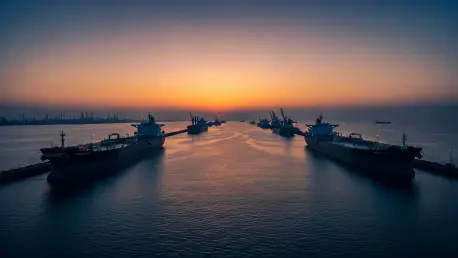
The Strait of Hormuz remains the single most important chokepoint in the global oil trade, accounting for nearly a fifth of the world’s daily consumption. When the American administration issued a forty-eight-hour ultimatum in March 2026, the implications were immediately felt across the commodities sector. The demand for Iran to cease its interference with maritime traffic or face the annihilation of its primary power generation plants has pushed the situation into uncharted territory. This brinkmanship has effectively frozen the decision-making processes of international shipping conglomerates, many of which have rerouted vessels or suspended operations in the Gulf entirely. The resulting bottleneck is not just a logistical nightmare but a direct challenge to the energy security of major industrialized nations. As the deadline looms, the probability of a kinetic engagement has spiked, leading to a surge in insurance premiums and a general sense of dread among those who manage global supply chains for essential fuel supplies.
Iranian officials have responded to these threats with a defiant shift in strategy that extends well beyond conventional military maneuvers in the Persian Gulf. Parliament speaker Mohammad Bagher Ghalibaf recently declared that any American aggression would be met with retaliatory strikes against critical infrastructure throughout the region, specifically targeting desalination plants and energy hubs. However, the most alarming development is the broadening of Iran’s target list to include international financial institutions that hold significant quantities of U.S. Treasurys. By arguing that these banks and funds are effectively financing the American military machine, Tehran has introduced a terrifying new dimension of financial risk. This unconventional approach suggests that the conflict could evolve into a multi-domain war where digital and economic assets are just as vulnerable as physical oil refineries. Consequently, the global financial system is now facing a threat that bridges the gap between traditional warfare and systemic economic collapse.
Escalation of Military Rhetoric: Regional and Global Impact
The narrative of the current conflict has fundamentally shifted from localized skirmishes to a direct threat against global economic stability. In previous years, such tensions might have been contained within the Middle East, but the interconnected nature of modern finance means that a threat against a power plant in Bushehr is now a threat to a portfolio in New York. The rhetorical escalation has forced a reassessment of the “geopolitical risk premium” that analysts apply to global markets. Military posturing by both sides has moved from defensive positioning to explicit threats of total infrastructure destruction. This shift is particularly concerning for the Gulf states, which rely on the same narrow waterways for their economic survival. The fear is that a single tactical miscalculation could trigger a chain reaction, leading to the destruction of the very facilities that provide the world with the energy required to sustain industrial production and residential heating during the transition into the spring months.
Furthermore, the expansion of Iranian targets to include sovereign debt holders has created a unique form of “financial deterrence” that the market was not prepared to handle. If financial entities perceive that their holdings of U.S. government debt make them legitimate targets for cyberattacks or physical sabotage, the demand for Treasurys could experience an unprecedented shock. This introduces a feedback loop where military tension drives up the cost of borrowing, which in turn limits the fiscal capacity of nations to respond to the crisis. The psychological impact on the market cannot be overstated; the certainty that once underpinned global trade has been replaced by a pervasive sense of vulnerability. This atmosphere of dread is compounded by the fact that diplomatic channels appear to be closing, leaving military action as the primary tool of foreign policy. The synthesis of these factors suggests that the global economy is staring into a chasm of uncertainty that no amount of central bank intervention can easily bridge.
Financial Contagion and Market Responses
The Impact on Global Equity Markets: A Synchronized Sell-Off
Market data currently reflects a sharp and synchronized sell-off across Asia-Pacific indexes, signaling a lack of confidence in a near-term peaceful resolution. Japan’s Nikkei 225 and South Korea’s Kospi both plummeted by more than 5% in a single session, with the latter experiencing a brief trading suspension as circuit breakers were triggered to prevent a total freefall. These losses are not isolated incidents but part of a broader trend where investors are liquidating positions in tech and manufacturing sectors that are highly sensitive to energy costs. The panic in Asian markets followed a significant downturn in U.S. equities, where major indexes like the S&P 500 have fallen below critical technical support levels. This technical breakdown often signals the start of a more prolonged bearish phase, as institutional algorithms pivot from “buy the dip” strategies to capital preservation. The speed of the decline has left many retail investors exposed, further accelerating the downward pressure on valuations globally.
The prevailing consensus among veteran market analysts is that the “peak intensity” of the current oil crisis is only just beginning to be priced into the equity markets. This is evidenced by the widening spread between different crude benchmarks, which indicates a fractured market where regional supply concerns outweigh global demand projections. When equity markets lose their footing in such a dramatic fashion, it often leads to a tightening of credit conditions, making it more expensive for corporations to maintain operations. In the current environment, the fear of a total regional war is causing a flight to safety, with capital flowing into traditional havens like gold and certain high-quality sovereign bonds. However, even these safe havens are being tested by the Iranian threat against Treasury holders, creating a paradoxical situation where there are few truly “safe” places to hide. The erosion of market capitalization across the globe is a stark reminder of how quickly geopolitical events can unravel years of economic growth and stability.
Energy Price Volatility and Future Outlook: Actionable Insights
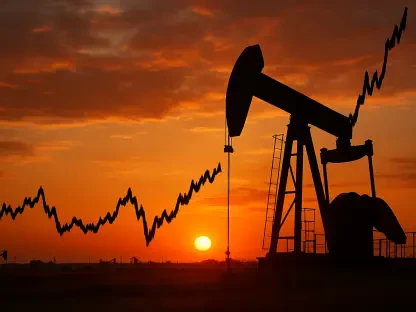
In the commodities sector, oil prices surged toward $113 per barrel for Brent crude as the market reacted to the looming possibility of a prolonged blockade. Financial institutions like Goldman Sachs aggressively adjusted their forecasts, anticipating that oil flows through the Strait of Hormuz could remain at just 5% of normal levels for at least six weeks if hostilities commenced. This disruption was expected to keep prices elevated through April, forcing businesses to re-evaluate their operational budgets and logistics strategies. To mitigate these risks, corporations were advised to accelerate the diversification of their energy sources and increase their hedging activities to protect against further price spikes. Supply chain managers sought to secure alternative shipping routes, even if they incurred significantly higher costs, to ensure that production lines remained active. The crisis highlighted the critical need for robust contingency planning that accounted for both physical and financial disruptions in the energy sector.
Strategic reserves were utilized by several nations to stabilize domestic markets, but these measures were viewed as temporary fixes rather than long-term solutions. Leaders in the energy industry focused on investing in localized energy production and resilient infrastructure to reduce their dependence on volatile geographic corridors. The situation underscored the importance of integrating geopolitical risk assessments into every level of corporate governance and investment strategy. By the time the immediate threat of the ultimatum passed, the global market had already undergone a fundamental shift in its perception of risk. Moving forward, stakeholders prioritized transparency and real-time data monitoring to navigate the “new normal” of high-stakes diplomacy and its impact on the economy. The crisis served as a powerful catalyst for a broader movement toward energy independence and the strengthening of international financial safeguards, ensuring that the global economy remained resilient in the face of future geopolitical shocks.