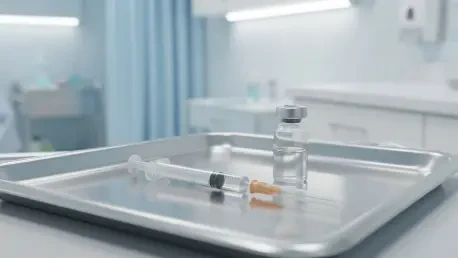

A sex worker in Mbarara no longer has to negotiate for her life at the bedside because a single injection every six months provides a silent, invisible shield against HIV infection. This pharmaceutical marvel, known as lenacapavir, has redefined the landscape of preventative medicine by decoupling protection from the immediate act of sexual intercourse. For decades, the fight against the epidemic relied on the precarious consistency of daily pills or the fraught negotiation of barrier methods. Now, the shift toward a long-acting injectable offers a medical “safety net” that functions independently of human error or social coercion, marking what many experts describe as the most significant leap in HIV science in recent memory. However, the excitement surrounding this breakthrough is tempered by a harsh reality: the drug’s rollout is currently stumbling over the same hurdles of cost and supply that have historically left the world’s most vulnerable populations behind.
The Six-Month Injection: The Shot That Could End an Epidemic
The promise of a twice-yearly injection lies in its ability to circumvent the “moment of encounter” that often determines life or death. Traditional preexposure prophylaxis (PrEP) requires a level of adherence that is difficult to maintain in unstable or high-risk environments. By contrast, lenacapavir operates on a predictable medical schedule, requiring only two clinical visits per year to maintain high-level immunity. This transition from a daily ritual to a biannual procedure removes the cognitive and social burden from individuals who may face domestic violence, housing instability, or intense community stigma for carrying medication.
Beyond convenience, “Lena” represents a monumental leap in pharmaceutical technology as a capsid inhibitor. It disrupts the HIV virus at multiple stages of its lifecycle, providing a level of efficacy that was previously thought to be impossible. Clinical trials conducted recently have shown that the drug is nearly 100% effective in preventing infection among participants, far outperforming the oral alternatives. This high bar of protection provides hope that the transmission cycle can be broken entirely if the drug can reach the people who need it most.
The Chasm: Medical Innovation versus Global Access
Despite this scientific triumph, a massive chasm remains between the laboratory breakthrough and the “last mile” of delivery in the most affected regions. Historically, the transition from barrier methods to modern PrEP was slowed by logistical hurdles and social resistance, but the current bottleneck is fundamentally different. While the science of prevention has been solved, the infrastructure for equitable distribution has not. Vulnerable populations in high-risk urban centers and rural sub-Saharan Africa remain trapped in a cycle of exposure because the miracle drug exists in theory but not in their local clinics.
Real-world vulnerabilities often transcend simple biology, as human error and social sabotage frequently undermine prevention efforts. In many communities, the stigma associated with HIV medication is so severe that individuals hide their pills, leading to inconsistent dosing. Furthermore, sex workers often report instances where clients refuse to use condoms or intentionally sabotage them during encounters. Lenacapavir’s long-acting nature renders these power dynamics irrelevant, as the protection is already in the bloodstream, yet this autonomy remains a luxury for those living where the supply chains are weakest.
Case Studies: Scarcity and the Triage of Care
The supply-demand mismatch is nowhere more evident than at the Mbarara Health Centre IV in Uganda, where the ethics of scarcity have become a daily reality. Earlier in 2026, the facility received a total of 110 doses across two separate batches, a quantity that was small compared to the thousands of residents at high risk. This forced healthcare providers into a harrowing triage process, initially limiting the drug only to pregnant women to prevent vertical transmission. The desperation in the waiting rooms highlights a systemic failure; when the second batch of 70 doses arrived, it was entirely exhausted in only ten days.
Personal narratives from the region underscore the frustration of those seeking protection that is not on the shelf. Julius Bampe, a builder in a “discordant” relationship with his HIV-positive wife, sought the injection to protect his own health and their future together. However, like many others, he found that the supply was reserved for “higher-priority” demographics, leaving him vulnerable despite his proactive approach. For itinerant workers and those in the sex trade, the exhaustion of these doses in mere days means that the window of opportunity for protection often closes before they can even reach the clinic.
Economic Gatekeepers: The Pricing Crisis
The primary barrier to global access is a staggering $28,218 annual price tag in high-income markets, creating a formidable economic gatekeeper. While this cost may be absorbed by insurance systems in the West, it is a non-starter for public health programs in the Global South. A significant regulatory milestone occurred recently when the FDA granted tentative approval for generic versions intended for low-income nations. This move aims to drive the cost toward a $40 annual target, a price point that would make mass distribution financially feasible for international aid organizations.
However, critics argue that the gap between Gilead Sciences’ corporate rhetoric and its logistical actions remains unacceptably wide. While the company has made public commitments to global equity, the restrictive nature of its voluntary licensing agreements has come under fire. Advocates point out that many middle-income countries, which still struggle with high infection rates, are excluded from these generic deals. This pricing crisis is not just about the cost per vial; it is about a pharmaceutical model that prioritizes profit margins over the rapid eradication of a global epidemic.
Strategies: A Rapid Global Scale-Up
Accelerating the global scale-up requires moving beyond the current 2026 to 2028 timeline for generic transition. International organizations such as Doctors Without Borders (MSF) and The Global Fund have called for frameworks that allow them to bypass slow, centralized distribution chains. By purchasing doses directly from generic manufacturers, these entities could ensure that the drug reaches remote areas before the next wave of infections occurs. The infrastructure for mass manufacturing had to be prepared immediately, rather than waiting for patent battles to resolve in courtrooms years down the line.
The global community recognized that the success of lenacapavir depended on the removal of restrictive licensing that left middle-income nations behind. Health authorities prioritized the establishment of decentralized manufacturing hubs in Africa and Asia to shorten supply lines and reduce costs. Policymakers identified that direct investment in generic production lines was the only way to meet the goal of reaching 3 million people by 2028. It became clear that while science provided the shield, only political will and economic reform could ensure that shield was actually held by those on the front lines.