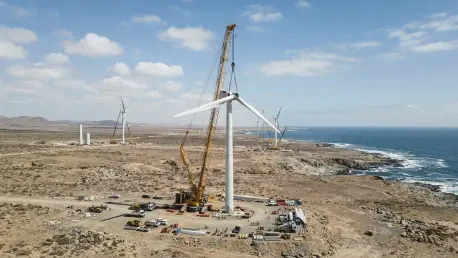

The winds of change are sweeping across the coastal plains of the Kharas Region as Namibia embarks on a transformative journey toward total energy self-sufficiency through a massive new infrastructure investment. This ambitious undertaking, centered near the harbor town of Lüderitz, represents a landmark shift in the national energy landscape, supported by a significant N$2 billion investment facility led by Standard Bank Namibia. The project is being meticulously spearheaded by CERIM Lüderitz Energy, a strategic joint venture between the China Energy International Group and the prominent Namibian firm ANIREP, which operates through its subsidiary, Zephyrus Energy. By leveraging a robust public-private partnership model, the initiative has successfully drawn in a diverse consortium of lenders, including RMB, the Development Bank of Namibia, BW, and the African Development Bank Group. This collaborative financial structure underscores global confidence in Namibia’s capacity to host large-scale renewable assets while fostering regional cooperation in the green energy sector.
Engineering a Sustainable Future
The technical blueprint for this facility reveals a highly sophisticated installation designed to maximize the consistent wind speeds found along the southwestern coast of Africa. At the heart of the plant are seven high-efficiency Goldwind turbines, which together provide a combined generating capacity of 54.6 MW, making it the largest wind power installation in the country’s history. This sophisticated array is strategically located near Lüderitz in the Kharas Region, a location chosen for its superior meteorological profile and proximity to existing industrial hubs. To ensure the generated power reaches the national distribution network, developers are constructing a 40-kilometer, 132-kilovolt transmission line that will link the site directly to the national grid. This infrastructure is not merely a local utility but a critical component of a broader national effort to modernize the country’s electrical backbone while integrating variable renewable energy sources seamlessly into the existing framework.
Once the facility becomes fully operational, which is currently targeted for the early months of March 2027, it is expected to generate approximately 253.8 GWh of clean electricity on an annual basis. This massive output is estimated to be sufficient to satisfy roughly 6% of the entire country’s current power demand, significantly reducing the frequency and impact of energy deficits during peak hours. Beyond the immediate logistical benefits, the environmental implications are equally profound, as the project is projected to offset an estimated 150,000 tons of carbon dioxide emissions each year. This reduction aligns Namibia with international sustainability trends and reinforces its commitment to global climate goals by transitioning away from traditional fossil fuel dependencies. By successfully integrating this much capacity into the domestic market, the nation effectively demonstrates the viability of large-scale wind energy as a primary pillar for regional energy security and long-term ecological balance.
Economic Strategy and Community Growth
A central pillar of this energy strategy is the attainment of long-term economic resilience through a meticulously negotiated 25-year power purchase agreement with the national utility, NamPower. This contract guarantees a stable supply of electricity at a remarkably low cost of less than N$1 per kilowatt-hour, a price point that offers a stark contrast to the volatile costs of traditional energy sources. For comparison, electricity generated from diesel-powered facilities typically costs between N$7 and N$10 per kilowatt-hour, making the wind project a vastly more sustainable alternative for the national treasury. By locking in these competitive rates, Namibia effectively shields its domestic economy from the unpredictable price shocks inherent in international energy markets. This financial stability is expected to create a more predictable environment for business operations, potentially lowering overhead costs for manufacturers and making the country a more attractive destination for foreign direct investment.
Stakeholders concluded that the successful implementation of the Lüderitz wind project established a definitive blueprint for future industrialization and regional energy leadership. By prioritizing cost-effective renewable generation, the nation positioned itself to attract heavy industries that previously avoided the region due to high power costs and supply instability. The next logical steps for policymakers involve streamlining the regulatory frameworks for green hydrogen and other energy-intensive exports that benefit from this newfound grid stability. It was determined that the integration of localized training programs successfully bridged the gap between academic theory and practical industrial application, providing a template for future infrastructure projects. Ultimately, the transition to wind energy proved to be the most viable path for driving sustained economic growth while safeguarding environmental integrity. These actions ensured that the momentum generated by the Lüderitz site was maintained and expanded across the coastline.