
The ultra-wealthy are transitioning toward a strategy of selective allocation, demanding exceptional architectural design and unique lifestyle amenities over simple ownership. This fundamental shift has defined the Chinese residential property market throughout 2026, creating a striking contrast between a cooling broader sector and a series of high-profile “luxury property blockbusters.” While the general real estate landscape continues to navigate a period of structural adjustment, elite urban hubs such as Shanghai, Shenzhen, and Hangzhou have witnessed a surge in localized demand that analysts describe as a “dotted” boom. This phenomenon is characterized by intense bursts of activity within specific, high-quality projects rather than a broad-based recovery of the entire housing market. The current climate highlights a discerning buyer base that is no longer satisfied with generic luxury but instead seeks out scarcity, exceptional craftsmanship, and long-term value preservation. This trend has led to extraordinary sales performances, including “one-day sell-outs” and price records that challenge previous historical benchmarks, signaling that the top tier of the market operates under a unique set of economic drivers.
Regional Resilience: The Shanghai and Shenzhen Performance
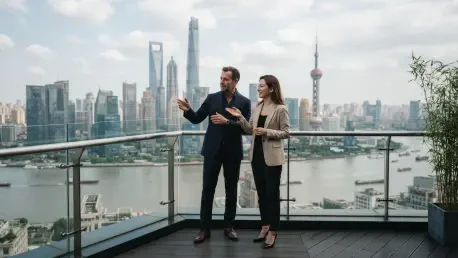
Shanghai’s luxury market has demonstrated remarkable endurance in 2026, functioning as a primary indicator of high-end investor confidence. The Qiantan Shangpin development serves as a quintessential example of this intensity, achieving a total sell-through on the very first day of its launch. Competition for these units reached unprecedented levels, with 408 subscription groups competing for just 65 available properties, driving the subscription rate to a record 627%. This indicates that, on average, six potential buyers were vying for every single luxury home. With prices ranging from approximately 9.5 million to 18 million yuan, the demand for what is considered “entry-level” luxury in prime locations remains incredibly robust. Furthermore, the Poly Suhejun project reported revenue exceeding 1.86 billion yuan during its initial phase, with unit prices reaching up to 24 million yuan. Such data points suggest that the affluent demographic in Shanghai is still eager to deploy significant capital into the real estate market, provided the project is backed by a reputable developer and situated in a high-growth urban district.
In Shenzhen, the luxury residential landscape has pushed toward extreme price ceilings, reflecting a growing appetite for “trophy assets” among ultra-high-net-worth individuals. The filing prices for the Shenzhen Bay Yunxi Sky Apartment recently established a new historical record for the city, with peak unit prices exceeding 430,000 yuan per square meter. This surpassed the previous high of 398,600 yuan, marking a significant escalation in the valuation of elite property. The financial scale of these individual transactions is immense; a single apartment unit can carry a price tag of up to 317 million yuan. When multiple floors are bundled for sale, the total transaction value can reach a staggering 570 million yuan. This project alone dominated the commercial residential sales charts in Shenzhen for the first ten months of 2026, totaling over 16.7 billion yuan in sales revenue. The performance of these high-ceiling assets underscores a market where the top one percent of buyers are less concerned with general economic fluctuations and more focused on securing irreplaceable real estate in the city’s most prestigious corridors.
Market Divergence: Statistical Realities and the Ultra-Luxury Surge
Despite the headline-grabbing success of specific projects, a comprehensive analysis of the broader statistical data reveals a more complex and divergent reality for 2026. According to Puru Data Intelligence, total transactions for properties priced above 10 million yuan in 30 key Chinese cities reached 26,403 units during the first nine months of the current year. This figure represents a year-on-year decline of 8%, suggesting that the market is not experiencing a universal upward trajectory. However, when the data is disaggregated by specific price brackets, a significant trend becomes apparent. Transactions for properties in the 10 million to 20 million yuan range have experienced a noticeable cooling effect, as this segment often relies on “improvement-based” buyers who are more sensitive to general economic shifts. In contrast, the ultra-luxury segment—consisting of properties priced over 30 million yuan—has seen transactions increase by 29% year-on-year. For properties priced above 50 million yuan, the increase was 11%, demonstrating that the most expensive assets are actually gaining momentum while the middle tier of luxury remains under pressure.
This statistical divergence highlights a fundamental gap between the affluent middle class and the ultra-wealthy elite in their approach to property acquisition. The former group has become increasingly cautious, often delaying purchasing decisions in response to broader market volatility or tightening credit conditions. On the other hand, high-net-worth individuals are viewing the 30 million to 50 million yuan price bracket as a “safe-haven” for asset preservation. This group prioritizes the scarcity and unique “product appeal” of elite assets over short-term market timing. The shift suggests that the luxury market is no longer a monolith; rather, it is splitting into a high-volume, price-sensitive segment and an exclusive, asset-focused tier. Consequently, developers who fail to differentiate their offerings for the ultra-wealthy are finding it increasingly difficult to move inventory, while those who deliver truly exceptional properties are seeing their projects sell out almost instantly. This bifurcation is expected to deepen as the market transitions toward a more mature phase where quality and exclusivity are the only guarantees of success.
Geographic Evolution: The Decentralization of Purchasing Power
Historically, the Chinese luxury real estate market functioned as a duopoly dominated by Beijing and Shanghai. However, the narrative of 2026 is one of geographic decentralization, where high-end purchasing power is overflowing into other economically vibrant regions. At the beginning of 2024, Beijing and Shanghai accounted for roughly 65% of all property transactions exceeding 10 million yuan. By the first half of 2026, that combined market share dropped to 55%, indicating that other cities are successfully capturing a larger portion of the luxury market. Cities like Hangzhou and Shenzhen have seen their transaction volumes for high-end properties rise by 35% and 13%, respectively. This evolution is driven by the rapid growth of “new first-tier” cities such as Chengdu, Xiamen, and Suzhou, which are increasingly attracting wealthy residents who prefer to invest in their local markets. The rise of these regional hubs is supported by local industrial upgrading and the creation of new wealth in sectors like technology, advanced manufacturing, and green energy.
In Hangzhou, the luxury boom has manifested through a unique phenomenon of bulk acquisitions and “mega deals.” The Riverside Chuanqi Mansion, recognized as one of the city’s most prestigious luxury developments, recorded three separate deals exceeding 100 million yuan within its first week of launch. One notable transaction involved a buyer spending 210 million yuan to secure two stacked villas in a single package. This trend of “package buying” reflects a desire among the ultra-wealthy to consolidate prime real estate assets as a strategic store of value. Experts attribute this shift to the industrial wealth creation within Hangzhou’s tech-driven economy, which has produced a new generation of high-net-worth individuals. As supply in traditional hubs like Beijing and Shanghai becomes more restricted by land availability and regulatory controls, capital is naturally flowing toward high-quality projects in these secondary hubs. This decentralization represents a maturing market where the definition of “prime real estate” is expanding beyond the traditional centers to include any project that offers exceptional value and lifestyle amenities.
Strategic Allocation: The New Standard for Product Appeal
The modern high-net-worth buyer in 2026 is moving away from the traditional model of buying luxury property for the sake of ownership alone. Instead, the focus has shifted toward “selective allocation,” where the specific features and “product appeal” of a development are the primary drivers of value. There is an intensified demand for superior architectural design, exceptional location value, and exclusive lifestyle amenities that offer a distinct living experience. This means that “average” luxury projects—those that rely solely on a high price tag or a central location without providing unique design elements—are struggling to attract interest. In contrast, “extraordinary” projects that integrate innovative architecture with high-end services are thriving. This shift toward a “super-luxury orientation” requires developers to be more precise in their targeting and more creative in their design, as the ultra-wealthy are now looking for homes that serve as both functional residences and pieces of art. The quality of the interior finishes, the privacy of the communal spaces, and the integration of smart home technology have become non-negotiable standards.
Industry insiders and analysts caution against interpreting these high-profile sell-outs as a sign of a total market recovery. Lu Wenxi of Centaline Property Shanghai notes that hot-selling projects are currently in the minority and are often the result of unique local conditions or pent-up demand. Many developments experience a surge of interest during their initial launch but struggle to maintain that momentum in subsequent phases. Yu Xiaoyu of Yihan Think Tank emphasizes that the market is still in a period of structural adjustment. The current “boom” is partially attributed to a supply-side expansion toward the end of the year, where developers traditionally launch their most attractive properties to meet annual sales targets. This seasonal “sprint” creates an illusion of widespread recovery, yet many standard luxury developments continue to face high vacancy rates and slow turnover. For the market to reach a state of true stability, there must be a consistent alignment between high-quality supply and the evolving expectations of a more discerning and mobile elite buyer base.
Strategic Outlook: Navigating a Mature and Differentiated Market
The landscape of Chinese luxury real estate has reached a point of extreme differentiation, where the era of universal price appreciation has been officially replaced by a more nuanced, value-driven environment. Throughout 2026, the success of a residential project was determined not by broad market tailwinds but by the precision of its design and the exclusivity of its location. Developers who focused on the ultra-luxury segment found that the demand for “safe-haven” assets remained insulated from the volatility affecting the broader economy. However, this required a significant investment in “product appeal,” moving beyond simple luxury labels to provide a holistic lifestyle experience. Investors and high-net-worth individuals successfully navigated this period by prioritizing properties that offered scarcity and long-term liquidity. The shift toward decentralization also provided new opportunities in regional hubs, allowing buyers to diversify their portfolios outside of the traditional Beijing and Shanghai markets. This strategic approach to allocation proved essential for capital preservation in a year defined by structural adjustments.
Looking ahead, the market was shaped by the lessons learned during this phase of selective growth. Stakeholders recognized that the future of luxury real estate lies in the super-luxury-oriented landscape, where only the most exceptional properties can command premium prices. Developers were encouraged to adopt more targeted marketing strategies and focus on high-value, low-volume projects that cater to the specific needs of the ultra-wealthy. Meanwhile, city planners and regulators began to acknowledge the importance of high-quality residential developments in attracting and retaining top-tier global talent. The actionable takeaway for the industry was the need for a fundamental shift from quantity to quality, ensuring that new supply met the rigorous architectural and lifestyle standards of 2026. As the market stabilized, the focus remained on creating enduring value, establishing a more mature real estate ecosystem where transparency, design excellence, and strategic location were the primary pillars of success. This evolution ensured that while the “dotted” boom provided moments of intense activity, the long-term health of the sector was built on a foundation of genuine demand and elite craftsmanship.