
The Taiwan Strait serves as a vital artery for international commerce, carrying nearly half of the global container fleet and the majority of high-capacity energy shipments required for industrial production. While the region has long been a focal point of geopolitical tension, the current scale of economic integration means that any localized disruption would immediately manifest as a worldwide crisis. Diplomatic observers and industry analysts warn that a military escalation in this narrow body of water would trigger a rapid chain reaction, dismantling the fragile equilibrium of international trade. Because the global market depends so heavily on the seamless flow of goods through this corridor, the stakes involve far more than regional sovereignty; they involve the continuity of modern civilization’s most advanced sectors. From high-tech manufacturing to consumer logistics, the fragility of the supply chain suggests that a crisis here would reach far beyond East Asian borders, threatening the future of innovation.
The Financial Consequences of Global Market Interruption
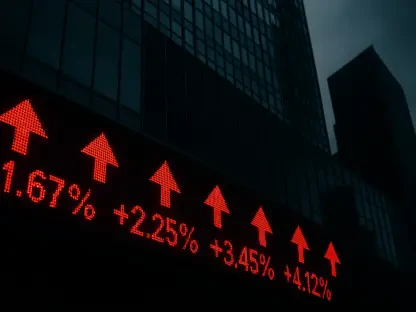
Detailed financial modeling from international researchers indicates that a full-scale military conflict in the region could drain the global economy of approximately $2 trillion in short-term productivity and asset value. This figure represents a catastrophic blow to the global gross domestic product, far exceeding the economic fallout seen in previous regional conflicts involving major energy exporters. Unlike the situation with Russia prior to its isolation from the Western financial system, China remains an inseparable pillar of the modern commercial landscape, serving as both a primary manufacturer and a critical consumer market for diverse industries. A naval blockade or an outright kinetic engagement would effectively sever the Taiwan Strait, which remains one of the world’s most congested and essential shipping lanes. This total cessation of maritime traffic would lead to an immediate collapse of just-in-time production chains, resulting in widespread industrial paralysis and a prolonged period of stagnant growth.
Beyond the immediate loss of trade revenue, the systemic risk to the global banking sector would likely trigger a credit freeze as lenders reassess the viability of multi-national operations dependent on Asian logistics. Investors would face unprecedented volatility, with equity markets likely plummeting as the realization of a permanent shift in trade dynamics becomes clear. The destruction of physical infrastructure and the cessation of commercial air travel over the region would exacerbate these issues, creating a vacuum in the electronics and automotive sectors. Furthermore, the inflationary pressure resulting from the scarcity of essential components would drive up the cost of living for billions of people, potentially leading to social unrest in both developing and developed nations. The interconnectedness of global finance means that no economy, however insulated, could escape the gravitational pull of a crisis centered on Taiwan. The sheer scale of the potential damage underscores the necessity of maintaining regional stability.
Strategic Resilience: Protecting the Global Innovation Pipeline
Taiwan currently maintains a near-monopoly on the production of the world’s most advanced semiconductors, manufacturing roughly 95% of the cutting-edge logic chips necessary for sophisticated computing. These components are the fundamental building blocks of the artificial intelligence revolution, powering the massive data centers that train large language models and manage complex algorithmic operations. Without the steady output from Taiwanese fabrication plants, the global trajectory of technological advancement would grind to a sudden and painful halt. Major American technology corporations, including leaders in software and hardware integration, have already committed close to $1 trillion to AI infrastructure projects that rely almost exclusively on this specific manufacturing pipeline. Recent data indicates a major shift in global commerce, with Taiwan’s exports to the United States now surpassing those from mainland China, driven by a surging demand for AI servers and a strategic push to reduce manufacturing dependency.
Global leaders recognized that the preservation of technological stability required a fundamental shift toward geographic diversification and the creation of resilient, redundant manufacturing hubs. While the threat of a full-scale kinetic invasion loomed, strategic planners prioritized the development of regional security frameworks that emphasized gray-zone deterrence and diplomatic engagement. The international community moved to accelerate the construction of semiconductor fabrication plants in alternative regions, ensuring that the critical supply of high-end silicon would no longer be vulnerable to a single-point failure. These efforts were complemented by new trade agreements that prioritized transparency and reliability over short-term cost savings, effectively shielding the global economy from localized shocks. By investing in autonomous energy solutions and decentralized logistics, businesses successfully mitigated the risks associated with the Taiwan Strait. This proactive stance ensured that the progress of artificial intelligence remained secure despite the complexities.