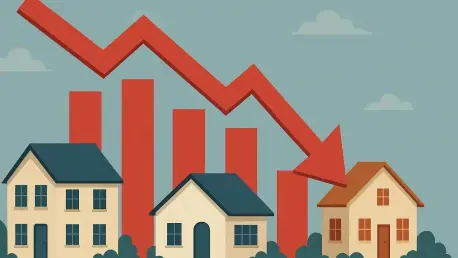

Financial experts are urging prospective buyers to act as the current climate offers a strategic entry point for those previously priced out by hyper-competitive auctions. The South Australian real estate landscape is currently witnessing a stark reversal from the explosive growth seen during the post-pandemic years, marking a definitive shift toward a cooling phase. Recent valuation data for metropolitan Adelaide reveals that a staggering 90.9% of analyzed suburbs recorded a drop in value over the most recent quarter. Out of 462 suburbs assessed for both houses and units, 420 saw prices retract, while a mere 18 areas managed to secure marginal gains. This widespread depreciation is particularly evident in high-profile locations like Kent Town, where unit values fell by 11%, and Clarence Gardens, which saw house prices plummet by 10%. This correction signals the end of an era defined by rapid capital appreciation and the beginning of a more measured market cycle.
Analyzing Market Shifts and Buyer Leverage
Emerging Opportunities in a Cooling Urban Market
The cooling of the urban market has fundamentally altered the power dynamics between sellers and buyers, reintroducing a level of balance that has been missing for over half a decade. For the first time in several years, the “slow and steady” characteristics of the Adelaide market have returned, allowing consumers to approach transactions with greater deliberation. One of the most significant indicators of this shift is the reappearance of “subject-to-sale” offers, a contingency that had almost entirely disappeared during the hyper-competitive auction environment of the recent past. Real estate agents report that the frantic bidding wars that once dominated the city are being replaced by private treaty negotiations where buyers have the breathing room to conduct due diligence. This period of negativity is frequently viewed by industry veterans as a prime window for strategic acquisition, as the reduction in competition allows for more favorable terms that were previously unattainable.
Resilience of the Prestige Sector
A significant factor providing a buffer for the South Australian market is the continued performance of the prestige sector, which has shown remarkable resilience in the face of broader economic headwinds. Currently, there are 167 suburbs or towns across the state that maintain a median property value of $1 million or more, highlighting the significant wealth concentrated in the local housing stock. Within this group, 42 suburbs have median values exceeding $1.5 million, demonstrating that the appetite for high-end residential real estate remains substantial. These elite enclaves often operate independently of the trends affecting the entry-level and mid-tier markets, as buyers in these segments are typically less sensitive to short-term borrowing costs. The presence of such a large number of high-value areas provides a psychological floor for the market, preventing a total collapse in sentiment and maintaining the state’s reputation for premium lifestyle living.
Regional Stability and Economic Influences
Divergence: Regional vs. Metropolitan Performance
One of the most compelling aspects of the current real estate climate is the sharp divergence between the performance of metropolitan Adelaide and the state’s regional centers. While over 90% of urban suburbs saw value losses, the regional data presents a far more optimistic outlook for property owners outside the capital city. Out of 65 regional towns analyzed, only about 31% recorded a decrease in value, while nearly 55% continued to experience growth or remained perfectly steady. This suggests that the factors driving the urban downturn, such as high entry prices and interest rate sensitivity, are not impacting regional South Australia with the same level of intensity. The continued growth in these areas may be attributed to a search for affordability and a shift in lifestyle preferences that began years ago and has sustained its momentum. This regional strength provides a necessary counterweight to the metropolitan cooling, offering a diverse range of opportunities for investors.
Navigating Financial Headwinds and Interest Rate Pressures
In response to these shifting conditions, financial advisors recommended that prospective buyers secured updated mortgage pre-approvals to reflect the current interest rate environment of 4.60%. The market correction provided a vital opportunity for individuals to reassess their long-term investment strategies and focus on suburbs with high rental yields or historical stability. Stakeholders took proactive steps by consulting with mortgage brokers to adjust their budgets according to the Reserve Bank’s ongoing stance on persistent inflation. Homeowners were encouraged to view their properties as long-term assets, ignoring short-term quarterly dips in favor of the broader growth trajectory characteristic of South Australia. By adopting a more analytical approach, participants navigated the transition from a seller’s market to a more balanced landscape with greater confidence. Moving forward, the focus remained on identifying value in lifestyle-oriented suburbs and regional hubs, ensuring that real estate decisions were grounded in financial discipline.