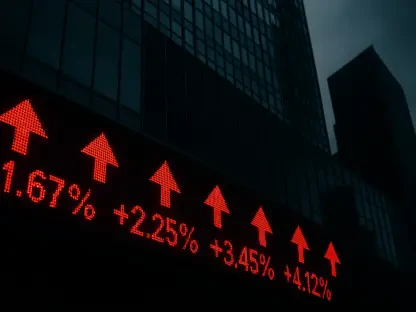

The Iranian regime’s nominal GDP has plummeted by nearly thirty percent since 2017, reflecting the severe impact of sustained international commercial isolation. This massive economic contraction is the result of a deliberate and systematic effort by the United States to implement what policymakers have dubbed an economic “D-Day.” By shifting away from the traditional cycle of limited sanctions and rhetorical condemnation, the current administration has initiated a comprehensive financial blockade designed to starve the Islamic Republic of the resources necessary to function as a modern state. This strategy prioritizes a total commercial freeze over direct military intervention, operating on the premise that a nation cannot sustain its regional ambitions if its domestic economy is effectively severed from the global financial grid. The goal is to force Tehran into a position where it must either fundamentally alter its behavior or face a total systemic collapse under the weight of its own isolation.
Strategic Interdiction: Dismantling Shadow Networks and Alliances
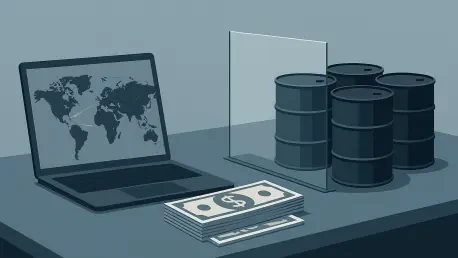
At the heart of this economic offensive lies a sophisticated regime of secondary sanctions that effectively forces third-party nations and private enterprises to choose between the Iranian market and the American financial system. Unlike previous iterations of trade restrictions, these measures are being applied with surgical precision, targeting every link in the supply chain from maritime insurance providers to port operators. Central to the current enforcement campaign is a massive crackdown on the shadow fleet, an aging network of oil tankers that utilize deceptive practices to transport Iranian crude across the Indian Ocean. By threatening to disconnect any institution found facilitating Iranian transactions from the global banking network, Washington has created a high-risk environment where the cost of doing business with Tehran far outweighs potential profits. Consequently, the regime’s ability to procure industrial components has been severely degraded, leaving its infrastructure to slowly deteriorate without the necessary parts for upkeep.
The effectiveness of this global blockade hinges on the delicate management of diplomatic friction, particularly as major powers like China and Russia continue to resist American dictates. While these nations maintain a degree of energy cooperation with Tehran, the increasing risk of secondary sanctions has caused even their largest state-owned banks to freeze Iranian-linked accounts to protect their broader international interests. A major turning point in this regional realignment occurred when the United Arab Emirates, formerly a primary hub for Iranian trade, officially suspended its financial ties with Tehran. The closure of these financial corridors has been a devastating blow, as it shut down the primary conduit for the illicit flow of electronics into the Iranian market. This shift signals a change in Middle Eastern geopolitics where economic security takes precedence over traditional ties, forcing the regime to rely on increasingly isolated and expensive supply chains.
Domestic Decay: Hyperinflation and the Dual-Economy Crisis
Inside the Iranian borders, the domestic economy is reeling from a catastrophic devaluation of the national currency, with the rial plummeting to record lows against the dollar on the open market. This hyper-depreciation has triggered a spiral of inflation that has made basic necessities, from medicine to staple food items, increasingly unaffordable for the average citizen. As the purchasing power of the population vanishes, the social contract between the regime and its people is fraying at an accelerated pace. Large-scale labor strikes and localized protests have become more frequent, driven not just by political dissent but by the sheer desperation of families unable to meet their daily needs. The government’s attempts to subsidize essential goods are failing as the costs of imports continue to rise while the available revenue streams dry up. This internal instability represents a significant threat to the administration, as security forces must increasingly shift from external ambitions to the suppression of domestic unrest born of economic ruin.
To survive these pressures, the Iranian leadership developed a dual-economy model that intentionally separated the suffering civilian population from the well-funded security apparatus. This strategy prioritized the allocation of resources to the military and the Islamic Revolutionary Guard Corps to ensure their loyalty. While the public sector faced severe budget cuts, elite units responsible for internal order moved millions of dollars through clandestine cryptocurrency networks. The ultimate success of the blockade was measured by its ability to fracture this power structure when the state lost the capacity to bankroll its internal coalition. To ensure future stability, international regulators should focus on standardizing digital asset transparency to prevent shadow conduits from 2026 to 2030. Strengthening the economic resilience of regional partners remains a critical next step to prevent the regime from establishing new illicit trade routes that could undermine security.