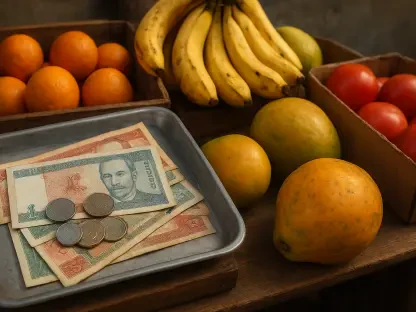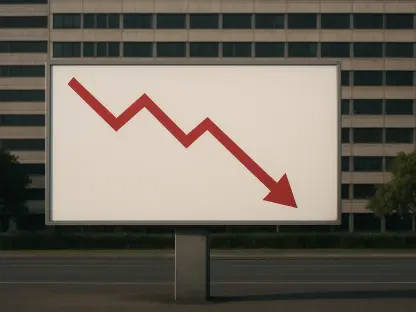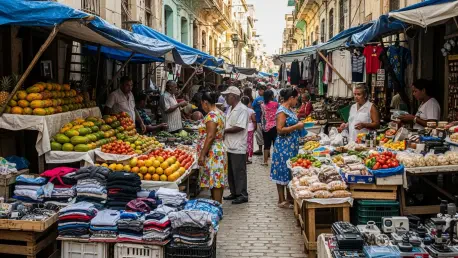

The sight of empty bank teller windows and the persistent hum of clandestine digital transactions have become the defining features of a national economy that no longer functions within its own official framework. Today, the surge in the informal currency market is the direct result of a profound and widening disconnect between government-mandated exchange rates and the harsh economic realities faced by the population. As systemic instability deepens, the official banking apparatus has failed to provide the necessary liquidity to meet public demand, effectively pushing citizens toward parallel markets for survival. In this environment, foreign currencies such as the U.S. dollar and the euro have transitioned from being secondary assets to serving as the primary benchmarks for determining the true cost of living across the island.
This shift has fundamentally altered how goods and services are priced, creating a landscape where state-controlled figures often bear little resemblance to the prices found on the street. Without a stable local currency, the population has adopted these foreign tenders as the only reliable measure of value in an increasingly unpredictable financial climate. The state’s inability to intervene effectively has allowed the informal sector to dictate the pace of economic life, leaving the official peso as a currency of convenience rather than a store of wealth. This evolution reflects a broader loss of institutional control over the national economy, as decentralized forces now drive the valuation of every essential commodity.
Market Trends and Foreign Currency Performance
Asset Performance: The Growth of Hard Currency Reserves
Confidence in the national currency has reached a critical low, prompting a sustained upward trajectory for both the U.S. dollar and the euro in the informal sector. Recent market data indicates that the dollar has reached a staggering 671 pesos, while the euro continues to command an even higher premium among those looking to insulate their savings from rapid depreciation. This growth is fueled by a constant demand for hard currency to facilitate international transactions and private trade, which the state-controlled financial system can no longer support or regulate effectively. As the central authorities struggle to maintain reserve levels, the informal market has become the only reliable source for businesses and individuals who require foreign tender to operate.
The result is a self-reinforcing cycle where the scarcity of dollars leads to higher street prices, which in turn fuels further hoarding by the public. This dynamic has solidified the role of foreign currency as the only viable hedge against an increasingly volatile domestic economy, leaving the peso to function in a diminished capacity. Because the official banks cannot meet the demand for exchange, the parallel market has expanded to fill the void, creating a decentralized banking system that operates through word-of-mouth and private networks. This shift has not only devalued the local currency but has also established a new economic baseline where the purchasing power of every citizen is tied to global exchange fluctuations.
Virtual Exchange: The Role of Digital Assets
Beyond the physical exchange of banknotes, the Freely Convertible Currency, known locally as MLC, occupies a volatile yet essential space within the informal market structure. While the MLC lacks a physical form and is restricted to virtual transactions within state-run retail outlets, its value on the street often experiences sharper daily fluctuations than traditional paper currencies. These spikes are typically tied to the immediate availability or scarcity of imported goods in government stores, where basic necessities are frequently absent for those using local currency. Consumers are forced to navigate a complex digital landscape to acquire these credits, often paying a significant markup to ensure they can purchase food or household electronics.
The high cost of acquiring this virtual asset places an immense burden on the average household, effectively creating a barrier to entry for many who do not have direct access to foreign transfers. This reliance on a digital medium for survival highlights the fragmentation of the financial system, as virtual assets become untethered from the fiscal realities of the domestic banking sector. Because the MLC is required for the most sought-after goods, its demand remains high despite its lack of physical utility outside of state stores. This has created a secondary digital economy where the value of a virtual credit is dictated by the urgent needs of the population rather than any underlying institutional backing or monetary policy.
Systemic Disconnect and Socio-Economic Consequences
Institutional Gaps: The Divergence of Official Rates
A massive disparity has emerged between the Central Bank’s stagnant exchange rates, particularly those classified under Segment III, and the actual prices dictated by informal street trade. Official figures have become largely irrelevant to the general population, as the state remains unable to offer foreign currency at its own mandated rates. This institutional vacuum has forced the public to rely on decentralized social media networks and messaging groups where prices are determined by real-time scarcity rather than administrative decree, making the state an observer rather than a participant in the market. Currently, the gap between official rates and the street value of some currencies has reached nearly 100 pesos.
This disconnect underscores a financial system that has lost its regulatory grip, leading to a chaotic marketplace where rumors and urgent needs drive daily price changes without oversight. Without a functioning mechanism to bridge this divide, the government is unable to stabilize the market or provide a predictable economic environment for its citizens. The lack of an official exchange window that actually provides liquidity means that the street rate is the only rate that matters for the majority of commercial transactions. This breakdown in communication between policy and practice has further isolated the central bank from the economic heart of the nation, leaving the informal market as the sole arbiter of value.
Social Divide: The Two-Tiered Economic Reality
The ongoing erosion of the peso’s value has triggered a cycle of runaway inflation that disproportionately impacts residents who receive their earnings exclusively in local currency. As the cost to acquire foreign currency continues to climb, the prices of food and essential services follow an identical path, effectively erasing the purchasing power of the average worker. This shift has resulted in a fractured, two-tier economy where financial security is determined solely by an individual’s access to foreign remittances or private sector bonuses paid in hard currency. Those without such connections are increasingly marginalized, struggling to afford even the most basic items in a market priced in dollars.
This socioeconomic divide is creating a permanent class of citizens who are excluded from the modern retail landscape, as the local peso becomes a symbol of diminishing returns. The reality of this dual economy means that labor is no longer tied to welfare, as the value of work is constantly undermined by the rising costs of an unregulated financial sector. As the gap between the classes widens, social stability is tested by the unequal access to basic commodities and the increasing difficulty of living within the state-managed salary structure. This environment has fostered a sense of economic alienation among those who lack the means to participate in the lucrative but expensive informal currency trade.
Strategic Pathways: Future Economic Stability
Addressing the fundamental imbalances within the national economy required a strategic shift toward transparency and the eventual unification of the currency system. It became clear that mere administrative adjustments were insufficient to bridge the gap between official policy and the street-level reality. To restore confidence, policymakers prioritized the establishment of a centralized, transparent exchange mechanism that reflected actual market demand rather than ideological targets. This transition involved incentivizing domestic production to reduce the reliance on expensive imports and creating legal avenues for currency exchange that could compete with the informal sector.
Furthermore, the expansion of credit facilities for local private enterprises helped stabilize the demand for foreign assets by grounding more economic activity in the domestic currency. These steps were essential for reintegrating the population into a cohesive financial framework that acknowledged the role of global markets while protecting the domestic labor force. Moving forward, the focus remained on strengthening the peso through sustainable growth and ensuring that the financial system served the needs of all citizens. By finally aligning official rates with economic reality, the government moved to diminish the influence of the informal market and re-established its role as the primary financial authority.