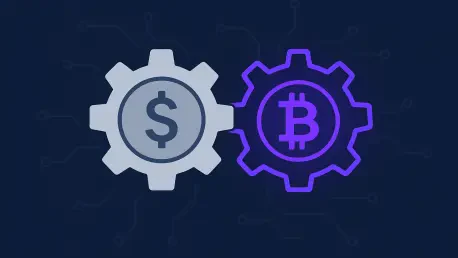

The historical boundaries between sovereign currency markets and decentralized digital assets are dissolving as traditional foreign exchange platforms adopt the rapid operational models of the cryptocurrency sector. This fundamental shift marks a departure from the era when these two financial ecosystems functioned in separate silos, governed by vastly different rules and participant behaviors. Historically, the foreign exchange market was the exclusive domain of central banks and massive institutional players, characterized by high barriers to entry and rigid settlement cycles. Conversely, the cryptocurrency market emerged as a decentralized, retail-centric frontier driven by transparency and community governance. However, the current landscape reveals a trading layer convergence that is rapidly blurring these distinctions. Even without moving entirely to public blockchains, the functional experience of trading major national currencies like the dollar or euro is becoming virtually indistinguishable from managing digital tokens on a smartphone.
The Transition to Continuous Market Operations
Cryptocurrency pioneered the always-on market, operating 24/7 and rendering the concept of an opening bell obsolete for a new generation of traders. This shift has fundamentally altered investor expectations, as the weekend hiatus typical of traditional finance now feels like an unnecessary restriction. In response, modern brokerage firms are working to eliminate the downtime that once defined the trading week. By leveraging automated market-making principles, these entities are ensuring that liquidity remains available at all hours, allowing for immediate reactions to geopolitical events that occur outside of standard New York or London banking hours. This evolution has turned the global currency market into a high-velocity environment where the distinction between a Sunday afternoon and a Tuesday morning has largely disappeared. Traders no longer wait for the Tokyo open to adjust their positions; they execute shifts in real-time as news breaks globally.
Beyond just extending the hours, the underlying mechanics of these trades are adopting the high-frequency nature of the digital asset world. The integration of advanced electronic mechanisms allows for a depth of liquidity that was previously difficult to maintain during off-peak hours. This structural change mirrors the environment of Bitcoin and Ethereum, where price discovery is a constant, non-stop process. This 24/7 functionality provides a level of flexibility that appeals to both retail speculators and institutional hedgers who require precise timing for their risk management strategies. As automated systems replace the manual intervention of traditional dealing desks, the operational friction that once slowed down the foreign exchange market is being systematically removed. This creates a seamless flow of capital that respects no borders and ignores traditional holidays, ensuring that the global financial system remains as dynamic as the digital information age demands for its survival.
Redefining the Standard of User Interaction
As these markets continue to merge, traditional providers are heavily borrowing from the digital-first retail experience established by major crypto exchanges. The days of complex, specialist-oriented terminal software are giving way to streamlined, app-based interfaces that prioritize intuitive design and immediate feedback. Modern unified dashboards now integrate spot markets, futures contracts, and sophisticated charting tools into a single, cohesive window. This allows a user to monitor a position in a major fiat pair while simultaneously tracking the volatility of a decentralized protocol without ever switching applications. From a purely psychological perspective, the gap between opening a position in the British Pound and a digital token is narrowing significantly. Traders are increasingly applying the same technical analysis techniques across identical software environments, treating every asset on their screen as a component of a single, global liquidity pool rather than distinct classes.
The barrier to entry for new participants is also falling as brokers adopt the frictionless onboarding processes that defined the early success of the crypto world. Gone are the days of weeks-long verification processes and bureaucratic hurdles that discouraged the casual investor from entering the foreign exchange market. Users can now establish accounts, verify their identity through automated biometric systems, and begin executing trades almost instantly. This convergence in the user experience means that the classic distinction between a traditional trader and a crypto trader is rapidly fading into history. Investors now expect a consistent, high-speed experience regardless of their specific goals. Whether they are hedging against inflation with a sovereign currency or speculating on the technological growth of a decentralized network, the demand for a low-latency, high-transparency interface has become the universal standard for all modern brokerage services and platforms.
Structural Integrity and Strategic Implementation
Despite the visible overlap in trading styles and software interfaces, the fundamental engines driving these markets remain distinct in their economic origins. The foreign exchange market remains deeply tethered to the mandates of central banks, national interest rate policies, and macroeconomic data such as inflation rates and trade balances. In contrast, the value of cryptocurrency is largely driven by network effects, speculative sentiment, and the protocols of decentralized governance. This underlying difference ensures that while the how of trading is converging, the why behind price movements remains rooted in two very different economic philosophies. One relies on the stability of sovereign credit, while the other bets on the resilience of mathematical code and decentralized consensus. Understanding these divergent foundations is essential for any participant looking to navigate this hybrid world, as the risks associated with a central bank pivot differ from those of a protocol upgrade.
In the recent months following the initial integration of these systems, institutional leaders successfully established more robust safety protocols that blended crypto speed with regulatory oversight. Professional participants recognized that the future of finance required a hybrid approach, where the reliability of sovereign-backed assets met the functional advantages of the digital age. They implemented real-time auditing and enhanced settlement procedures to protect against the volatility of the newer asset classes. Moving forward, traders should prioritize platforms that offer deep transparency into their liquidity sources and automated risk management tools. Investors must also cultivate a dual-competency in both macroeconomic analysis and on-chain metrics to fully grasp the complexities of the modern environment. By embracing these technological shifts while respecting the structural differences of each asset, participants effectively utilized these new tools to diversify their portfolios.