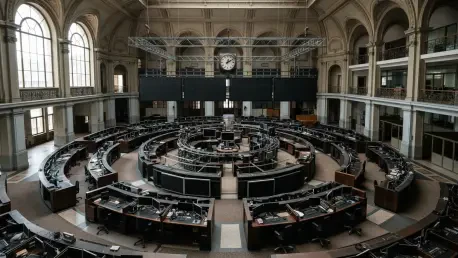

Even as automation reshapes the industry, the commodities business remains fundamentally rooted in localized market knowledge and the strength of personal commercial relationships. The 66th European Commodities Exchange, hosted in the bustling port city of Rotterdam, underscored this reality as four thousand industry leaders gathered to dissect the shifting paradigms of global trade. From grain traders and brokers to logistics experts and agricultural producers, the halls were filled with professionals seeking to move beyond digital screens and engage in the high-stakes physical reality of the market. This summit arrived at a crucial juncture when the industry is grappling with a transition away from traditional supply and demand models toward a more fragmented and unpredictable geopolitical environment. The collective intelligence gathered during this two-day event suggested that the path forward requires a blend of technological precision and the seasoned intuition that only comes from direct human collaboration and shared regional expertise. Industry veterans noted that while electronic platforms facilitate execution, the actual discovery of value and risk mitigation remains a deeply social and intellectual exercise.
Navigating Geopolitical Shifts and Market Volatility
Europe continues to occupy a strategic position as a vital bridge between the massive grain-producing regions of the Black Sea and the high-demand importing nations across the Middle East and North Africa. During the discussions in Rotterdam, it became clear that the competitive landscape is tightening as buyers increasingly weigh the stability and quality of European origins against the aggressive pricing of Black Sea heavyweights. Countries like France, Germany, Romania, and Bulgaria are finding that their role as reliable trade nodes is more essential than ever, providing a necessary counterbalance to regional instability. However, maintaining this position requires a sophisticated understanding of how local political decisions in exporting nations ripple across the global supply chain. The consensus among participants was that the European market must double down on its reputation for reliability to remain competitive against the high-volume output from emerging agricultural powerhouses that are currently seeking to dominate the global marketplace.
The global trade map is currently characterized by its volatility rather than a contraction of total volume. Traders observed that the variables influencing a deal have expanded significantly beyond simple crop yields to include rapid fluctuations in ocean freight costs, currency values, and shifting government export policies. These external factors can fundamentally alter the competitiveness of a specific grain origin almost overnight, forcing exporters to adopt a highly agile operational stance. In this high-stakes environment, the ability to pivot and respond to sudden logistical or political disruptions is now regarded as just as important as the inherent quality of the agricultural products themselves. Consequently, firms are increasingly prioritizing risk management and real-time data analysis to navigate these choppy waters. This trend highlights a broader shift where success is defined not just by what is grown, but by how effectively a company can manage the complex web of external influences that govern delivery schedules and international trade.
Strategic Impact of Black Sea Grain Stocks
A primary point of concern for attendees at the exchange involved the current status and future movement of wheat stocks within the Black Sea region. While production figures remain a topic of debate, the general industry consensus reached in Rotterdam was that grain stocks in Russia and Ukraine are remarkably healthy, which shifts the market focus from basic availability to tactical timing. The central question for global traders is no longer whether the grain exists, but rather how and when these massive inventories will be released into the international market. A coordinated or sudden influx of Black Sea wheat could easily saturate the global trade lanes, exerting significant downward pressure on prices and challenging the profitability of Western European producers. This environment has created a psychological tug-of-war between buyers waiting for a price floor and sellers trying to maximize the value of their holdings before the next harvest cycle begins, adding layers of complexity to daily procurement strategies.
This dynamic presents a specific tactical challenge for European Union exporters who must find windows of opportunity within the selling patterns of their Black Sea counterparts. If major players in the East decide to withhold stocks due to internal logistical delays or strategic state policies, a temporary vacuum is created that European origins can quickly fill. However, the short-term tactical decisions of these major players now influence global market sentiment more profoundly than long-term production forecasts. This has led to a trading environment where timing and market intelligence are the ultimate currencies. Traders in Rotterdam emphasized that traditional seasonal trends are being replaced by a more reactive model where news of a single policy shift or a port closure can trigger massive price movements. Navigating this requires a level of vigilance that transcends basic supply analysis, as the market is now reacting to the human and political intent behind the movement of every metric ton of grain.
Infrastructure Vulnerabilities and Logistic Resilience
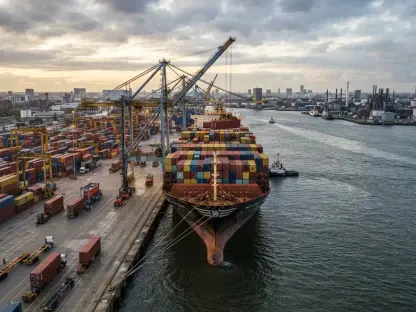
Beyond the macro-level concerns of international diplomacy and stock management, the exchange highlighted severe anxieties regarding the physical movement of goods through the European continent. The recurring issue of low water levels on major river systems like the Rhine and the Danube has evolved from a seasonal nuisance into a structural threat to the entire agricultural supply chain. These inland waterways serve as the lifeblood of commodity logistics, connecting landlocked production zones and storage facilities to the deep-water export terminals of the North Sea. When water levels drop below critical thresholds, barge loading capacities are drastically restricted, which forces a sharp increase in transportation costs as more vessels are required to move the same volume. This physical constraint creates a bottleneck that can leave grain stranded in silos while international buyers seek more reliable origins, effectively decoupling local market prices from the global futures exchanges.
The discussions in Rotterdam revealed a growing consensus that logistics often serve as the final determining factor in whether a trade deal is ultimately successful or commercially unviable. Even in scenarios where a seller possesses the necessary stock and a buyer is prepared to pay a premium, infrastructural failures or environmental disruptions can render the transaction impossible to execute. This reality is driving a new trend in the industry where market participants are forced to invest more heavily in resilient supply chain alternatives and diverse transportation modes. Pricing models are also being adjusted to reflect these physical risks, with many firms now incorporating logistic premiums to account for the increasing unpredictability of inland freight. As the industry looks ahead, the focus is shifting toward long-term investments in port infrastructure and water management to ensure that the physical flow of grain can withstand the environmental and operational challenges that have become the new normal.
Technological Integration and Future Operational Standards
While the wheat trade often captures the majority of media attention, the exchange also dedicated significant focus to the evolving dynamics of feed grains and oilseed meals. Feed demand across Europe and the Mediterranean remains robust, yet consumers are becoming far more sophisticated in how they optimize their rations based on quality and price. As weather patterns continue to cause unexpected shifts in the protein content and moisture levels of corn and barley, traders and processors must remain exceptionally fluid in their sourcing strategies. This has led to a trend where feed formulations are adjusted in real-time, with ingredients being substituted based on the immediate availability of alternatives. The gathering allowed various segments of the supply chain to synchronize their expectations for the coming year, moving toward a more unified understanding of how shifting production quality in one region will impact the demand for specific feed additives and substitutes in another.
The findings from the Rotterdam exchange demonstrated that the industry was moving toward a multi-dimensional strategy to ensure long-term stability. Market participants concluded that the integration of data-driven tools was no longer optional but a prerequisite for staying competitive in a volatile global landscape. They emphasized that firms should prioritize the diversification of supply chains to mitigate the risks associated with both geopolitical shifts and physical infrastructure vulnerabilities. Furthermore, the consensus suggested that future success would depend on a company’s ability to blend high-tech analytical capabilities with the traditional strengths of local market presence and interpersonal networking. By focusing on these core areas, the agricultural sector prepared to navigate the complexities of the next trade cycle with a renewed focus on resilience and strategic agility. The event ultimately proved that while tools were evolving, the fundamental need for human insight remained entirely unchanged.