
Housing Minister Clare O’Neil has defended the sharp decline in lending as a necessary rebalancing that prioritizes residential ownership over speculative investment. This assertion comes at a time when the Australian real estate landscape is undergoing its most radical transformation in decades, characterized by a swift and deliberate retreat of private investors from the residential sector. The federal government’s recent fiscal overhaul has effectively disrupted long-standing market dynamics, creating a vacuum where speculative buying once thrived. As the nation grapples with these sweeping changes, the primary focus has shifted toward ensuring that the average citizen can compete in a market that was previously dominated by well-capitalized portfolios. The cooling of the mortgage market reflects a broader strategy to curb unsustainable price growth and reorient the housing supply to meet social needs rather than purely financial gain, signaling a new era for Australian real estate development and ownership.
Record Contraction in the Mortgage Market
The latest figures from the Australian Bureau of Statistics have sent shockwaves through the financial sector, revealing a staggering 30.6% decline in investor-led lending for the quarter ending in September. On an annual basis, the participation of private investors in the mortgage market has contracted by nearly 39%, representing the most significant pullback since records began. This historic downturn is particularly pronounced in high-activity regions like New South Wales and Queensland, where the appetite for real estate investment has essentially evaporated under the weight of new regulatory constraints. In New South Wales, lending for existing residential assets collapsed by nearly 50%, a figure that underscores the severity of the current market correction. While first-time buyers have also shown signs of caution, their retreat is significantly less dramatic, suggesting that the government’s efforts to tilt the scales in favor of residential occupants are beginning to manifest in national lending patterns.
Regional variations across the continent further illustrate the uneven nature of this market contraction, with Victoria and Western Australia experiencing their own unique pressures. In Victoria, loans for existing homes saw a 27% reduction, while the downturn in Western Australia reached a sharp 38.1%, reflecting a widespread lack of confidence among those who traditionally utilized real estate as a primary wealth-building tool. However, a closer examination of the data reveals a telling disparity between existing dwellings and new construction projects. While the secondary market for existing homes has stalled, lending for new construction has proven to be relatively more resilient, dropping by a more moderate 18.4% in several key jurisdictions. This trend highlights a fundamental shift in the deployment of private capital, as investors are increasingly forced to choose between the diminishing returns of older properties and the tax-advantaged status of new residential developments, creating a bifurcated market that favors supply expansion.
Strategic Legislative Shifts and Market Response
The primary catalysts for this massive market correction are rooted in the federal government’s strategic revisions to the national tax code, specifically targeting negative gearing and capital gains tax concessions. By restricting the ability to offset rental property losses against total income solely to new construction, policymakers have effectively removed the financial incentive for investors to compete for existing housing stock. Furthermore, the decision to phase out the 50% capital gains tax concession in favor of an inflation-adjusted model has further eroded the speculative appeal of residential real estate. These legislative shifts were designed to direct investment toward expanding the total housing supply, yet they have also introduced a level of fiscal friction that many market participants were unprepared to navigate. When combined with five consecutive interest rate hikes by the Reserve Bank of Australia, the resulting environment has become one of the most challenging periods for property management in the nation’s history.
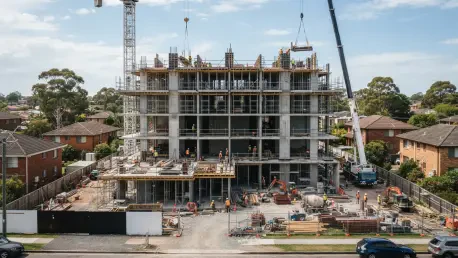
The fallout from these policy changes sparked a vigorous debate regarding the health of the nation’s housing ecosystem, as Minister Clare O’Neil argued that the previous focus on real estate investment had distorted market accessibility. In contrast, industry experts cautioned that penalizing the investor class could exacerbate the rental shortage, leading to increased financial strain for non-owners. Amidst this retreat of private capital, a notable pivot toward high-density institutional development emerged, with loans for apartment buildings and data centers reaching record highs. This transition reflected an evolution where large-scale projects replaced the small-scale suburban landlord as the primary driver of construction activity. To adapt, stakeholders were advised to prioritize projects aligned with new tax incentives and to monitor the long-term impact on rental availability. Ultimately, the market initiated a structural self-correction that prioritized sustainable growth over speculation, ensuring that residential ownership remained a viable goal.