
The financial hubs of Dubai and Abu Dhabi are witnessing a tectonic shift as seasoned investors increasingly abandon the long-standing MetaTrader 4 platform in favor of sophisticated, multi-asset alternatives. This transition is not merely a preference for newer aesthetics but a strategic response to the limitations of a software ecosystem that was fundamentally designed for a different era of financial interaction. While MT4 dominated the retail sector for years, the modern UAE investor now demands real-time access to global equities, commodities, and digital assets through a single, unified interface. The rapid maturation of the regional market has highlighted the growing gap between legacy infrastructure and the high-speed, data-heavy requirements of today’s professional trading strategies. Consequently, the local investment community is prioritizing platforms that offer deeper liquidity pools and more robust security protocols to protect substantial capital allocations in an increasingly volatile global economy.
The Decline of Legacy Trading Infrastructure
Overcoming Technical Debt: The 32-Bit Bottleneck
The primary driver behind this mass migration is the overwhelming accumulation of technical debt inherent in outdated software architectures that cannot keep pace with 2026 standards. MetaTrader 4 was originally architected as a 32-bit application with a primary focus on the decentralized foreign exchange market, which severely limits its ability to integrate centralized exchange feeds efficiently. When UAE investors attempt to manage diverse portfolios containing international stocks and exchange-traded funds, they often encounter significant latency and synchronization errors that can lead to costly execution slippage. This architectural bottleneck prevents the seamless implementation of modern risk management tools that require high-speed data processing across multiple asset classes simultaneously. As the regional market moves toward a more institutionalized structure, the reliance on such restrictive legacy code has become an unacceptable operational risk for those managing large-scale private equity or family office funds.
Managing Asset Constraints: Beyond Foreign Exchange
Beyond basic connectivity issues, the aging infrastructure of legacy platforms fails to provide the scalability required for the high-frequency trading strategies now prevalent in Dubai. Modern order management systems must handle thousands of price updates per second without compromising the stability of the user interface or the accuracy of the technical indicators being utilized. In contrast, older systems frequently suffer from terminal freezes or delayed chart updates during periods of intense market volatility, such as major central bank announcements or regional geopolitical shifts. UAE traders are increasingly recognizing that the inability to customize the core execution engine of their software puts them at a distinct disadvantage against global competitors using modular, API-driven solutions. This realization has sparked a localized demand for platforms that allow for deep customization and the integration of third-party analytical plugins that provide a more granular view of market microstructures and liquidity flows.
Leading Software Alternatives for Modern Investors
Analytical Depth: MetaTrader 5 and TradingView
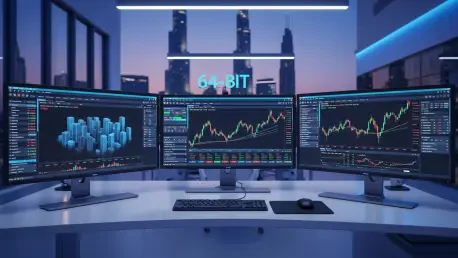
MetaTrader 5 and TradingView have successfully positioned themselves as the natural successors by offering the analytical depth and cross-device flexibility that today’s investors expect. MT5 offers a significant leap forward with its 64-bit multi-threaded architecture, allowing for the native handling of thousands of symbols and the inclusion of advanced features like a built-in economic calendar and market depth visibility. Meanwhile, TradingView has revolutionized the social aspect of trading by providing cloud-native charting that allows investors in Abu Dhabi to share complex technical setups with a global community instantly. The ability to move from a desktop workstation to a mobile device without losing chart annotations or custom script settings has become a non-negotiable requirement for the modern professional. These platforms effectively bridge the gap between retail-level accessibility and the rigorous requirements of professional-grade research, ensuring that users are never more than a click away from critical market data.
Institutional Execution: cTrader and NinjaTrader
For those who prioritize execution transparency and institutional-grade speed above all else, cTrader and NinjaTrader offer specialized environments that bypass the limitations of traditional setups. cTrader is particularly esteemed in the Middle East for its commitment to direct market access and Level II pricing, which provides traders with a transparent view of the full limit order book without the risk of broker interference. This level of transparency is essential for high-net-worth individuals who need to ensure that their large orders are being filled at the best possible prices across various liquidity providers. NinjaTrader, on the other hand, remains the platform of choice for the algorithmic and futures trading community, offering precise tick-by-tick backtesting capabilities and high-speed data routing to major global exchanges. By adopting these high-performance systems, UAE investors can operate with a level of precision and technological sophistication that was once exclusively reserved for the most elite institutional trading desks.
Strategic Market Trends in the UAE
Broker Integration: The Rise of Proprietary Systems
There is also a growing trend among sophisticated UAE investors toward adopting proprietary platforms offered by premier global brokerages such as Saxo Bank and Interactive Brokers. These specialized “walled garden” systems are meticulously optimized for the specific asset classes and advanced order types provided by the broker, resulting in a highly stable and integrated trading environment. While these proprietary ecosystems may lack the general portability of independent third-party software, the trade-off is frequently justified by the superior security features and the inclusion of comprehensive wealth management tools. Investors find significant value in having a single interface that manages everything from simple spot currency trades to complex multi-leg option strategies and long-term bond holdings. This shift indicates that the convenience of a unified financial ecosystem and the availability of specialized professional tools are becoming just as important as the raw execution speed or the variety of technical indicators.
Regulatory Alignment: Future-Proofing Financial Activity
The evolution of the regional trading landscape was deeply influenced by the rigorous regulatory standards established by the Securities and Commodities Authority and other local financial bodies. Investors ultimately recognized that maintaining a competitive edge required a transition toward platforms that supported advanced data-driven decision-making and total transparency. This movement away from legacy systems provided a necessary foundation for traders to navigate the complexities of a diversifying global market with greater confidence and accuracy. By prioritizing technological agility and regulatory alignment, market participants in the UAE successfully modernized their operational frameworks to meet the demands of a high-speed financial era. Moving forward, the focus shifted toward integrating artificial intelligence and machine learning modules directly into these advanced platforms to further refine predictive modeling and risk assessment. The adoption of these sophisticated tools ensured that the region remained a leading hub for financial innovation and institutional-grade investment activity globally.