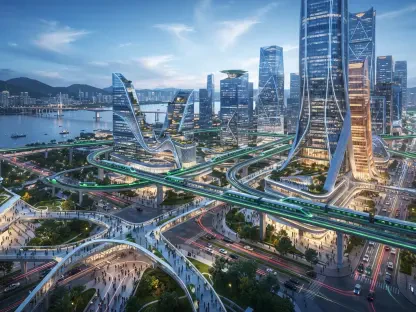

Real estate investment functions as an exercise in urban scouting where identifying convergence points of commerce and transport is the key to wealth generation. While the visual appeal of a modern skyscraper or the intricate details of a luxury suite often capture the initial attention of prospective buyers, these elements are secondary to the land upon which the structure stands. In the high-stakes environment of property acquisition, the geographical context of a residence serves as the primary engine for both capital appreciation and long-term market resilience. A property situated in a stagnant or isolated area will struggle to maintain its value, regardless of the quality of its interior finishes. Conversely, a modest unit positioned within a burgeoning economic corridor possesses an inherent growth potential that far exceeds its physical footprint. As urban centers become more densely populated and complex, the distinction between a simple address and a strategic location becomes the defining factor in an investor’s ability to secure and grow their financial legacy.
The concept of value in the modern housing market has shifted away from isolated luxury toward a comprehensive neighborhood ecosystem that supports a productive lifestyle. This evolution suggests that the most successful investors are those who can look beyond the four walls of a building to evaluate the invisible networks that sustain urban life. Connectivity, in this sense, is not just about proximity to a road, but rather the property’s integration into a larger web of employment hubs, educational institutions, and healthcare facilities. By reducing what urban planners call commute friction, a strategically located property provides the resident with the most valuable modern commodity: time. This fundamental utility ensures that demand for well-placed residences remains high, even during periods of broader economic volatility. Consequently, the strategic placement of a home is not merely a matter of convenience; it is a foundational asset that dictates the property’s performance throughout its entire lifecycle.
The Impact: Infrastructure and Connectivity as Value Drivers
Proximity to mass transit systems and major road networks is the most significant driver of property appreciation in the current real estate landscape. Developments situated near established transit lines, such as the LRT and MRT, or major thoroughfares like EDSA and C-5, provide residents with unparalleled mobility that translates directly into financial gain. This accessibility is widely considered the ultimate amenity because it functions as a permanent enhancement to the property’s utility that the developer cannot simply replicate through interior design. As cities continue to expand and traffic congestion becomes a persistent challenge for the workforce, the premium placed on transit-oriented developments continues to rise. Investors who prioritize these corridors are essentially buying into the city’s nervous system, ensuring that their assets remain relevant and highly liquid as the population seeks out ways to navigate the urban environment more efficiently.
Forward-thinking investment strategies also require a keen focus on planned infrastructure projects to capture early-mover advantages before market prices reflect their completion. The anticipation of new subway stations, airport expansions, or highway extensions often triggers a surge in land value long before the first stone is laid. By identifying these growth corridors in their early stages, savvy investors can position themselves to benefit from the massive capital gains that occur once a region is fully integrated into the metropolitan transportation grid. This proactive approach involves analyzing government development roadmaps for the period from 2026 to 2030, seeking out areas that are slated for improved accessibility. Future-proofing an investment in this manner requires a deep understanding of how public works projects reshape the desirability of a district. When a once-overlooked neighborhood suddenly gains a direct rail connection to the central business district, the resulting increase in demand often leads to exponential growth in rental yields and resale value.
Regional Growth: Strategic Urban Hubs and Market Synergy
Different geographic clusters within a metropolis illustrate how specific location-based advantages manifest in unique ways for the property owner. In northern urban sectors like Quezon City, the convergence of high-level education, specialized medical centers, and dual-transit options creates a formidable environment for long-term investment. Properties in these areas, such as those located near the future Metro Manila Subway Anonas Station or the existing LRT-2 lines, benefit from being networked into multiple layers of the city’s infrastructure. This multi-layered connectivity stabilizes rental demand by appealing to a diverse demographic, ranging from graduate students to medical professionals. Furthermore, gateway locations in regions like Caloocan tap into established commercial traffic and historical trade routes, providing a stable environment for those seeking consistent income through residential synergy with traditional business districts. The value in these hubs is driven by their status as self-sustaining ecosystems where residents can live, work, and study without extensive travel.
In central districts like Pasig, the value of a real estate asset is primarily derived from its role as an intermediary hub that bridges the gap between major commercial cores. These locations serve as vital links between massive employment centers like Ortigas and Bonifacio Global City, making them ideal for professionals who need to move between different corporate headquarters. The introduction of international design partnerships and prestige branding in these intermediary zones further bolsters a property’s standing in a competitive market. For example, projects that incorporate specialized architectural philosophies or collaborate with global entities often command higher premiums because they offer a level of quality that matches the strategic importance of the site. This combination of a central, high-demand location and superior construction standards ensures that the asset remains competitive over several decades, resisting the natural depreciation that often affects properties in less connected or poorly branded neighborhoods.
Strategic Perspectives: Economic Nucleus and Future Resilience
The heart of a major city, encompassing districts like Makati and Mandaluyong, remains the gold standard for real estate value due to its geographic centrality and concentration of capital. These areas are often equidistant to every major commercial hub in the region, offering a level of multi-directional accessibility that makes them virtually tenant-proof. As older industrial zones within these districts evolve into high-end residential extensions of the Central Business District, the demographic of the area shifts toward high-value tenants, multinational executives, and frequent travelers. This evolution demonstrates the incredible capacity of a prime location to reinvent itself, significantly increasing the property’s worth as the surrounding neighborhood matures and gentrifies. For the investor, this means that the initial high cost of entry is offset by the security of owning an asset in a location that the city cannot afford to let fail, providing a safety net that outlying areas simply cannot offer.
Successful property acquisition in the current decade was ultimately a refined exercise in urban scouting that prioritized the long-term trajectory of the city over short-term architectural trends. The analysis of market performance indicated that the most resilient assets were those situated at the intersection of transportation, commerce, and lifestyle amenities. By categorizing potential investments through the lenses of immediate utility, future growth potential, and adaptive resilience, investors were able to navigate a complex market with high levels of confidence. The evidence suggested that while internal features provided comfort, it was the external connectivity and the surrounding neighborhood ecosystem that determined the final return on investment. Looking ahead, prospective buyers should focus on acquiring properties within 500 meters of planned transit hubs or within established growth corridors that show signs of continuous commercial expansion. Prioritizing these “convergence points” will remain the most effective strategy for ensuring that a real estate portfolio continues to thrive in an increasingly dense and competitive urban environment.