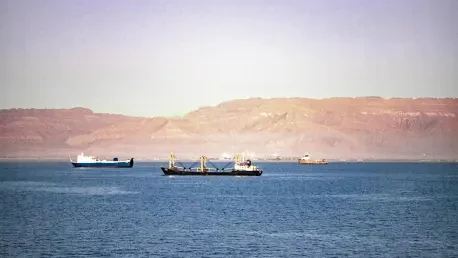

The silent vibration of the Arabian Sea now carries the heavy weight of a global economy held in suspense as the USS Abraham Lincoln maintains its watchful vigil over the world’s most precarious maritime corridor. Since the guns fell silent in February, the transition from a brittle ceasefire to a permanent peace has become a complex chess match between Washington and Tehran. While a 14-point framework for reconciliation exists on paper, the presence of an American carrier strike group signals that the path to normalcy is still obstructed by deep-seated distrust and strategic friction. This period of cooling hostilities represents a high-stakes pause where the geography of global energy and the physics of nuclear enrichment dictate every diplomatic move.
The Fragile Architecture of an Uneasy Ceasefire
The current diplomatic landscape is less a definitive resolution and more a calculated suspension of active combat. Although negotiators have narrowed the gap on secondary issues, the fundamental stalemate persists because both nations view the remaining hurdles as existential. The United States, led by an administration prioritizing regional stability and maritime freedom, is balancing the “good signs” of progress against the reality of a blockade that remains the only leverage against a sudden escalation.
This fragile peace relies on a framework that seeks to untangle decades of animosity, yet the physical indicators of conflict remain visible. The silence at the ports is not a sign of recovery but a symptom of a standstill that keeps the international community on edge. As long as the primary terms of engagement remain unresolved, the ceasefire functions as a temporary shield rather than a permanent bridge toward a signed treaty.
Why the Stalemate Holds Global Energy and Security Hostage
To understand the weight of this deadlock, one must look toward the structural pillars that support global stability. The Strait of Hormuz is the jugular vein of international trade, traditionally facilitating the movement of 20% of the world’s oil and liquefied natural gas. With traffic currently at a standstill, the economic ripples are felt in every industrial hub from Tokyo to Berlin, transforming a regional skirmish into an urgent matter of international survival that transcends bilateral grievances.
Furthermore, the status of Iran’s enriched uranium stockpile elevates the tension from a local maritime dispute to a global proliferation crisis. The international community is forced to navigate the thin line between Iranian assertions of energy sovereignty and Western fears of a nuclear-armed state. This deadlock ensures that until a compromise is reached, the global energy market remains volatile and the specter of a nuclear arms race in the Middle East continues to loom over diplomatic efforts.
The Dual Roadblocks: Maritime Sovereignty and Nuclear Safeguards
Control over the world’s most vital oil chokepoint remains a non-negotiable point for the U.S. administration. Secretary of State Marco Rubio and President Donald Trump have categorized the potential imposition of tolls on the Strait of Hormuz as an unfeasible demand. Despite whispers of a joint Iranian-Omani payment system, Washington maintains that it holds total control over the waterway and will accept nothing less than its restoration as a free, international passage.
The second hurdle involves the physical location and enrichment levels of Iran’s uranium. The United States demands the immediate removal of near-weapons-grade materials to ensure they cannot be converted into a functional arsenal. Conversely, Ayatollah Mojtaba Khamenei has issued firm directives prohibiting any transfer of the stockpile abroad. This clash of interests pits the American goal of total denuclearization against a domestic Iranian insistence on maintaining control over nuclear assets for what they claim are peaceful purposes.
Expert Perspectives on the Diplomatic Deadlock
Regional power brokers view the current window for peace as dangerously narrow, noting that rhetoric and reality are frequently at odds. While Secretary Rubio has expressed cautious optimism, his words are tempered by the continued presence of the USS Abraham Lincoln. This suggests that the diplomatic “good signs” are merely a surface layer over a deeper military commitment that will not flinch until specific concessions are made.
The involvement of third-party mediators, such as the Pakistani army chief’s recent trip to Tehran, highlights the necessity of an external bridge between American demands and Iranian sovereign claims. Analysts suggest that as long as the carrier group looms off the coast, the situation remains a single misunderstanding away from a return to active warfare. The deadlock is not merely a matter of stubbornness but a reflection of two different visions for regional security that have yet to find a common center.
Navigating the 14-Point Framework Toward a Final Resolution
Transforming this uneasy ceasefire into a lasting peace required a sophisticated sequence of compromises that addressed both the maritime and nuclear spheres. A multi-stage de-escalation process became the only viable path forward, starting with the establishment of a neutral monitoring body for the Strait of Hormuz. This entity managed to bypass the “toll” terminology while providing Iran with the security assurances it sought without violating international laws regarding free passage.
The resolution eventually hinged on a “deferred removal” model for uranium stockpiles, which allowed the material to remain under strict, 24-hour international surveillance on Iranian soil. This move, combined with a phased lifting of the U.S. maritime blockade in exchange for verifiable enrichment caps, utilized the Pakistani mediation channel to finalize the remaining points of the peace framework. By decoupling the immediate military pressure from the technical negotiations, the parties moved toward a sustainable agreement that prioritized long-term regional stability over short-term political victories.