
Natalie Poirain sits down with Priya Jaiswal, a seasoned banking and finance strategist known for guiding large-scale infrastructure portfolios through policy shocks and market cycles. With projects worth billions in flux, Priya brings a pragmatic lens to the politics-meets-capital puzzle unfolding along the East Coast. Grounded in real-world deal flow, she parses what five blocked offshore wind projects, federal court reversals, and a high-profile $1 billion lease payout mean for jobs, tax bases, and the bankability of clean energy. Across our conversation, she dissects the immediate playbook for agencies and developers, the intraparty rifts exposed by nine House Republicans demanding answers, and how a coastal Virginia build—priced around $11.5 billion with 176 turbines located about 27 miles offshore—can still anchor a resilient regional economy serving more than 660,000 homes at full 2.6-gigawatt buildout.
When a new administration blocks multiple offshore wind projects on day one, how should agencies, developers, and states respond? Walk us through the immediate legal, financial, and operational steps, and share any benchmarks that determine whether to litigate, renegotiate, or redeploy capital.
Day one blocks trigger a triage mode: preserve rights, preserve cash, preserve optionality. Legally, you move for preliminary relief while assembling a tight record that mirrors the very approvals the administration is now discarding—especially if courts have already put similar projects back on track, as they did for the five East Coast builds. Financially, you freeze nonessential capex, hedge near-term exposure, and open amendments with lenders to toll milestones without tripping defaults; a clean communication to equity about runway and decision gates is critical. Operationally, you secure yards and laydown areas so that a 27-mile offshore staging plan doesn’t unravel, and you stand up a renegotiation channel with offtakers to convert a pause into a schedule shift. Benchmark-wise: you litigate if permits and consultations are complete and comparable cases have won; you renegotiate if timelines slip but economics remain intact; and you redeploy capital if a payout like the $1 billion lease exit becomes the de facto policy signal—though I prefer performance bonds or re-auctions that keep capital in productive use.
Nine House Republicans pressed for an explanation after major offshore wind cancellations. What does that signal about intraparty dynamics? How do coastal economic interests reshape energy positions, and what coalition-building tactics actually move skeptical lawmakers?
When nine Republicans publicly question cancellations, it telegraphs a fault line between ideology and district economics. Coastal members are reading the room: port jobs, supplier contracts, and a visible $11.5 billion local project cut across traditional talking points. Their risk calculus changes when constituents see construction cranes, not just headlines, and when a workforce council says training is underway. The tactics that move skeptics are hyper-local: invite-only yard walk-throughs, union briefings with wage ladders, and small-business roundtables anchored by purchase orders. Link the project’s 1,000 jobs and about $2 billion in activity to district-level competitiveness, and skepticism becomes a negotiation, not a veto.
In one year, roughly $35 billion in clean energy projects were canceled, with Republican districts losing nearly twice as much investment as Democratic ones. How do you quantify those local impacts? What jobs, supply-chain contracts, and tax revenues are most at risk, and how can communities hedge?
Start with the capex-to-payroll conversion visible in the coastal Virginia case: a multibillion-dollar build translating into 1,000 jobs and about $2 billion in knock-on activity. Then map that against vendor rosters—fabrication shops, marine logistics, safety training, and site civil work—because those contracts keep small firms afloat between cycles. Counties feel it in construction sales taxes, port fees, and the long tail of maintenance service taxes once turbines spin. Hedging means building a dual pipeline—offshore wind and other maritime work—so yards aren’t single-threaded, and insisting on step-in rights for states so that if federal winds shift, local contracts and training cohorts still proceed under a phased plan.
A coastal Virginia project priced around $11.5 billion aims for 1,000 jobs and about $2 billion in economic activity. What are the job categories and wage bands involved? Describe training pipelines, credential timelines, and how local ports and shipyards are integrated.
The bulk of early jobs cluster in marine construction, electrical installation, heavy-lift operations, and HSE roles, with a durable tail in operations technicians, remote monitoring, and port stevedoring. Wage bands rise with risk and credentialing; even without quoting specific figures, the mix of skilled trades, sea-time premiums, and specialty certifications yields household-sustaining pay. The training pipeline runs through maritime programs and workforce councils that are already mobilized for the project, channeling candidates through safety and sea-survival courses before deploying them to pier-side practice rigs. Ports become the heartbeat: a staging area at the marine terminal orchestrates components so that 176 turbines can be sequenced and pushed 27 miles out with shipyard refits, crew transfer drills, and just-in-time logistics that keep vessels fed and idle time low.
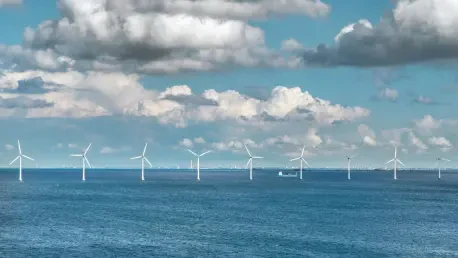
With 176 turbines located about 27 miles offshore and difficult to see from land, how should leaders address aesthetic and tourism concerns? What messaging, visualization tools, and community benefit agreements actually change minds?
You start with lived experience: invite residents to the shoreline and ask them to point out the turbines—most will struggle because, at that distance, the horizon swallows them. Pair that with high-resolution visual simulations from vantage points people actually use—boardwalks, beaches at dusk—so the abstract becomes tangible. Community benefit agreements matter when they are hyperlocal: beach nourishment, workforce scholarships tied to zip codes, and guaranteed funding for coastal amenities that visitors can touch. The tone should be calm and empirical—“here’s the horizon line today; here’s the same line with turbines”—and then you close the loop by publishing monthly tourism stats so perception doesn’t outrun reality.
Delivering first power marks a milestone. What grid integration challenges arise next—interconnection queues, transmission upgrades, or curtailment risks? Share concrete timelines, contingency plans, and cost-recovery mechanisms you’ve seen succeed.
After first power, the stress shifts to onshore bottlenecks: substation energization, relay coordination, and phased transmission tie-ins so production isn’t stranded. Timelines tend to mirror construction windows—aligning outages with low-demand periods—while contingency planning floods the zone with spare transformers, backup protection settings, and pre-approved reroutes. Curtailment risk gets managed via staged ramp-ups and day-ahead coordination, plus contractual pathways for make-whole adjustments so revenue isn’t whipsawed. On cost recovery, regulated utilities have succeeded with transparent riders that tie spend to discrete milestones—think “export cable energized,” “substation commissioned”—so customers see progress and commissions can audit line-by-line.
At full buildout, 2.6 gigawatts could power more than 660,000 homes. What capacity factor, outage assumptions, and seasonal wind profiles underpin that estimate? How should utilities plan reserves and storage to firm this resource?
The 660,000-home figure is the developer’s shorthand for average output over a year at the 2.6-gigawatt nameplate; baked into that are seasonal wind patterns and planned maintenance windows. Rather than chase a single capacity factor, planners should work with hourly profiles that reflect stronger shoulder-season winds and calmer summer spells. Reserve planning means co-optimizing quick-start assets and demand flexibility while scheduling maintenance during historically windy weeks to smooth output. Storage doesn’t have to be colossal to be valuable—targeted durations that shave peaks and firm ramps can turn a variable resource into a dependable system contributor.
Rapid growth in AI data centers is driving regional electricity demand. How can offshore wind contracts, pricing structures, and grid planning align with 24/7 high-load facilities? Offer examples of tariff design, PPAs, or colocated storage that work.
Pair the offshore profiles with load-following blocks: tranche a PPA so the wind slices cover the lion’s share of nighttime and shoulder hours while flexible supply fills the mid-day gaps. A bespoke tariff can blend fixed delivery from the wind farm with a balancing service priced against verifiable profiles, rewarding predictability and penalizing unnotified deviations. Colocated or contracted storage can time-shift portions of the offshore output into the late afternoon, sharpening the match to data center peaks. The winning pattern is portfolio logic—offshore wind as the anchor, storage for shaping, and a balancing product that makes the operations team feel they’re flying on instruments, not by feel.
Courts have recently put halted projects back on track. What legal arguments and administrative records tend to prevail in these cases? Outline the documentation developers should assemble from day one to withstand policy whiplash.
Courts look for procedural regularity and a reasoned basis—if agencies followed the rules, weighed the evidence, and built a coherent record, sudden reversals often falter. What tends to prevail are meticulous permit files, consistent consultations, and contemporaneous analyses that show why decisions were made. Developers should treat documentation like a bankable asset: cradle-to-current meeting notes, stakeholder comments with responses, engineering change logs, and impact assessments that are indexed and cross-referenced. From day one, maintain a litigation-ready data room so that when politics zigzags, you can show a judge the straight line you walked.
A lawmaker backed both offshore wind locally and a bill rolling back clean energy tax credits nationally. How do you reconcile such split decisions politically and economically? What metrics should voters use to judge whether district benefits outweigh federal trade-offs?
Politically, it’s the two-level game: district-first optics meet national party alignment. Economically, the question is whether the local project’s payrolls, vendor awards, and rate stability outmuscle the headwinds imposed by weaker federal incentives. Voters should track three metrics: project timelines (did the vote slow or threaten them), delivered jobs versus the promised 1,000, and consumer outcomes—are bills and reliability improving as first power arrives. If the district’s gains hold—construction steady, about $2 billion in activity materializing—while national cuts raise costs, the split vote looks less like balance and more like a drag masked by local momentum.
A federal decision reportedly paid a foreign firm to exit wind leases in favor of oil and gas. How do such payouts distort market signals? Describe alternative pathways—re-auctioning, milestone-based performance bonds, or cross-technology crediting—that protect taxpayers.
Writing a $1 billion check to unwind two leases advertises that policy volatility is bankable, not just survivable, and that’s a troubling market signal. It rewards exit engineering over execution excellence and spooks lenders who crave stable rules. Better options include re-auctioning under clarified terms so competition, not negotiation, sets value; milestone performance bonds that forfeit progressively if timelines slip; and cross-technology crediting that lets firms pivot within energy portfolios without cashing out. Those tools preserve taxpayer leverage and keep capital aimed at building, not arbitraging policy.
In coastal regions where opposing wind brings little upside, what’s the winning playbook? Share anecdotes on stakeholder mapping, union partnerships, and veteran hiring that have neutralized opposition and built durable support.
The playbook starts with a map of who actually holds sway—dockmasters, fishing cooperatives, shipyard foremen, not just city hall. Union partnerships turn skeptics into advocates when apprenticeship slots convert into steady pier-side paychecks and clear paths to crew transfer roles. Veteran hiring resonates in Navy towns—when a former helicopter crew member lands a supervisory job at the port, you get word-of-mouth that no ad buy can match. Over time, regular coffee chats at the terminal and transparent safety briefings cool anxieties because people can see, touch, and critique the work without being shut out.
When federal funding for a major rail tunnel was nearly blocked, courts intervened to restore it. What parallels do you draw for safeguarding energy infrastructure finance? Detail step-by-step strategies states can use to lock in funds early.
The parallel is simple: build a record, lock in agreements, and be prepared to litigate fast. Step one, secure binding grant agreements with explicit milestones, not letters of intent. Step two, match state funds early so you can demonstrate readiness if the feds wobble. Step three, escrow critical-path procurements and keep a court-ready file of approvals; when a block hits, you can point to signed commitments and precedent where judges restored funding for essential infrastructure.
Community colleges and workforce councils are training maritime workers for offshore wind. What curricula, sea-time requirements, and safety certifications matter most? Give a timeline from enrollment to placement and the attrition points to watch.
The core is maritime safety, electrical basics, and offshore survival, coupled with hands-on rigging and transfer practice at the port. Sea-time accrues through supervised trips on crew vessels, while safety modules emphasize transfer protocols and emergency drills—habits you want ingrained before the first offshore shift. A practical timeline runs from enrollment to pier-side labs, then short sea rotations, and finally placement as construction ramps; each handoff is an attrition point if transportation, childcare, or stipend supports aren’t in place. Workforce councils smooth those edges, turning capable students into confident crew members who can handle a 27-mile offshore commute and the cadence of turbine work.
Turbines far offshore reduce viewshed issues but raise maintenance and vessel logistics challenges. What KPIs—weather downtime, vessel utilization, crew transfer safety—define operational excellence? Share the tech stack that’s proving its worth.
Operational excellence offshore looks like shrinking weather downtime through accurate forecasting and crisp go/no-go calls, while keeping vessel utilization high without overextending crews. Crew transfer safety is a day-one KPI—no compromises—and it’s reinforced by training cadence, boarding systems, and a culture that celebrates early stand-downs when conditions shift. The tech stack blends remote monitoring, predictive maintenance analytics, and digital twins of the 176-turbine array so inspections are targeted, not rote. Tie that to port scheduling software that meters components and teams through the marine terminal, and you turn ocean variability into a manageable rhythm.
Political maps can shift a district’s partisan balance overnight. How should energy projects adjust outreach, procurement, and local hiring to remain resilient across election cycles? Provide a checklist that teams can execute within 90 days.
When maps move, projects need institutional memory that survives personnel changes. In 90 days: refresh stakeholder maps; brief both new and incumbent offices; rebid a slice of contracts to local small businesses; publish a plain-English community benefits report; and stand up a bipartisan port tour. Add a hiring sprint focused on underrepresented zip codes, an updated safety record release, and open office hours at the terminal. The goal is simple—make the project feel indispensable to everyone from chamber leaders to beach staff, so party swings don’t become project shocks.
Delivering first power often shifts public scrutiny. How should leaders translate technical milestones into household-level value so communities see tangible benefits, not just press releases?
Tie the milestone to everyday life—schools with upgraded HVAC backed by stable power, small shops that can plan hours without fear of outages, and city budgets buoyed by port activity. Share photos from the marine terminal at dawn when the first megawatts rolled in, and pair them with bill inserts explaining what changes next. Track and publish local hires, safety stats, and port throughput so residents can trace a straight line from turbine to table. The story becomes real when people can feel the hum of progress in their routines, not just read it.
What is your forecast for offshore wind in coastal Virginia and along the East Coast?
I’m cautiously bullish. With courts restoring momentum for five projects and first power already flowing in coastal Virginia, the scaffolding for scale is in place. The combination of a 2.6-gigawatt target, 176 turbines staged through a proven marine terminal, and demand from data centers creates pull that politics alone struggles to reverse. Expect friction, but also expect this: when 1,000 paychecks and about $2 billion in local activity are on the line, communities, lenders, and even divided parties tend to choose progress over paralysis.