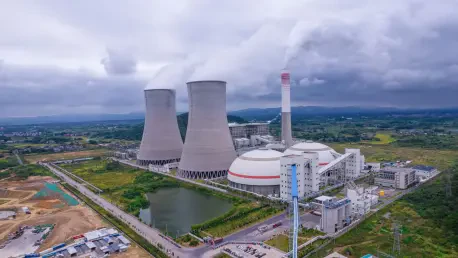

Regulated utilities are shedding their reputation as slow-growth entities to become the essential infrastructure partners powering the modern digital economy. This transformation stems from an unprecedented surge in electricity demand, driven by the voracious energy requirements of artificial intelligence, cryptocurrency mining, and electric vehicle charging networks. Federal policy has shifted dramatically to meet this challenge, providing substantial financial backing to bolster nuclear energy capacity. A cornerstone of this strategy is a four-billion-dollar federal loan recently allocated to Vistra, aimed at expanding carbon-free output through reactor enhancements. This intervention highlights a national realization that the traditional power grid requires a stable, “always-on” foundation to prevent digital stagnation in an increasingly competitive global landscape. By positioning nuclear energy as the bedrock of the energy transition, the government is effectively underwriting the next generation of technological innovation. This shift has forced investors to re-evaluate the utility sector, moving away from defensive dividend plays toward a growth-oriented narrative defined by high-tech infrastructure alignment.
Powering the Hyperscale Revolution
The practical application of this energy shift is most visible in the Gulf South, where Entergy has pivoted to accommodate massive industrial development. By securing long-term agreements with hyperscale cloud providers such as AWS and Meta, the company transformed its growth trajectory, anticipating annual retail sales increases of nearly nine percent through the end of the decade. This expansion is not merely about adding capacity; it is about providing the high-reliability power that high-performance computing clusters demand. Unlike intermittent renewable sources, nuclear assets provide the baseload stability required for data centers that cannot afford even a millisecond of downtime. As these tech giants seek to meet their own sustainability goals, the carbon-free nature of nuclear power becomes a competitive advantage for regional utilities. This alignment between technology firms and power providers has created a new economic model where energy availability, rather than just cost, dictates the location of major digital infrastructure projects. Furthermore, these partnerships have accelerated the deployment of advanced cooling and transmission technologies to maximize output.
Strategic Investment: Balancing Capital and Reliability
To sustain this growth, utilities like Ameren successfully navigated a complex landscape of capital costs and regulatory trade-offs. By maintaining a diversified generation fleet across Missouri and Illinois, they demonstrated that the transition toward a nuclear-centric future required careful management of the “funding overhang.” Effective strategies prioritized the modernization of transmission lines alongside reactor life extensions to ensure that regional power delivery remained resilient under increased consumption. The sector moved toward a model where long-term capital management became as critical as the engineering behind the power plants. Stakeholders realized that the path forward depended on fostering collaborative regulatory environments that incentivized large-scale infrastructure buildouts without compromising affordability. By 2026, the industry had established a blueprint for integrating nuclear energy into a broader, more flexible grid. This proactive approach allowed the nation to secure its digital sovereignty while setting the stage for a decarbonized industrial renaissance that balanced ambitious tech goals with practical financial stability.