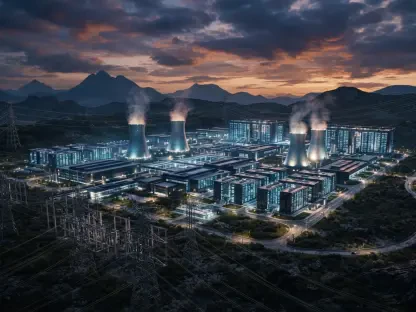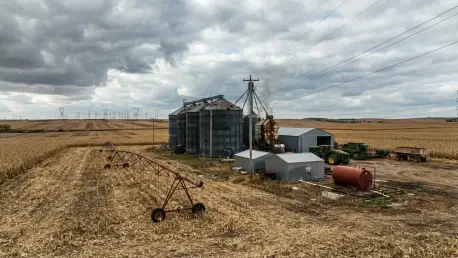

Hostilities affecting Saudi Arabian energy infrastructure have disrupted global shipping lanes, leading to indirect price hikes for the petroleum-based inputs used in modern farming. As Brent crude surges past $113 per barrel and West Texas Intermediate hovers near $100, the domestic agricultural landscape faces an unprecedented cost crisis. These geopolitical tensions are compounded by a sudden contraction in the equities market, where technology and semiconductor sectors have seen valuations plummet. For the American farmer, this economic convergence translates into a direct assault on operational stability. The immediate impact is most visible in the pricing of diesel, the lifeblood of rural operations that powers everything from heavy harvesters to the irrigation pumps sustaining the Great Plains. As the 2027 growing season approaches, the pressure to maintain productivity while managing soaring overhead has forced a radical reassessment of traditional farming strategies.
Fuel and Nutrient Expenses
The rapid appreciation of crude oil prices represents the most immediate threat to the logistical and operational integrity of the American farm. Diesel is not merely a fuel; it is a fundamental component of the supply chain that moves grain from isolated silos to international ports. When energy-related expenses rise without a corresponding increase in the market price of commodities like corn and wheat, the resulting margin squeeze can be devastating for producers in the Corn Belt. This inflationary environment creates a volatile atmosphere where every mechanical operation must be scrutinized for its cost-effectiveness. Farmers are now evaluating the necessity of every trip across the field, knowing that fuel costs have become a primary driver of potential insolvency. The ripple effects of this energy shock extend beyond the tractor, influencing the broader economics of rural communities that depend on the profitability of these harvests to sustain their local businesses.
The Burden of Rising Production Inputs
Beyond the immediate expense of liquid fuels, the current energy crisis has deeply permeated the fertilizer market, which serves as a fundamental pillar for high-yield commodity production in the United States. Nitrogen-based nutrients are particularly vulnerable to these fluctuations because their synthesis relies heavily on natural gas as both a feedstock and a power source. While oil and natural gas markets occasionally decouple, the current atmosphere of geopolitical instability has created a unified upward pressure on all energy commodities. This situation has presented corn and wheat growers with a profound strategic dilemma as they look toward the 2027 season. They are being forced to decide between locking in high input prices now to guarantee spring availability or gambling on a market correction that might never materialize. For many operations in the heartland, this uncertainty has shifted the focus from maximizing yield to protecting the thin profit margins that remain viable.
Advanced Strategies for Resource Management
In response to these escalating costs, the agricultural community has accelerated its transition toward precision farming technologies that were once viewed as optional luxuries. The logic behind this shift is purely economic; when the price of fertilizer and diesel reaches these heights, the margin for error effectively disappears. Farmers are now deploying advanced sensors and satellite-guided application systems to ensure that nutrients are placed with sub-inch accuracy, thereby reducing waste and maximizing every dollar spent on chemical inputs. This movement toward efficiency is not merely about surviving the current price spike but represents a permanent shift in how resource management is conducted in rural America. By utilizing variable rate technology and automated soil mapping, producers can tailor their applications to the specific needs of each acre, effectively decoupling their productivity from the total volume of inputs consumed. This adoption of digital tools is a critical shield.
Financial Markets and Infrastructure
The broader financial selloff seen across the Nasdaq and S&P 500 has triggered a significant shift in capital allocation, driving investors toward the perceived safety of U.S. Treasury bonds. This movement caused the 10-year Treasury yield to settle near 4.95%, a figure that would typically suggest a cooling of interest rates for commercial borrowers. However, the reality for agricultural credit remains much more complex, as local and regional lenders must account for their own rising internal funding costs and the increased risk profile of farming operations. Producers seeking capital for land acquisitions or seasonal operating loans have found that credit availability is often dictated more by Federal Reserve policy and individual balance sheet strength than by the fluctuations of the bond market. This has created an environment of cautious uncertainty where lenders are scrutinizing cash flow projections with unprecedented intensity. For the 2027 cycle, securing financing has become a test of planning.
Shifting Credit Conditions and Rural Lending
As the banking sector reacts to the volatility in technology stocks and semiconductor valuations, the criteria for agricultural loans have become increasingly stringent. Lenders are no longer just looking at the value of the land as collateral; they are prioritizing the operational efficiency and the depth of the risk management strategy employed by the borrower. This shift has forced farmers to become as proficient in financial modeling as they are in agronomy. The flight to quality in the bond market has not yet translated into lower interest rates at the farm gate, primarily because rural banks are hedging against the possibility of a broader economic downturn. For many producers, this means that expanding the footprint of their operation or investing in new heavy machinery requires a more robust justification than in previous years. The availability of credit is becoming a bottleneck for smaller operations that lack the sophisticated accounting systems needed to navigate these dynamics.
Tech Sector Volatility and AgTech Innovation
The sharp decline in the technology sector has introduced secondary risks to the agricultural supply chain that were previously overlooked by traditional analysts. As venture capital funding for high-tech startups begins to contract, the pipeline for AgTech innovations—such as autonomous tractors and robotic weeding systems—is facing a period of significant stagnation. These tools are essential for reducing the industry’s reliance on expensive manual labor and high-energy traditional methods, yet their development depends on a healthy tech ecosystem. Despite this financial cooling, the demand for cost-saving innovations remains at an all-time high, creating a paradox where the need for technology grows just as the capital to produce it becomes more expensive. For the American farmer, this means that while the next generation of autonomous equipment may be delayed, the existing platforms are becoming indispensable. This market volatility serves as a catalyst, forcing a more rapid integration of digital tools.
Supply Chain Dynamics and Risk Mitigation
High energy costs have generated a series of competing effects across the various sectors of the agricultural economy, with the biofuel industry standing at the center of the conflict. On one side, elevated petroleum prices have significantly improved the economic competitiveness of corn-based ethanol and soybean-based renewable diesel, providing a potential price floor for these staple commodities. However, these benefits are frequently neutralized by the soaring costs of freight and the general weakening of consumer demand associated with high inflation. Livestock producers are finding themselves on the losing end of this equation, as their operations are intensely energy-dependent and rely on intricate distribution networks for feed and livestock transport. Cattle and poultry farmers have seen their margins erode as the cost of moving grain from the silo to the feedlot continues to climb. This volatility has reinforced the necessity of a total supply chain perspective for domestic producers.
Sector-Specific Impacts and Biofuel Demand
The dynamic between traditional fossil fuels and the renewable energy sector is entering a phase of forced evolution as global supply lines remain constricted. For the 2027 season, the viability of domestic biofuels will depend heavily on legislative support and the ability of processing facilities to manage their own rising overhead. Soybean growers, in particular, have looked to the renewable diesel market as a hedge against lower export demand, yet the success of this strategy is tied to the very energy markets that are currently causing production costs to spike. This interconnectedness means that a gain in one area often comes with a corresponding loss elsewhere in the farm budget. To manage these sector-specific impacts, integrated operations are beginning to diversify their revenue streams, exploring opportunities in carbon sequestration and other emerging environmental markets. These efforts are aimed at creating a more stable financial foundation that is less susceptible to the wild swings seen in global crude oil and tech indices.
Strategic Outcomes and Operational Resilience
The strategic response to the late 2026 economic shocks centered on a disciplined adherence to risk management protocols and the maintenance of significant working capital reserves. It was concluded that those who successfully navigated the transition into the 2027 season were the ones who utilized sophisticated commodity hedging to lock in favorable price points before further volatility took hold. These producers also relied heavily on federal support programs and updated their crop insurance strategies to better align with the reality of inflated input costs rather than just yield protection. The integration of precision technology was identified as the single most important factor in reducing the long-term dependency on volatile energy markets. By the end of this period, the industry realized that the old models of expansion were no longer viable without a corresponding focus on operational efficiency and financial transparency. Moving forward, the focus shifted toward a resilient approach.