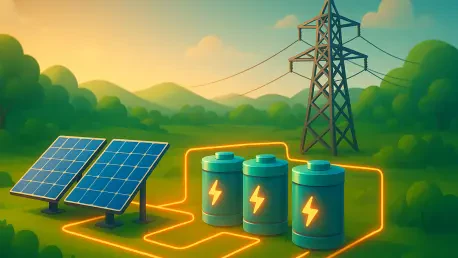

New and upgraded renewable facilities can now access carbon markets through a unified framework that prioritizes system-wide efficiency and optimization. This development comes as the global energy landscape faces a critical pivot point where simply adding solar panels or wind turbines is no longer sufficient to ensure a stable, decarbonized grid. Gold Standard, a leading authority in carbon credit regulation, recently unveiled the Grid-Connected Renewables, Storage and Energy Transition (G-RESET) methodology to address these complexities. Historically, the eligibility of renewable projects for carbon finance relied heavily on the economic status of the host nation, often excluding projects in developed regions regardless of their technical necessity. By replacing this rigid, location-based screening with a project-specific assessment, the new framework recognizes that financial barriers still exist for advanced infrastructure. This shift ensures that high-impact technologies, such as large-scale energy storage and grid flexibility enhancements, receive the capital they require even in wealthier markets where standard generation might already be commercially viable.
Expanding the Scope: Technological Integration and Flexibility
The G-RESET methodology departs from traditional models by broadening the eligibility criteria to encompass a wide array of technological configurations essential for modern grid stability. This includes the construction of new renewable plants, significant efficiency upgrades for existing facilities, and the implementation of advanced energy storage systems designed to mitigate the problem of renewable energy curtailment. By focusing on system-wide optimization, the framework supports captive power supplies and virtual power plants that synchronize decentralized energy resources into a cohesive network. Sarah Leugers, the Chief Growth Officer at Gold Standard, noted that contemporary climate action necessitates the ability to store and deliver clean energy precisely when and where the demand is highest. Consequently, the framework evaluates the additionality of a project—the proof that it would not proceed without carbon finance—based on technical and economic realities. This approach empowers developers to tackle grid-level bottlenecks that have previously hindered the full integration of intermittent renewable sources into national power systems.
Strategic Alignment: The Future of Global Energy Finance
The introduction of G-RESET established a unified path for financing the global energy transition by integrating it into a broader suite of regulatory tools. This rollout was part of a strategic triad that included the Energy Systems and Efficiency requirements and the proposed methodology for Small-scale Productive Access to Renewable Kilowatt-hours. Together, these frameworks provided a comprehensive solution for scaling everything from industrial power systems to localized renewable access in underserved areas. To capitalize on this shift, project developers should prioritize modular designs that incorporate storage components, as these are now more likely to qualify for high-value carbon credits. Investors and stakeholders moved toward a more granular evaluation of grid impact, ensuring that capital flowed toward the most technically challenging and impactful projects. Looking ahead, the focus must remain on streamlining the certification process to unlock the billions in private investment needed to modernize aging electricity networks. By centering finance on system-wide efficiency rather than geographic borders, the industry took a significant step toward achieving a truly decarbonized and resilient global energy architecture.