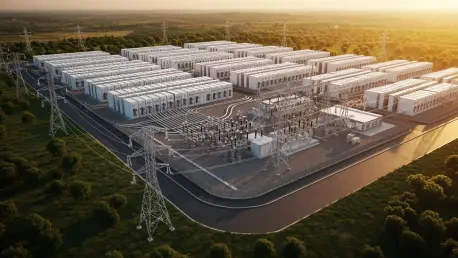

Italy has traditionally been known for its automotive prowess, but the shift toward electrification required a massive capital injection that only a sophisticated blend of public and private financial instruments could provide in this decade. This transformation was not merely a matter of changing production lines but involved a systemic overhaul of the entire energy value chain to ensure national competitiveness within the European Green Deal framework. By leveraging specific European and national funds, the Italian government successfully incentivized domestic manufacturers to pivot toward high-density lithium-ion and solid-state technologies. The deployment of these resources aimed to bridge the gap between initial research and large-scale industrialization, ensuring that local firms did not fall behind international competitors. Consequently, the Italian battery ecosystem evolved from a niche sector into a central pillar of the industrial strategy, attracting global interest from investors seeking stable, high-growth opportunities in the renewable energy storage and electric vehicle segments today.
Public-Private Partnerships: The Catalyst for Industrial Scaling
Central to this financial strategy was the utilization of the Important Projects of Common European Interest (IPCEI), which provided a structured framework for state aid to flow into high-risk, high-reward battery innovations. These initiatives allowed for the mobilization of billions of euros, focusing on battery cell production and the critical recycling of raw materials to create a circular economy model within the Mediterranean region. Government-backed grants and low-interest loans from the National Recovery and Resilience Plan (PNRR) acted as the initial spark, reducing the financial barrier for medium-sized enterprises to enter the battery manufacturing space. These funds were strategically allocated to regions with a strong historical manufacturing presence, such as Piedmont and Lombardy, ensuring that the existing workforce could be retrained for the new economy. This targeted allocation of public capital not only stimulated job growth but also provided the infrastructure necessary for private entities to feel confident in their long-term commitments to the region.
Building on the foundation of public support, private equity firms and global venture capitalists entered the market to fund the construction of massive production facilities known as gigafactories. Companies like Italvolt and various joint ventures between automotive giants and energy firms utilized project finance structures to manage the high capital expenditures required for these plants. These financial arrangements often included complex debt-equity mixes that mitigated risks associated with fluctuating raw material prices and technological obsolescence. Strategic finance in this context also involved securing long-term offtake agreements with major automakers, which provided the revenue certainty needed to attract institutional investors. By 2026, the Italian landscape saw an increase in dedicated battery investment funds that focused specifically on the midstream and downstream segments of the value chain. This influx of private capital ensured that the industry could scale rapidly, creating a self-sustaining ecosystem that prioritizes efficiency.
Strategic Investment: Navigating the Competitive Global Supply Chain
The strategic allocation of finance was not limited to manufacturing capacity; a substantial portion was directed toward research and development to foster next-generation storage solutions. Italian universities and research centers partnered with private corporations to accelerate the development of cobalt-free batteries and high-nickel cathodes, which offered better performance and lower environmental impact. Investment in specialized laboratory equipment and pilot lines allowed these entities to test new chemical compositions at a much faster rate than previously possible. This focus on innovation helped Italian firms carve out a specialized niche in the high-end market, where quality and energy density are prioritized over pure volume. Venture capital specifically targeted startups focusing on battery management systems, which optimize the life cycle and safety of the cells. By integrating hardware production with software control, Italian manufacturers offered more comprehensive solutions, increasing the value add and ensuring higher margins in an increasingly competitive global marketplace.
As the industrial landscape matured, the integration of strategic finance proved essential for establishing a resilient battery supply chain that could withstand global market shocks. The focused deployment of capital through 2026 allowed Italy to transition from a traditional internal combustion engine hub to a leader in electrochemical storage. Stakeholders recognized that maintaining this momentum required a continuous commitment to workforce development and the simplification of regulatory frameworks to attract further international investment. Future growth strategies were designed to emphasize the localization of raw material processing and the expansion of recycling infrastructure to minimize reliance on non-European sources. Decision-makers prioritized the creation of specialized investment vehicles that bridged the gap between early-stage innovation and commercial deployment. By fostering a collaborative environment, the market achieved a level of stability that encouraged long-term industrial planning and sustained economic growth across the entire energy sector.