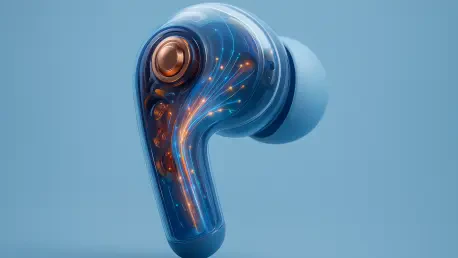

The integration of EEG sensors into in-ear monitors allows for the normalization of brainwave monitoring outside of clinical laboratory settings. This transition is redefining the wearable landscape by shifting the focus from simple peripheral metrics to internal neurological health. For the past several years, the market was dominated by wrist-worn devices that tracked heart rate and steps, but as we move through 2026, the ear has become the primary destination for advanced health tracking. The anatomical structure of the ear canal provides a stable and discrete environment for high-fidelity sensors, which can capture physiological signals with far greater accuracy than sensors placed on the moving wrist. Manufacturers are now leveraging this proximity to the brain to integrate Photoplethysmography (PPG) and Electroencephalogram (EEG) sensors into standard-looking audio peripherals. This evolution transforms a common consumer electronics item into a medical-grade diagnostic tool, blurring the lines between lifestyle gadgets and clinical equipment. By doing so, the industry is not just adding secondary features but is establishing a completely new market segment dedicated to cognitive health and neuro-management.
The Evolution of Cardiovascular Sensors: Moving Beyond the Wrist
The initial phase of this movement involved the migration of mature sensing technologies, primarily PPG, from the wrist to the ear to enhance data reliability. This shift gained substantial momentum in 2025 and has reached a peak in current product cycles, as major consumer electronics players integrate these sensors into their flagship earphone lines. The AirPods Pro 3, for instance, has set a new standard by utilizing custom PPG sensors paired with advanced accelerometers and gyroscopes to provide precise heart rate tracking that remains stable even during high-intensity interval training. Similarly, brands like Tingzhihui and Edifier have introduced models such as the ### and SPORT OPEN L, which expand the scope of monitoring to include blood oxygen levels (SpO2) and hearing load assessments. These devices utilize the consistent contact between the ear canal and the sensor to eliminate the noise often associated with wrist movements. As a result, the data produced by these earphones is becoming increasingly comparable to clinical standards, allowing users to track their cardiovascular health with a degree of precision that was previously unavailable in a consumer audio product.
The logic behind this transition is rooted in the high-frequency nature of headphone usage, which often surpasses that of traditional smartwatches for certain demographics. While many users find wearing a watch to bed or during intensive workouts to be cumbersome or restrictive, headphones are already a natural part of their daily routine for music, communication, and focused work. By embedding health sensors into these existing habits, manufacturers have successfully mitigated the problem of wearable fatigue, where users abandon health-tracking devices after a few months. For fitness-conscious consumers, this integration simplifies the digital ecosystem by consolidating multiple needs into a single device. A runner no longer requires a chest strap for heart rate and a pair of earbuds for audio; a single set of health-integrated earphones, like the Sanag Apex Star Ring, can provide real-time voice broadcasts of physiological warnings, sedentary reminders, and even AI-driven health insights. This consolidation of hardware not only improves the user experience but also provides a more holistic view of the user’s health by correlating physical exertion directly with auditory and cognitive responses.
The Neuro-Technological Revolution: Capturing Native Neural Signals
While cardiovascular monitoring provided the foundation, the true paradigm shift in 2026 has been the successful integration of EEG acquisition capabilities into consumer-grade headphones. This development marks a transition from tracking external vital signs to capturing the actual electrical activity of the brain, a feat that was previously restricted to specialized medical facilities. Historically, collecting EEG data required the use of bulky head-mounted electrodes, conductive gels, and a complex setup that was entirely impractical for everyday life. Modern smartbuds have overcome these barriers by utilizing dry-contact sensors embedded within the ear tips, allowing for millisecond-level identification of sleep stages and cognitive states. Global leaders like NextSense and NAOX are at the forefront of this revolution, producing devices that can distinguish between various brainwave frequencies while the user is simply commuting or working. This normalization of neuro-monitoring enables a continuous stream of data that can detect early signs of neurological fatigue or stress, providing a proactive approach to mental health that was never before possible through consumer-level technology.
The primary technical advantage of using EEG-integrated headphones over traditional wrist-based wearables lies in the superior quality and native nature of the data collected. Smartwatches generally estimate sleep cycles and cognitive load through indirect proxies, such as heart rate variability and limb movement, which can often lead to inaccurate conclusions about deep sleep or mental exhaustion. In contrast, EEG sensors in the ear detect the brain’s electrical pulses directly, which remains the undisputed gold standard for neurological evaluation. Because the ear canal is close to the brain’s temporal lobe, these sensors can pick up clear signals without the interference of the skull’s thicker regions. This precision allows for the identification of specific neural markers associated with concentration, relaxation, and different phases of the REM cycle. For example, BrainRhythm Tech’s current AI-driven earphones can identify the exact moment a user’s brain enters a state of flow or becomes overloaded with cognitive tasks. By providing this direct link to the central nervous system, these headphones offer a level of diagnostic depth that transforms health monitoring from a descriptive exercise into an analytical one.
Engineering Closed-Loop Ecosystems for Advanced Sleep Management
The most impactful application of brainwave-reading technology is found in the rapidly expanding sleep health market, where these devices are moving beyond simple recording toward active intervention. By using EEG to monitor brainwaves in real-time, current headphones can distinguish between light sleep, deep sleep, and semi-awareness with surgical precision. This capability is the cornerstone of what is known as a closed-loop system, where the device uses the data it collects to immediately adjust the user’s environment. If the EEG sensors detect that a user is prematurely transitioning out of a deep sleep phase, the device’s AI can instantly trigger specific low-frequency audio cues designed to encourage the brain to remain in a restorative state. This is a significant departure from previous technologies that merely provided a post-hoc analysis of a poor night’s rest. By actively managing the sleep cycle as it happens, these headphones serve as a personal sleep coach, optimizing the restorative quality of every hour spent in bed and addressing sleep disturbances before the user even becomes conscious of them.
These advanced systems are particularly valuable for high-intensity brain users, a demographic that includes high-stress professionals, medical residents, and students who must maintain peak cognitive performance under pressure. For these individuals, the ability to objectively observe and manage their brain state is not just a luxury but a critical tool for preventing burnout and cognitive decline. Companies like BrainRhythm Tech have integrated features that offer personalized brain rhythm training and meditation guidance based on the user’s real-time EEG feedback. This allows users to train their brains to enter states of relaxation or focus more efficiently, effectively utilizing the headphones as a biofeedback tool. Furthermore, the integration of AI-driven recommendations for breathing exercises and sleep hygiene helps users develop long-term resilience against the physiological effects of stress. As these devices become more ubiquitous, they are shifting the narrative of sleep health from a passive occurrence to an actively managed biological process, where data-driven insights lead to immediate, tangible improvements in mental clarity and overall well-being.
Addressing Challenges: Comfort, Cost, and Clinical Credibility
Despite the immense technological potential, the path to mainstream adoption is hindered by significant physical and engineering challenges, particularly regarding long-term wearing comfort and sensor stability. For an EEG-reading earphone to be effective for sleep monitoring, it must remain in the ear for seven to eight hours without causing discomfort or irritation. This is a difficult engineering feat because ear canal shapes vary wildly among individuals, and a sensor that loses contact for even a few seconds can result in corrupted data. To solve this, manufacturers are pivoting toward micro-designs and the use of ultra-flexible, medical-grade silicones. Current iterations of BrainRhythm’s technology have managed to reduce the weight of a single earbud to approximately 6 grams, making them almost imperceptible during rest. Additionally, specialized ear wings and custom-sized tips are being developed to ensure that the sensors remain flush against the skin of the ear canal even when the user moves or turns during the night. Solving these ergonomic puzzles is essential for ensuring that the data collected is both high-quality and consistent over long periods.
Another critical hurdle for the industry is the transition from health gadgets to medical devices, which requires rigorous clinical validation and official certification. To achieve true market disruption and gain the trust of healthcare providers, manufacturers must secure certifications such as Class II medical device status or FDA 510(k) clearance. NAOX has already led the way in this regard, with its WAVE and LINK models receiving approval for home-based EEG monitoring, allowing the data they collect to be used for the actual diagnosis of neurological conditions. This medical credibility is what separates premium health-tech brands from standard consumer electronics. Furthermore, the economic model of these devices is evolving to reflect their specialized nature. Because the cost of high-fidelity EEG and PPG sensors is high, the retail prices for these headphones are often significantly higher than traditional audio devices. To address this, companies are adopting hardware plus subscription models, where users pay a lower upfront cost for the device but subscribe to ongoing AI-driven data analysis services. This ensures that the manufacturer can continue to provide software updates and sophisticated neurological insights while making the technology more accessible to a broader consumer base.
Future Industry Trends: The Shift Toward Personalized Neuro-Management
The industry consensus indicates that we are moving toward a future where the ear is the central hub for all personal biometric data collection, leading to a shift from passive recording to active state management. In the past, wearable technology was primarily used to look back at what had already occurred, such as how many calories were burned or how many hours were slept. In contrast, the current generation of brainwave-reading headphones is designed to look forward, providing real-time guidance on how to optimize one’s current mental state. This evolution is driven by the integration of Artificial Intelligence as the core engine that translates raw, complex neural signals into actionable advice. Without this AI feedback loop, the vast amount of data produced by an EEG would be unintelligible to the average user. By focusing on specific high-value scenarios—such as maximizing focus during a deep work session or ensuring recovery after a period of intense stress—these devices are carving out a unique niche where they provide utility that no other wearable can offer.
To further refine this user experience, there is an increasing trend toward personalization, both in software and hardware. The move toward custom ear molds, once reserved for professional musicians and high-end audiophiles, is now becoming a key feature for health-integrated headphones to ensure perfect sensor alignment and maximum comfort. This level of customization ensures that the EEG sensors are positioned exactly where they need to be for each individual’s unique anatomy, significantly reducing the signal-to-noise ratio. As we look at the trajectory of this technology through 2026 and beyond, it is clear that the integration of brainwave reading into headphones is not just a temporary trend but a fundamental shift in the health-tech landscape. The ear has proven to be an ideal location for capturing the most intimate details of our internal biological states. As the technology matures, these devices will likely become a standard tool for anyone looking to manage their health from the inside out, turning the simple act of wearing headphones into a comprehensive, daily neurological check-up that empowers users to take control of their cognitive and physical destiny.
Strategic Implementation: Recommended Steps for Adopting Neuro-Technology
The conclusion of the initial phase of neuro-integrated wearables demonstrated that success was not solely dependent on the hardware but on how effectively users integrated the data into their daily routines. Industry analysts observed that the most successful implementations involved a gradual adoption process, where users first utilized the cardiovascular metrics before moving into the more complex neurological data sets. This phased approach allowed individuals to become comfortable with the hardware and the constant feedback loop of the AI systems. Organizations that provided their employees with these devices to combat burnout found that the most significant gains were made when the data was used to restructure work schedules around peak focus times. By acknowledging the limitations of human cognitive endurance, these early adopters set a precedent for a more humane and data-driven approach to productivity and wellness. The successful integration of these tools into the broader healthcare ecosystem was achieved through collaboration between hardware manufacturers and clinical researchers, ensuring that the insights provided were both scientifically sound and practically useful.
Looking ahead, the focus shifted toward the long-term sustainability of neuro-management through the establishment of standardized data protocols and privacy protections. It was determined that for brainwave-reading headphones to become a permanent fixture in health tech, users needed absolute assurance that their neural data was secure and used exclusively for their benefit. Manufacturers addressed this by implementing localized AI processing, which ensured that sensitive brainwave patterns never left the device unless specifically authorized for medical consultation. Furthermore, the development of community-driven platforms allowed users to compare their cognitive recovery rates anonymously, fostering a better understanding of collective mental well-being. The next steps for the industry involved expanding the diagnostic capabilities of these sensors to detect early biomarkers for neurodegenerative diseases, potentially moving from wellness management to early-stage medical screening. By prioritizing user comfort, data integrity, and clinical utility, the sector successfully transitioned from a niche interest to an essential component of the modern health-tech infrastructure, providing a roadmap for future innovations in human-machine interfacing.