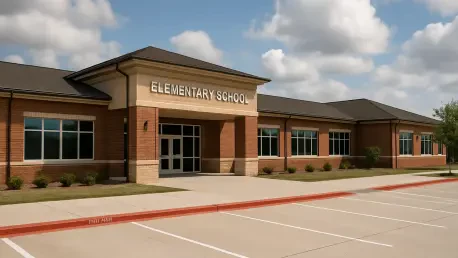

The inauguration of the newly reconstructed Harris Elementary School serves as a landmark achievement for the Austin Independent School District, signaling both the tangible successes and the fiscal complexities of the district’s massive 2022 bond program. This $2.4 billion initiative was originally designed to modernize aging infrastructure and create equitable learning environments across the city, yet it has had to weather a volatile economic climate characterized by sharp inflation and rising material costs. As students walk through the doors of this state-of-the-art facility in Northeast Austin, the school stands as a physical manifestation of a pedagogical shift that prioritizes flexibility and community integration over traditional, rigid layouts. The project’s completion marks a critical milestone in a broader district-wide transformation, providing a clear example of how modern educational spaces can be reimagined even when the financial landscape demands rigorous oversight and strategic pivots.
Modern Design: Reimagining the Educational Environment
The new Harris Elementary represents a significant departure from the insular, mid-20th-century architectural styles that previously dominated the Windsor Park neighborhood. By replacing the original 1950s structure with a facility designed for $47 million, the district has demonstrated that high-quality modernization can be achieved under budget, even within a challenging market. This campus moves away from fixed corridors and static desks, instead favoring modular furniture and expansive flexible open spaces that allow students to exercise greater autonomy over their learning process. Specialized art and music studios are integrated into the design to provide creative outlets that were formerly restricted by the limitations of older building footprints. These architectural choices are not merely aesthetic; they are intentionally crafted to foster a collaborative atmosphere where children are encouraged to function as independent thinkers within a shared community framework.
Beyond its physical layout, the school functions as a multicultural hub that reflects the rich diversity of a student body originating from over ten different countries. The facility is strategically equipped to host dual-language programs, ensuring that the environment supports the linguistic and cultural needs of every family it serves. Large windows and outdoor learning areas provide a seamless connection between the classroom and the natural environment, which has been shown to improve student engagement and well-being. By prioritizing accessibility and modern safety standards, the district has created a blueprint for future projects that must reconcile high-tech needs with welcoming, inclusive atmospheres. This design philosophy acknowledges that the physical space is a silent teacher, influencing how students interact with one another and how they perceive their place in the world. Consequently, the campus serves as a cornerstone for the district’s long-term goal of educational equity.
Fiscal Strategy: Balancing Budgets Amidst Global Inflation
While the completion of the Harris project is a notable success, the broader 2022 bond program is currently navigating a period of intense financial pressure that has seen projected costs rise to $2.6 billion. This $217 million increase over the original voter-approved budget is largely the result of systemic economic factors, including global conflicts and supply chain disruptions that have driven up the price of raw materials and construction labor. To bridge this gap without requesting additional taxpayer funding, the Austin Independent School District has utilized a sophisticated multi-pronged financial strategy. By placing bond proceeds into interest-bearing accounts, the district has successfully generated approximately $110 million in additional revenue to date. This proactive approach to cash management allows the administration to offset rising expenses while maintaining the original scope of the most critical infrastructure improvements planned through the 2026 to 2028 window.
In addition to interest gains, the district has salvaged roughly $109 million by halting or pausing renovations at campuses that are slated for closure or consolidation. This reallocation of funds has been a point of significant discussion among stakeholders, as it requires balancing the immediate needs of current facilities with the long-term sustainability of the entire school network. Although the district is working to exit about $70 million in committed bond dollars for these schools, a remaining $30 million in commitments still requires careful settlement to ensure no resources are wasted. This fiscal maneuvering is essential for the continued progress of the remaining 50% of district-wide renovations. By maintaining a slim surplus of approximately $2 million through meticulous oversight, the construction management team has protected the integrity of the bond program. Such agility is necessary to ensure that the district can fulfill its promises to the community despite the economic volatility.
Future Outlook: Consolidation and Community Impact
The intersection of construction activity and campus management has led to a complex logistical landscape involving school closures and the redrawing of attendance boundaries. Decisions to stop work at locations like Martin Middle School and Barrington Elementary were driven by a strategic plan to streamline operations and focus resources where they are most effective. However, the district has shown a willingness to pivot when community needs dictate a change in course, as seen in the reversal regarding Oak Springs Elementary. Instead of closing the campus, the district has committed to a $58 million investment for a new building, reflecting a nuanced approach to neighborhood stability. Under this revised plan, students will temporarily relocate to Blackshear Elementary while the new facility is under construction, with a projected completion date in 2028. This flexibility highlights the administration’s intent to base long-term decisions on evolving demographic data and community feedback.
As the district moves forward, the focus shifts toward a comprehensive boundary review intended to provide a stable foundation for all future facility investments. Leadership has emphasized that no further closures will occur until this review is complete, allowing for a more equitable distribution of resources across the city. The lessons learned from the first phase of the bond program—specifically the importance of flexible design and agile financial management—will guide the remaining projects as they progress toward 2028. Actionable next steps involve finalizing the technological upgrades and athletic facility improvements that comprise the remaining portions of the bond. To ensure continued success, the district must prioritize transparent communication with parents and maintain a rigorous auditing process for all construction expenditures. By integrating modern infrastructure with a sustainable fiscal model, the district is positioning itself to support a high-quality educational environment for many years.