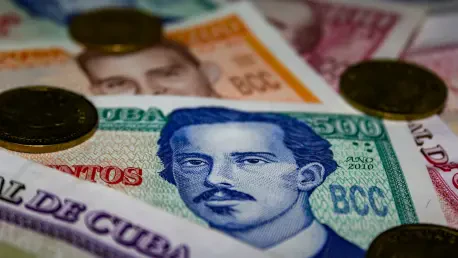

The unprecedented devaluation of the Cuban peso has reached a staggering milestone as the informal exchange market continues to operate as the primary indicator of the nation’s severe fiscal instability. While the official government rates maintained by the Central Bank of Cuba remain fixed at significantly lower figures, the reality on the ground reflects a different story where the US dollar has surged to 530 pesos and the euro has climbed to a historic 600 pesos. This massive disparity between state-controlled valuations and the actual cost of currency highlights a deepening disconnect within the national economy. Since the early part of this decade, the national currency has lost approximately 95 percent of its purchasing power, leaving citizens to navigate a landscape where high-denomination bills, specifically the 2,000 and 5,000 peso notes introduced in April 2026, serve more as symbols of inflation than tools for financial convenience. The scarcity of basic goods further complicates this volatile environment.
Building on these systemic challenges, the introduction of larger banknotes was intended to streamline transactions but has instead triggered widespread public distrust and accelerated the downward spiral of the peso. Projections from the Observatory of Currencies and Finances of Cuba indicate that the dollar could fluctuate between 503 and 590 pesos before the current month concludes, suggesting that the peak of this depreciation has not yet been reached. The root of this collapse is often traced back to the failed monetary reform of previous years, known as Tarea Ordenamiento, which sought to unify the dual-currency system but ultimately catalyzed hyper-depreciation. Compounding this structural failure is a crippling energy crisis driven by reduced fuel shipments from traditional partners like Venezuela and Mexico. With the tourism sector failing to return to its former strength and foreign reserves sitting at critical lows within the state banking system, the informal market remains the only viable, albeit expensive, avenue for obtaining the hard currency necessary for international trade.
Strategic Responses: Navigating the Currency Collapse
Addressing the volatility of the informal market required a shift toward more transparent fiscal policies that prioritized the stabilization of domestic production over simple currency manipulation. Effective interventions necessitated a move away from the rigid centralized control that failed during the initial stages of the current decade, favoring instead a model that allowed for realistic price discovery. Analysts suggested that the government needed to implement structural reforms that encouraged foreign investment by providing legal guarantees and predictable exchange mechanisms. By focusing on the restoration of the electrical grid through diversified energy sources, the state could have reduced the dependency on volatile oil imports that drained remaining foreign reserves. Furthermore, the integration of digital payment systems and a more flexible banking infrastructure would have helped mitigate the reliance on physical cash, potentially slowing the demand for high-denomination bills that fueled inflationary expectations. These steps offered a clearer path toward long-term recovery and eventual stability.
The resolution of the crisis demanded an immediate focus on rebuilding international confidence and restoring the functionality of the internal market through decentralized economic initiatives. Rather than relying on the continued issuance of high-denomination currency, policymakers were encouraged to foster small and medium-sized enterprises that could provide local alternatives to imported goods. This approach sought to alleviate the pressure on foreign exchange by reducing the necessity for dollars to purchase basic necessities. Additionally, establishing a more transparent relationship between the official and informal rates would have helped bridge the gap that currently undermines the credibility of the Central Bank. By aligning fiscal policy with the actual market conditions observed in 2026, the administration could have laid the groundwork for a more resilient monetary framework. Moving forward, the emphasis remained on creating a sustainable economic environment that valued the peso through productivity and fiscal discipline rather than administrative mandates.