
The Intersection of Digital Innovation and Traditional Craftsmanship
The rapid expansion of the artificial intelligence sector depends on massive concrete foundations, thousands of miles of heavy-duty copper wiring, and the sophisticated physical systems that house the world’s digital intelligence. While the public focus often remains on invisible algorithms and neural networks, the reality is that the AI economy is currently undergoing an unprecedented physical development phase across the United States. This infrastructure boom is not being led by software engineers alone; it is being driven by a massive surge in industrial construction that relies heavily on the specialized skills of the American labor movement.
Technology giants like Amazon and Google have discovered that the speed of their expansion is often limited not by code, but by the physical reality of building data centers. In this environment, a “blue-collar” alliance has emerged as a critical stabilizing force. These corporations have increasingly turned to organized labor to provide the reliable, skilled workforce necessary to execute multi-billion-dollar projects on tight schedules. This partnership provides tech firms with a guaranteed labor supply, while unions gain a foothold in the most modern sector of the global economy, ensuring their relevance for decades to come.
Labor unions are undergoing a profound transformation, evolving from a mere source of manual labor into strategic political and public relations partners for the tech industry. In many regions, the presence of union workers has become a prerequisite for project approval, as these organizations carry significant weight with local governments and community boards. By aligning themselves with the tech sector, unions are not just building servers; they are helping to navigate the complex social and legislative landscapes that define modern infrastructure development.
The Resurgence of Labor Through Infrastructure Projects
Economic Revitalization and the Surge in Membership Hours
The sheer scale of AI-related construction has sparked a historic growth in union labor hours, reversing a decades-long decline in several industrial sectors. In major technology hubs, data centers have moved from being niche projects to dominating the entire workload for electricians, pipefitters, and ironworkers. Industry data from organizations like the International Brotherhood of Electrical Workers (IBEW) suggest that in certain metropolitan areas, data center projects now account for more than half of all man-hours worked, providing a level of economic stability that was previously unthinkable for the construction trades.
This surge has forced a rapid scaling of union training infrastructure to meet the specialized demands of high-tech facilities. To keep pace with the needs of tech companies, many local unions have had to double the size of their apprenticeship classes and invest heavily in expanding their training centers. These facilities are no longer just teaching basic wiring; they are training the next generation of workers to handle the complex cooling systems and high-capacity power distributions that define the modern data center. The North America’s Building Trades Unions (NABTU) have noted that this revitalization is providing a clear pathway to the middle class for thousands of workers who might have otherwise been left behind by the digital transition.
Strengthening the Energy Grid to Fuel Computational Demands
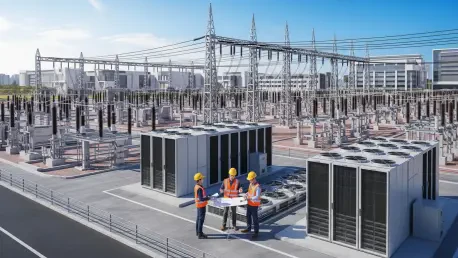
The energy requirements of artificial intelligence are staggering, necessitating a secondary boom in power infrastructure that is being built almost exclusively by union labor. As tech companies scramble to secure enough electricity to fuel their massive server farms, they are funding the revitalization of regional power sectors. This includes the construction of new substations, the upgrading of existing transmission lines, and the development of specialized cooling infrastructure. In states like Pennsylvania, trades such as boilermakers have returned to full employment after years of stagnation, driven by the need to build the power systems that sustain the AI cloud.
Integrating utility infrastructure construction with tech-led development offers a significant competitive advantage but also carries inherent risks. While the influx of capital allows for a more robust and resilient grid, the speed of development puts immense pressure on local utilities. Union expertise is vital in these scenarios, as their members possess the institutional knowledge required to safely and efficiently upgrade high-voltage systems without disrupting existing service. This relationship ensures that the physical backbone of the digital age is built to the highest possible standards, minimizing the risk of outages or technical failures.
Unions as Strategic Buffers Against Local Resistance
One of the most valuable roles unions play in the AI economy is that of a community advocate that can neutralize local opposition. Proposed data centers often face criticism regarding noise pollution, excessive water usage for cooling, and the potential for rising utility costs for nearby residents. Union leaders have become instrumental in addressing these concerns, speaking at town hall meetings and statehouse hearings to champion the long-term economic benefits of these projects. Because union members are often local residents themselves, their advocacy carries a level of grassroots legitimacy that a corporate representative from Silicon Valley might lack.
There is a noticeable shift where tech companies rely on union “political muscle” to navigate the labyrinth of local zoning laws and secure necessary project approvals. By framing data center construction as a source of stable, high-paying local jobs, unions help shift the public conversation away from environmental or aesthetic concerns toward economic opportunity. Moreover, labor organizations are increasingly involved in community benefit negotiations, ensuring that tech companies provide funding for local schools and public infrastructure in exchange for development rights. This multifaceted involvement proves that unions are focused on much more than just wages; they are becoming essential architects of community development.
The Geopolitical Narrative and National Security Integration
The expansion of AI infrastructure is frequently framed within a broader geopolitical context, specifically the competition with China for technological dominance. This national security narrative serves as a unifying patriotic theme that helps accelerate construction and bypass certain regulatory hurdles that might otherwise delay progress. By positioning the building of data centers as a vital component of national defense, the corporate-labor alliance gains a powerful argument for expedited permits and government incentives. This shift elevates the role of the construction worker from a traditional tradesman to a “national security partner” in the digital age.
Financial support for this partnership is also becoming more formalized, with tech leaders like Sam Altman of OpenAI expressing public support for the labor movement. There is a growing trend of tech firms providing multi-million dollar grants to union-backed training programs, ensuring that the workforce is specifically prepared for the challenges of AI infrastructure. This integration suggests a future where the boundary between corporate interests and labor organization becomes increasingly blurred, as both parties recognize that their success is interdependent. This strategic alignment ensures that the United States maintains its lead in the AI race by having the most skilled physical workforce in the world.
Strategic Recommendations for Sustaining the AI-Labor Partnership
For the AI-labor partnership to remain sustainable, it is essential to maintain high labor standards across all phases of development. Ensuring that workers are well-compensated and properly trained is the only way to guarantee the long-term reliability and security of the critical physical assets that power the global digital economy. Industry leaders suggest that cutting corners on labor during the construction phase leads to significantly higher maintenance and operational costs over the lifecycle of a data center.
Local governments must develop clear strategies to balance the rapid growth driven by labor-intensive tech projects with environmental and community concerns. This includes implementing smart zoning policies that encourage development in areas where the infrastructure can be most easily supported and requiring companies to invest in water-saving cooling technologies. By creating a transparent framework for development, municipalities can ensure that the benefits of the AI boom are shared equitably among all stakeholders, from the workers building the facilities to the residents living near them.
Tech firms would be wise to integrate union expertise as early as possible in the planning and design phases of their projects. Early collaboration allows for the identification of potential logistical challenges and site-specific issues before they escalate into costly public relations crises or construction delays. By treating labor organizations as true strategic partners rather than just a hired workforce, technology companies can build the public trust and political support necessary to sustain their expansion in a complex and often skeptical regulatory environment.
Solidifying the Physical Foundation of the Digital Age
The evolution of the AI economy proved that digital progress remained fundamentally anchored by traditional industrial labor and physical infrastructure. This reality challenged the notion that the future of work belonged solely to those behind computer screens, highlighting instead the vital role of the people who built the power grids and server halls. The alliance between high-tech capital and union labor redefined the American political landscape, creating a new center of gravity that bridged the gap between technological innovation and the industrial working class.
As the construction of the digital backbone continued, the collaboration between these two sectors became a cornerstone of national economic policy. The partnership demonstrated that the interests of major corporations and organized labor could align when focused on the massive task of building the future. This synergy not only accelerated the deployment of artificial intelligence but also provided a template for how other emerging industries might navigate the challenges of rapid physical expansion and public scrutiny.
The 21st-century technological revolution paradoxically secured the future of the 20th-century labor movement by making its skills more essential than ever. The trades that once built the factories and bridges of the industrial age were the same ones tasked with constructing the cathedrals of the information age. This transition ensured that the American worker remained at the center of the nation’s progress, proving that even the most advanced intelligence still required a solid, hand-built foundation to function. High labor standards and strategic community engagement became the enduring legacy of this era, shaping how the nation balanced innovation with social stability.