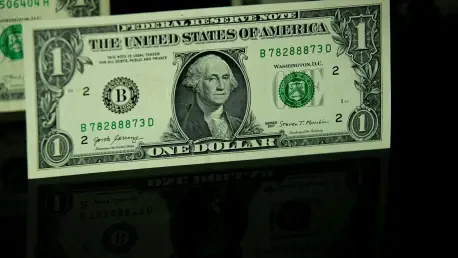

The global financial community stands at a crossroads as the long-standing supremacy of the American greenback encounters unprecedented resistance from emerging economic coalitions and shifting trade paradigms. Following the intense market fluctuations of the past year, characterized by the “Sell America” trade and brief moments of geopolitical stabilization, investors are scrutinizing whether the current landscape represents a standard cyclical downturn or a permanent shift in the world’s economic axis. This analysis explores the tension between traditional dollar dominance and the accelerating momentum of de-dollarization, weighing the structural advantages of American markets against the rising influence of alternative trade blocs.
Historical Foundations: The Legacy of the Petrodollar System
The current dominance of the dollar is rooted in the architecture of the post-WWII era, where international trade was built around a stable, dollar-denominated framework. A defining moment occurred in the 1970s when the energy market became the primary engine for dollar demand, as oil-producing nations began pricing their crude exclusively in the currency. This arrangement did more than just settle trades; it created a massive recycling mechanism where profits were funneled back into American debt instruments, providing the United States with an extraordinary level of fiscal freedom and a deep, self-sustaining financial network.
Understanding this history is essential because it illustrates how the dollar became more than just a medium of exchange. It evolved into a global utility, benefiting from a network effect that made it nearly impossible to avoid for any nation participating in international banking. This historical inertia has acted as a protective barrier for decades, ensuring that even during periods of high domestic inflation or political discord, the world had few alternatives that could match the dollar’s reach and institutional reliability.
Geopolitical Realignment: The Rise of the Petroyuan Narrative
The Transition: Developing Alternative Trade Currencies
A significant challenge to the existing order is the potential emergence of the “petroyuan” as a functional competitor in energy markets. Geopolitical friction and changing security alliances in the Gulf have prompted major energy producers to reconsider their reliance on a single currency. If significant portions of global oil trade shift toward the Chinese renminbi, it would fundamentally alter the demand profile for the dollar. This movement is driven by a desire to insulate domestic economies from policy shifts and sanctions, fostering a push toward a more multipolar trade environment.
Market Depth: The Institutional Defense of Liquid Assets
Conversely, many financial analysts argue that the dollar’s demise is often overstated because it ignores the unmatched depth of American capital markets. The dollar’s primary strength lies in its surrounding infrastructure: a transparent legal system, reliable property rights, and a level of liquidity that no other market can currently offer. While other nations may seek to settle trades in local currencies, they often struggle to find a safe and liquid place to park those profits, a problem that naturally leads them back to the security of the American treasury.
Reserve Realities: Analyzing Trends in Global Holdings
Evidence of a gradual shift is visible in global reserve data, where the dollar’s share has decreased from over 70% at the turn of the century to roughly 50% today. However, the search for a successor remains complicated by the fact that challengers like the renminbi still account for a minimal fraction of total reserves due to capital controls and a lack of transparency. For a true structural collapse to occur, a rival would need to demonstrate decades of stability and total convertibility, a standard that most emerging competitors are still far from achieving.
Future Projections: Fragmentation and Technological Disruption
The coming years are set to be defined by a more fragmented global economy where regional trade clusters prioritize local settlement systems over a centralized global network. This trend is being accelerated by the advancement of Central Bank Digital Currencies and blockchain-based payment technologies, which allow for direct peer-to-peer settlement between nations. These innovations provide the technical means to bypass traditional banking corridors, slowly diluting the dollar’s influence by providing viable alternatives for specific trade routes without relying on the traditional infrastructure.
Strategic Considerations: Navigating a Multipolar Environment
In this evolving landscape, professionals must adopt a strategy of active diversification to mitigate the risks of currency concentration. Relying exclusively on dollar-denominated assets is increasingly seen as a vulnerability rather than a safety net, especially as energy markets test new settlement models. Monitoring the velocity of these shifts serves as a critical indicator for long-term planning, as a world with multiple reserve options will likely lead to higher volatility and changing cost structures for international borrowing and investment flows.
Final Reflection: The Evolving Role of Global Currencies
The assessment of the currency landscape revealed that the dollar occupied a space of significant structural transition rather than total obsolescence. While shifts in trade policy and institutional trust weakened its absolute dominance, the underlying economic strengths of the United States provided a resilient foundation that prevented a rapid collapse. The transition moved toward a more complex, diverse ecosystem where the greenback survived by adapting to new competitive pressures. Strategic planning focused on the reality that no single entity was ready to replace the existing order entirely. Instead, the financial world embraced a model of fragmentation that prioritized regional autonomy while maintaining the dollar as a necessary tool for large-scale international liquidity. This evolution ensured that the global economy remained functional even as the historical monopoly of a single currency gradually faded away.