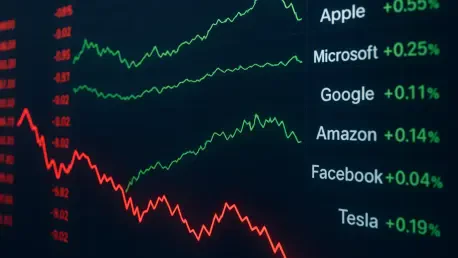

A narrow rally led by technology and semiconductor firms like Meta and Intel successfully masked the widespread financial damage affecting the majority of the market. While the S&P 500 appeared remarkably resilient with a mere 0.4% decline in the overall index, this surface-level stability provided a deceptive view of the actual health of the broader equities landscape. Beneath this veneer of calm, more than three-quarters of the companies within the benchmark index suffered significant losses, painting a much grimmer picture for diversified investors. The average stock price across the index plunged by nearly 6%, indicating that the concentration of capital into a handful of high-performing mega-caps was the only factor preventing a full-scale market retreat. This masking effect illustrates the current disparity between the index-heavy winners and the rest of the domestic economy, where thousands of smaller participants struggled to find any momentum during a month defined by intense volatility.
Macroeconomic Pressures: The Federal Reserve Impact
The fundamental driver behind this widespread downward pressure was the Federal Reserve’s decision to implement its first interest rate hike in three years, a move that sent shockwaves through rate-sensitive sectors. This pivot in monetary policy pushed the 10-year Treasury yield toward a significant 5.3% threshold, fundamentally altering the valuation models for capital-intensive industries. Real estate firms were particularly hard-hit, with only a single stock out of thirty managing to post any gains, while the materials sector failed to produce even one winning company during this period. By the close of the month, technical indicators revealed a severely oversold market environment, as 83 separate stocks hit a relative strength index below the 30-point mark. This level of technical exhaustion was most prominent within the financial and real estate segments, where the rapid adjustment to higher borrowing costs forced a swift re-rating of assets and a flight from risk.
Retail Resilience: Counterintuitive Trading Behavior
Despite the prevailing bearish sentiment and steep price drops, retail investor engagement did not falter as institutional selling intensified. Data from social tracking platforms revealed a counterintuitive trend where retail chatter and attention actually surged as stock prices plummeted. Securities that experienced losses exceeding 10% saw a median message volume increase of over 70%, suggesting that individuals were hunting for bargains rather than fleeing the carnage. A notable case involved FICO, which lost nearly half its market value yet saw its fastest growth in user interest on trading platforms. As market participants navigate the remainder of 2026 and look toward 2027, the focus must shift toward assessing corporate debt structures and long-term yield stability. To manage upcoming volatility, investors should prioritize stocks with robust free cash flow and minimal exposure to floating-rate debt. Monitoring relative strength metrics can help identify potential reversals in these oversold industries.