
Priya Jaiswal is a powerhouse in the global financial sector, recognized for her sharp ability to dissect complex market trends and translate them into actionable insights. With a distinguished career spanning portfolio management and banking strategy, she has become a go-to authority for understanding the delicate dance between international geopolitics and the domestic housing market. Today, we delve into the recent surge in borrowing costs, exploring how the interplay of Federal Reserve policy, rising bond yields, and global conflict is tightening the grip on the American dream of homeownership. Our conversation explores the underlying causes of the current interest rate environment, the growing divide within the central bank, and what these fiscal shifts mean for the average consumer.
With the average 30-year mortgage rate recently climbing to 6.66 percent, how are these shifting costs reshaping the landscape for people trying to enter the market today?
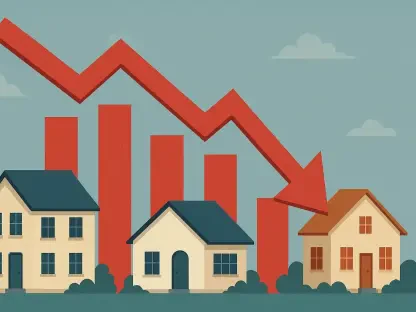
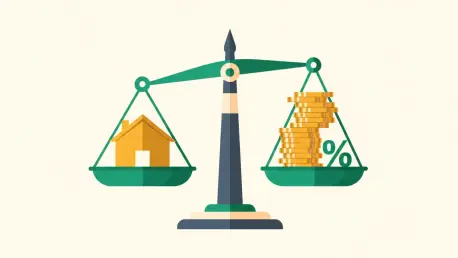
The jump to 6.66% represents a significant psychological and financial hurdle for the average family, especially when you consider that just last week we were looking at 6.58%. This isn’t just a minor fluctuation; it marks the highest level we have seen in an entire year, creating a palpable sense of frustration among buyers who were waiting for a reprieve. These rising rates effectively strip away purchasing power, often adding hundreds of dollars to a monthly mortgage payment, which forces many to reconsider the size or location of the home they can afford. We are seeing the immediate impact of this in the data, with mortgage applications dropping by 6.4% just last week as prospective buyers pull back. Even those looking to refinance aren’t safe, as 15-year fixed-rate mortgages have climbed to 6.04%, further dampening the enthusiasm for any kind of housing-related debt.
The connection between international conflict and local mortgage rates might seem distant to some; could you explain how the Iran war and oil prices are filtering down to affect a homebuyer’s monthly payment?
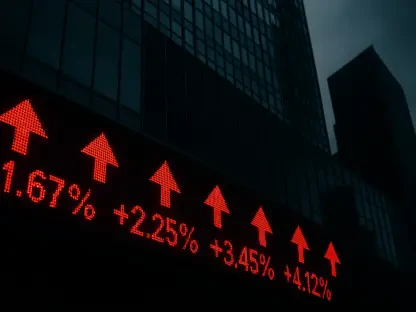
It is a classic domino effect where global instability directly dictates the cost of a suburban driveway. Since the conflict broke out in late February, the Iran war has sent crude oil prices soaring, which acts as a massive catalyst for inflation across the board. When inflation expectations heat up, bond market investors demand higher returns, which is why we’ve seen the 10-year Treasury yield—the primary benchmark for home loans—surge to 4.66% from the 3.97% we saw earlier this year. Lenders use these yields as their North Star for pricing, so as long as the Strait of Hormuz remains a point of tension, we should expect these elevated costs to persist. It creates a stressful environment where the price of a gallon of gas and the interest on a 30-year loan are essentially moving in the same upward direction.
The Federal Reserve appears to be at a crossroads with internal dissent regarding interest rates. What does this lack of “lockstep” among officials signal for the future of borrowing costs?
The recent two-day monetary policy meeting was incredibly telling because it revealed a growing fracture within the Fed’s leadership, with three regional bank presidents actually dissenting in favor of higher rates. This internal disagreement signals that the central bank is struggling to get a handle on inflation, which has now been stuck stubbornly above their 2% target for more than five years. For the consumer, this means the hope for a rate cut anytime soon has essentially evaporated, and the market is now bracing for the possibility of another hike instead. When the leadership isn’t in lockstep, it creates a layer of uncertainty that keeps bond yields high and lenders cautious. We are in a period where the “higher for longer” mantra isn’t just a theory anymore; it’s a reality being reinforced by the fact that the key interest rate remained unchanged despite the market’s desperate plea for relief.
U.S. home sales are currently hovering around a 4-million annual pace, which is significantly lower than the historic norm. How concerning is this persistent slump for the broader economy?
The gap between our current 4-million annual pace and the historic norm of 5.2-million tells a story of a market that is fundamentally stuck. While we saw a tiny 0.7% bump in sales of previously occupied homes during the first half of the year, it’s not nearly enough to break the national housing slump that has been dragging on since 2022. This stagnation is largely due to the “lock-in” effect, where homeowners with pandemic-era low rates refuse to sell because they don’t want to trade a 3% mortgage for one at 6.66%. This lack of inventory combined with high borrowing costs has kept sales essentially flat, hovering near 30-year lows. It’s a challenging cycle because without more transactions, the broader economic benefits typically associated with moving—like spending on renovations, furniture, and local services—are being severely curtailed.
What is your forecast for mortgage rates and the housing market through the rest of the year?
My outlook remains cautious because the primary drivers of these high rates show no immediate signs of cooling down. Given that the Fed has signaled its next move is more likely to be a hike than a cut, and with inflation proving to be incredibly resilient, I expect mortgage rates to fluctuate between the 6.5% and 6.8% range for the foreseeable future. The clearest path back to lower rates would require a significant de-escalation in the Iran conflict to settle the oil markets, but until that happens, the 10-year Treasury yield will likely stay elevated. Homebuyers should prepare for a “new normal” where the sub-6% rates we briefly saw in February feel like a distant memory. For the housing market to truly rebound to that 5.2-million unit pace, we need to see a sustained period of stability that gives both buyers and sellers the confidence to move, but for now, the “wait-and-see” approach will likely dominate the summer.