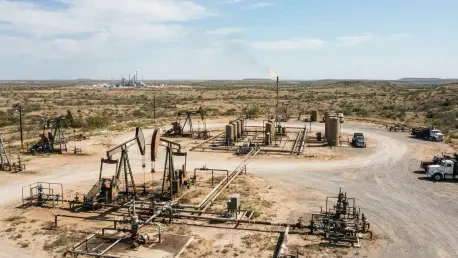

The intersection of environmental regulation and energy affordability has long been a flashpoint for intense political debate within the United States. As the administration moves forward with plans to dismantle existing methane emissions standards, the central argument hinges on the belief that reduced compliance costs will directly translate into lower utility bills and cheaper fuel for the average citizen. This strategy, led by EPA Administrator Lee Zeldin, focuses on easing the burden for oil and gas operators by scaling back leak detection requirements and permitting more flexible flaring practices. By targeting the Super Emitter Program, which relies on third-party monitoring to identify significant leaks, officials hope to remove what they characterize as an expensive bureaucratic hurdle. However, this policy shift occurs at a time when the global energy market is influenced by complex geopolitical factors that often overshadow domestic regulatory changes. The tension between achieving short-term economic relief and maintaining long-term environmental integrity remains at the heart of this legislative maneuver.
Economic Projections and Market Realities
Despite the bold assertions that slashing methane regulations will ignite a surge in domestic energy production, the Environmental Protection Agency’s own internal economic modeling suggests a much more modest outcome. Projections indicate that these regulatory changes would likely reduce U.S. crude prices by approximately 11 cents per barrel by 2027, representing a negligible decrease of just 0.14 percent. Such a small shift in pricing is often lost within the daily volatility of global oil markets, where fluctuations of several dollars per barrel are commonplace due to international supply shifts or changes in demand from major economies. Furthermore, the estimated increase in domestic production is a mere 0.09 percent, which effectively means only one additional barrel would be produced for every one thousand currently flowing through American pipelines. This data points to a reality where the structural drivers of the oil market are largely unaffected by the specific costs associated with leak detection.
Financial Gains and Environmental Trade-offs
Industry analysts observe that the fundamental viability of drilling operations is driven by crude prices remaining consistently above the 80-dollar mark. When prices are at this level, most active wells are already profitable, meaning that the incremental savings gained from reduced compliance costs are unlikely to trigger a massive wave of new capital investment. While the proposed rollbacks specifically benefit marginal wells—which represent about 80 percent of all active sites in the country—these particular locations contribute less than 10 percent of the total national output. Consequently, providing financial relief to these smaller, less productive operations does not provide the necessary leverage to significantly alter the overall supply-and-demand curve of the American energy landscape. Additionally, the inherent uncertainty regarding the long-term stability of these rules makes many major producers hesitant to overhaul their operational strategies based on temporary shifts in the federal regulatory environment.
Strategic Pathways for Methane Management
The evaluation of methane regulatory rollbacks provided a clear lens into the friction between immediate industrial cost reduction and broader market stability. Policy leaders prioritized the easing of operational constraints for smaller producers, yet the evidence indicated that these moves did not fundamentally shift the needle on consumer energy prices or global supply levels. Instead, the focus moved toward identifying more resilient ways to integrate environmental safety with economic growth, such as investing in advanced leak detection sensors that offered efficiency without heavy administrative oversight. Stakeholders eventually recognized that long-term energy security depended less on the removal of specific leak-tracking protocols and more on the modernization of infrastructure and the diversification of the national energy portfolio. Moving forward, the industry turned its attention toward voluntary compliance measures that satisfied both shareholder expectations for sustainability and the operational necessity of minimizing waste.