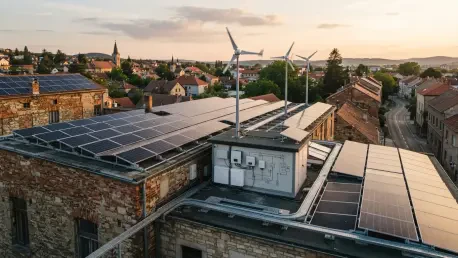

Following the 2013 oil train explosion, Lac-Mégantic implemented a microgrid capable of islanding from the main power grid to maintain electricity for thirty downtown buildings. This transition toward localized energy infrastructure represents a fundamental shift in how modern communities manage their environmental footprint and financial independence, moving away from the era of massive, centralized investments by utility conglomerates. Traditionally, energy projects required the backing of international banks or major governmental bodies, but as the demand for rapid sustainability solutions intensifies, community financing has emerged as a viable alternative. This model allows local residents to act as participants in developing green infrastructure, bypassing traditional financial institutions that often perceive small-scale, distributed projects as too risky or unrefined. By turning neighbors into investors, these projects establish a localized ecosystem where financial returns are secondary to community resilience and ecological health, creating a blueprint for the decentralized power grids that will likely define the coming decade across the continent.
A prime example of this innovative model in action is the ZooShare Biogas Co-operative in Toronto. Launched with the goal of eliminating organic waste from the Toronto Zoo, this facility transforms elephant dung and grocery store produce into renewable electricity. Despite its clear environmental benefits, the project struggled initially to secure capital because its decentralized nature did not fit the standard criteria for conventional bank loans. To bridge this gap, the organizers turned to the community, demonstrating that local support can substitute for institutional backing. This industrial synergy diverts tons of waste from landfills, converting potential pollutants into a reliable source of power. The facility represents more than just a technical achievement; it is a testament to how creative financing can unlock the potential of niche green technologies that larger banks might otherwise ignore. By focusing on circular economy principles, ZooShare has effectively demonstrated that local waste can be a localized asset rather than a municipal liability.
To fund the necessary infrastructure, ZooShare utilized community bonds—debt instruments that allow citizens to lend money directly to local initiatives. This strategy proved remarkably successful, raising over $4 million from hundreds of initial backers between 2026 and the subsequent operational phases. These bonds act as a bridge, providing the essential early-stage capital required before a project can prove its long-term revenue model to traditional lenders. By democratizing the investment process, the co-operative turned neighbors into stakeholders, ensuring the project’s survival during its most vulnerable developmental stages. Unlike traditional stocks, these bonds offer a tangible connection to the community, with investors knowing exactly where their capital is being deployed. This transparency is a hallmark of community financing, creating a loop of accountability and local pride that strengthens the social fabric while building modern energy systems. This methodology has paved the way for other municipal projects to consider public participation as a core financing pillar rather than a last resort.
The Psychology and Economics: Understanding Local Investment
Motivations and Participation: The Human Element
The success of community-financed projects often hinges more on the values of the investors than on the promise of high financial returns. Most participants in these initiatives are driven by “emotional investment,” seeking to align their personal portfolios with their environmental and social beliefs. This shift in mindset prioritizes the tangible improvement of one’s own neighborhood over the extraction of wealth from distant commodities. When individuals invest in a local solar array or a biogas plant, they are not just looking at a balance sheet; they are looking at the air quality in their town and the resilience of their local grid. This connection creates a patient class of investors who are willing to wait for returns if it means ensuring the project achieves its mission. This value-driven approach is a significant departure from the standard venture capital model, which often demands rapid growth and high exit multiples, sometimes at the expense of a project’s original social goals.
In a co-operative structure, this participation is further reinforced by democratic governance, where each member has a vote, fostering a deep sense of ownership and transparency. Each member, regardless of the size of their investment, holds an equal say in the direction of the organization and the election of the board of directors. This democratic equity ensures that the project remains focused on the needs of the community rather than the whims of a majority shareholder. Regular meetings and quarterly updates keep the investor base informed, transforming them from passive observers into active participants in the project’s lifecycle. This high level of engagement often leads to a more resilient organization, as members are more likely to support the project through technical hurdles or periods of slow revenue. By fostering a sense of collective responsibility, the co-operative model turns energy production into a shared civic duty, effectively grounding the transition to renewables in the everyday lives of the people it serves.
Risk and Financial Reality: Navigating Economic Volatility
While the social rewards of community energy are significant, the financial path is rarely without obstacles. Community financing is frequently a patient and high-risk endeavor, as seen when project revenues are slow to cover operating expenses. In these instances, bondholders may face delayed repayments, highlighting the reality that these investments are as much about social impact as they are about monetary gain. This necessitates a high level of trust between the project leaders and the community, maintained through constant communication and shared goals. For many small-scale projects, the initial years are a period of technical stabilization and market adjustment, where cash flow can be unpredictable. Community investors must enter these agreements with a clear understanding that their capital is providing the foundation for a long-term transition. The risk is mitigated not by diversified portfolios in the traditional sense, but by the shared belief in the project’s essential role in the local infrastructure and the environment.
Navigating this volatility requires project managers to be exceptionally transparent about the financial health of the co-operative. In many cases, community bonds are restructured or terms are extended when a project faces unforeseen technical delays or changes in energy pricing. This flexibility is a unique advantage of community financing, as local investors are often more willing to negotiate than a commercial bank would be. However, this also underscores the importance of financial literacy among both the organizers and the backers. Without a realistic understanding of the project’s revenue potential and operational costs, a community group can find itself in a precarious position. The “no-brainer” aspect of community financing lies in its ability to unlock these projects, but the long-term success still depends on sound economic management and the ability to eventually transition toward a stable, revenue-generating operation. This balance between idealism and pragmatism is what ultimately defines the durability of locally owned energy systems.
National Climate Goals: Local Action as a Driver
Tackling the Methane Problem: Beyond Large Landfills
Localized energy projects play a vital role in helping nations meet ambitious greenhouse gas reduction targets, particularly those involving methane. In the current environmental landscape, municipal landfills are a major source of methane, a gas significantly more potent than carbon dioxide in terms of heat-trapping potential. While large-scale gas capture at existing dumps is helpful, it is insufficient on its own to meet the target of cutting landfill methane by 50% by 2030. Small-scale anaerobic digesters, like those used in biogas projects, address the problem at the source by processing organic waste before it ever reaches a landfill. By diverting food waste and animal manure into controlled environments, these systems prevent methane from ever being released into the atmosphere. This proactive approach is mathematically necessary for meeting national climate obligations, as it fundamentally changes the waste stream and reduces the burden on centralized municipal waste management systems.
Furthermore, the implementation of localized biogas systems provides a decentralized solution that can be replicated in various settings, from agricultural regions to urban centers. Each individual facility contributes a measurable reduction in the total methane footprint of a region, making them essential components of a broader climate strategy. These projects also produce high-quality digestate, which can be used as a nutrient-rich fertilizer, further reducing the environmental impact of chemical agricultural runoff. This multi-benefit approach makes local energy systems a critical tool for environmental policy, as they solve multiple problems—waste management, methane reduction, and energy production—simultaneously. As national governments look for ways to accelerate their climate actions, the focus is increasingly shifting toward these types of integrated local solutions that offer immediate and verifiable carbon offsets. The success of these systems depends on their ability to integrate into existing community infrastructures, turning everyday activities like waste disposal into a climate-positive endeavor.
Strategic Economic Development: Filling the Financial Gap
Beyond their environmental utility, community bonds should be viewed as a sophisticated economic development strategy. They fill a critical void in the financial ecosystem by supporting projects that are deemed too small or too early-stage for traditional lenders. By providing this “missing link” in the capital market, community financing allows for the growth of a diverse range of energy solutions that would otherwise remain on the drawing board. From 2026 to 2028, the expansion of these instruments has enabled municipalities to retain wealth locally, as interest payments on bonds go back into the pockets of residents rather than to distant institutional shareholders. This local recycling of capital strengthens the regional economy, creating jobs in the maintenance and operation of energy infrastructure that is tailored to specific community needs. It shifts the economic paradigm from one of extraction to one of reinvestment, where the community itself profits from its own energy consumption and waste management.
The strategic role of community finance also extends to its ability to de-risk projects for future institutional involvement. Once a project has proven its technical viability and community support through a bond round, it becomes a much more attractive candidate for secondary financing or government grants. This tiered approach to funding allows for a more robust growth trajectory for green infrastructure. By acting as the “first-in” capital, community members are essentially providing the proof of concept that traditional markets require. This economic function is vital for innovation, as it creates a pathway for new technologies to move from pilot phases to established municipal standards. Consequently, community financing should not be seen as a fringe activity, but as a core component of a modern, resilient financial strategy that bridges the gap between private innovation and public utility. This model encourages a more dynamic and responsive energy market, where local needs drive the development of new, sustainable assets.
Diverse Models: Leadership and Ownership Structures
Indigenous Sovereignty: Leading the Renewable Transition
Indigenous communities are currently at the forefront of the community energy movement, using microgrids to achieve long-term energy sovereignty. Many remote areas have transitioned from a reliance on expensive, polluting diesel fuel to community-owned solar and battery systems. These projects, often developed in collaboration with utilities or through federal grants, provide a powerful blueprint for how renewable technology can be leveraged to empower marginalized communities and reduce carbon footprints simultaneously. For instance, the Kiashke Zaaging Anishinaabek in northwestern Ontario has successfully integrated solar power to offset thousands of liters of diesel annually, while the Sayisi Dene First Nation in Manitoba has implemented microgrids to reduce carbon emissions by hundreds of tonnes per year. These initiatives are not just about energy; they are about self-determination and the ability to control the resources essential for the community’s survival and growth.
The leadership shown by Indigenous nations in this sector highlights a deep integration of environmental stewardship and economic independence. By owning and operating their own energy systems, these communities can ensure that the benefits—both financial and practical—remain within the territory. This model of ownership often leads to more sustainable long-term outcomes because the community has a direct stake in the maintenance and success of the technology. These projects also serve as educational hubs, providing training and employment opportunities for local youth in the high-demand fields of renewable energy and electrical engineering. This holistic approach to community energy demonstrates that the transition to green power is a vehicle for social and economic justice. As more Indigenous-led projects come online, they set a standard for how renewable energy can be implemented in a way that respects local traditions and prioritizes the long-term health of the land and its people.
Resilience and Recovery: Strengthening the Local Grid
The implementation of microgrids is also proving essential for community resilience in the face of increasingly frequent natural disasters and grid failures. In locations like Lac-Mégantic, the reconstruction of infrastructure included systems capable of “islanding”—operating independently from the main power grid during widespread failures. This ensures that critical buildings, such as emergency services and community centers, remain powered during the most volatile periods. Such pilots demonstrate that community-controlled energy is not just about sustainability, but also about safety and reliability in an increasingly volatile climate. As traditional power grids face strain from extreme weather and aging infrastructure, the ability for a neighborhood to generate and manage its own power becomes a life-saving asset. This model of decentralized resilience is gaining traction in urban planning as a way to protect vulnerable populations and maintain essential services without total dependence on a centralized provider.
Building on these recovery models, other communities are now looking to integrate microgrids into their standard urban development plans. These systems allow for a more modular approach to energy management, where specific sections of a city can sustain themselves if a primary feeder line goes down. The technology involves a sophisticated mix of solar panels, battery storage, and smart grid software that balances load and generation in real-time. This level of technical sophistication was once reserved for large-scale utility operations, but it is now being successfully deployed at the neighborhood level. By investing in these resilient systems, communities are essentially buying insurance against future disruptions. The success of these localized grids in maintaining power during emergencies has provided a clear argument for the wider adoption of decentralized energy. These systems not only reduce the overall load on the national grid but also provide a “bottom-up” stability that can prevent cascading failures in the wider energy network.
Defining Ownership: Equity Versus Benefit Agreements
It is important to distinguish between projects located within a community and those actually owned and governed by one. Some developments labeled as “community energy” are actually private ventures that offer minor benefit agreements to local residents in exchange for land use or social license. While these agreements can provide some financial perks, they do not offer the same level of control or long-term wealth retention as a community-owned co-operative. Experts argue that true community energy requires majority equity and democratic control to ensure that the wealth and decision-making power generated by energy production remain in the hands of the people who live near the infrastructure. This distinction is crucial because it determines who has the final say on operational changes, expansion, and the distribution of profits. Without true ownership, a community remains a passive recipient of corporate benevolence rather than an active driver of its own energy future.
Establishing true equity ownership often involves more complex legal and financial structures, but the long-term benefits are significantly higher. When a community holds the majority share, it can prioritize local hiring, choose its own suppliers, and reinvest profits directly into other local social programs. This model prevents the “leakage” of capital that occurs when a private developer extracts profits from a local resource and moves them to a distant corporate headquarters. Furthermore, democratic control ensures that the project remains aligned with the community’s environmental and social values over its entire lifespan. As the renewable energy sector continues to grow, there is an increasing push for policies that favor or mandate true community ownership models. This movement toward “energy democracy” seeks to rebalance the power dynamics of the utility sector, moving away from centralized corporate control and toward a more equitable and participatory system where energy is treated as a common good.
Scaling Systems: Strategies for Universal Adoption
Overcoming Barriers: The Role of Strategic Information
Despite the proven success of various models, the widespread adoption of community energy is often hindered by a lack of strategic information and financial literacy. Many groups rely solely on government grants, reaching a standstill once those funds are exhausted or denied. To combat this, new tools like the Community Energy Finance Navigator have been developed to track the financing and ownership structures of dozens of successful projects across the country. These resources help new organizers understand how to piece together complex funding arrangements and provide a roadmap for navigating the regulatory hurdles associated with local energy production. By sharing the “lessons learned” from early adopters, these platforms reduce the learning curve for new projects, making the transition to community-funded energy more accessible to a broader range of participants. This democratization of information is a key step in moving the sector from a series of isolated pilot projects to a mainstream energy strategy.
The shortage of information often leads to a “reinvention of the wheel” for every new community energy group, which can waste valuable time and resources. When organizers can access data on how a similar biogas plant or solar co-operative was funded and managed, they can focus their efforts on the specific technical and social needs of their own neighborhood. Strategic planning involves understanding the local energy market, identifying potential investors, and selecting the right legal structure for the organization. By fostering a network of information exchange, the community energy sector can build a collective expertise that rivals the resources of larger utility companies. This collaborative environment is essential for scaling, as it allows for the standardization of bond agreements, co-operative bylaws, and operational procedures. As these tools become more sophisticated, the barrier to entry for local groups will continue to lower, allowing more neighborhoods to take control of their environmental and financial destinies through informed, strategic action.
Building the Capital Stack: A Multi-Layered Approach
Successful community energy projects rarely rely on a single funding source; instead, they utilize a “capital stack” to achieve financial stability. This involves layering different types of financial instruments, such as federal grants, low-interest loans, community bonds, and private partnerships, to cover the high upfront costs of infrastructure development. From 2026 to 2028, the use of these multi-layered financial structures has become the standard for resilient local projects. By blending various sources, organizers can mitigate the risks associated with any single funder and create a more robust financial foundation that can withstand market fluctuations. For example, a federal grant might cover the initial feasibility study, while community bonds provide the capital for construction, and a low-interest loan covers long-term operational maintenance. This strategic approach allows organizers to move beyond a “grant-only” mindset and treat financing as a core element of the project’s technical design from the very beginning.
The complexity of building a capital stack requires a high level of coordination and financial savvy, but it also provides a level of security that a single funding source cannot match. Each layer of the stack serves a different purpose and appeals to a different type of investor, from the socially conscious local resident to the mission-driven government agency. This diversity of backing also creates a stronger case for the project’s long-term viability, as it demonstrates broad-based support and multiple avenues for repayment. Furthermore, using a variety of financial instruments can help a project maintain its community-led identity even when larger amounts of capital are required. For instance, a loan guarantee from a municipality can lower the interest rates on community bonds, making them more attractive to local residents without ceding control to an outside bank. As more projects successfully navigate these financial complexities, the capital stack model will likely become the primary vehicle for funding the next generation of decentralized energy infrastructure.
The Path Forward: Standardizing Community Energy
For local energy systems to become a standard feature of the national landscape, there must be a shift toward more intentional and standardized financial planning. The transition to green power is as much a financial challenge as it is a technical one, requiring a rethink of how we value and fund public utilities. By fostering financial literacy among community organizers and encouraging the use of blended finance, the barriers to entry can be significantly lowered. This evolution will allow more neighborhoods to take control of their energy future, contributing to national climate targets while building local wealth. Standardizing the processes for issuing community bonds and forming energy co-operatives will make it easier for smaller towns and rural areas to replicate the successes of larger urban centers. As the regulatory environment becomes more supportive of distributed energy, the potential for these systems to displace traditional, carbon-intensive power sources will only grow.
Looking ahead, the integration of values and financial value will be the defining characteristic of the most successful energy projects. When financial instruments are designed to serve local interests, the resulting infrastructure is more resilient, more widely supported, and more aligned with the urgent needs of the climate crisis. This alignment ensures that the energy transition is not only green but also equitable, providing a way for everyday people to participate in the most significant industrial shift of the century. As the model for community-funded energy moves from a niche alternative to a primary driver of the global energy transition, it will require continued innovation in both technology and finance. The projects that have succeeded so far provide the foundation for a future where energy is produced, owned, and managed by the communities that depend on it, creating a more sustainable and democratic world for all.
The integration of community values with localized energy infrastructure provided a necessary shift in the global climate strategy throughout the mid-2020s. By leveraging emotional investment and democratic governance, these projects transformed neighbors into active stakeholders in their own environmental resilience. The successful deployment of microgrids and anaerobic digesters demonstrated that decentralized systems were technically viable and economically sound when supported by a diverse capital stack. This transition fundamentally altered the relationship between citizens and their utilities, moving away from passive consumption toward active participation and ownership. Policy makers and community leaders utilized these successful models to draft new frameworks that prioritized local equity over corporate profit extraction. The collective experience of these early projects served as a definitive guide for standardizing community energy across the continent. Moving forward, the adoption of these strategies will likely focus on regional interconnections between localized grids to further enhance stability and energy independence. Sustaining this momentum required a commitment to ongoing financial education and the continued development of transparent, accessible investment tools for the public.